Why Personalized Learning Is Shaping the Future of Modern Education

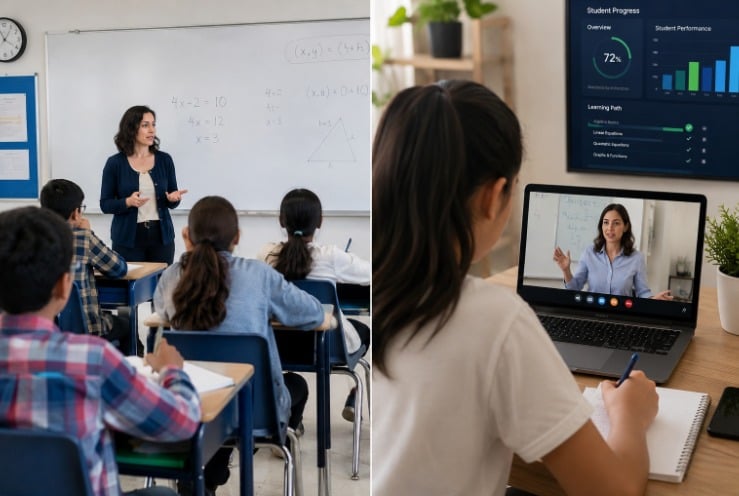
For generations, education has largely followed the same blueprint: one teacher, one classroom, one curriculum, and one pace for every student. While this model has helped educate billions of learners worldwide, it was designed for an era when standardization was the priority rather than individual learning needs. Today, however, the expectations placed on education are changing rapidly.
Students no longer learn exclusively inside traditional classrooms. They have access to interactive learning platforms, artificial intelligence (AI), educational apps, virtual classrooms, and an endless library of digital resources. More importantly, they have different goals, learning styles, strengths, and challenges that cannot always be addressed through a one-size-fits-all approach.
This shift has accelerated the rise of personalized learning, an educational model that adapts instruction, pace, content, and support to meet the unique needs of each learner. Rather than expecting every student to follow the same path, personalized learning recognizes that meaningful progress happens when education is tailored to the individual. Interactive activities such as it is an It word search puzzles can also help students practice technology-related vocabulary in an engaging way.
In this article, we’ll explore why personalized learning is becoming the new standard in modern education, how technology is accelerating this transformation, and why the most successful learning environments continue to place human guidance at the center of student success.
The Traditional Education Model Was Never Designed for Every Learner
The modern classroom has achieved remarkable success over the past century, expanding access to education and creating opportunities for millions of students. However, its underlying structure was built around efficiency rather than personalization. A single teacher is often responsible for guiding dozens of students through the same curriculum within a fixed academic calendar, regardless of their individual abilities or learning preferences.
This standardized model assumes that most students can absorb information at a similar pace. In reality, every classroom contains learners with different backgrounds, levels of prior knowledge, attention spans, and motivations. Some students grasp new concepts almost immediately, while others need additional explanations, practical examples, or repeated practice before achieving confidence.
These differences are particularly noticeable in subjects such as mathematics, science, and languages, where foundational concepts build upon one another. A student who misses one important concept may struggle with every lesson that follows, creating knowledge gaps that become increasingly difficult to close over time.
Standardized instruction also leaves limited room for curiosity and exploration. Teachers must often prioritize completing the syllabus over adapting lessons to individual interests or learning styles. As a result, gifted students may feel underchallenged, while those requiring extra support can quickly fall behind.
The challenge becomes even greater in today’s digital economy, where employers increasingly value creativity, collaboration, communication, and problem-solving alongside academic achievement. These skills flourish when learners receive personalized feedback, opportunities for independent thinking, and instruction that adapts to their progress rather than forcing everyone through the same educational pathway.
This doesn’t mean traditional education has become obsolete. Instead, it highlights why educators worldwide are exploring more flexible learning models that combine structured teaching with personalized support. Rather than replacing classrooms, personalized learning enhances them by recognizing that equal access to education does not always result in equal learning outcomes.
What Is Personalized Learning?
Personalized learning is an educational approach that tailors instruction to the unique needs, abilities, interests, and goals of each student. Instead of expecting every learner to follow the same pace or master concepts through identical teaching methods, personalized learning adapts the educational experience to maximize individual understanding and long-term success.
While the term is often associated with technology, personalized learning is fundamentally about putting the student at the center of the learning process. Technology simply provides new tools to make that personalization more scalable and effective.
A personalized learning environment may include:
- Flexible learning paths based on student progress.
- Adaptive assessments that identify strengths and knowledge gaps.
- One-to-one tutoring for targeted academic support.
- Interactive digital resources matched to learning preferences.
- Continuous feedback rather than relying solely on end-of-term examinations.
- Learning goals that evolve as students develop new skills.
Consider two students preparing for the same mathematics examination. One may excel in algebra but struggle with geometry, while the other demonstrates the opposite pattern. Under a traditional classroom model, both students often receive the same lessons and assignments. Personalized learning, however, allows each student to focus additional time and support where it is needed most, creating a more efficient and meaningful educational experience.
The growth of online learning has made personalized education significantly more accessible. Modern tutoring platforms, virtual classrooms, and adaptive learning systems can analyze student performance, recommend targeted resources, and provide individualized support beyond the physical classroom.
This approach has also contributed to the growing popularity of online tutoring, where students benefit from one-to-one sessions tailored to their specific academic needs rather than following a generalized lesson plan. Instead of simply delivering information, experienced tutors can identify learning barriers, adjust teaching strategies, and build confidence through continuous interaction.
As educational technology continues to evolve, personalized learning is becoming less of an alternative approach and more of an expectation among students and parents seeking meaningful academic progress.
Why Every Student Learns Differently
One of the strongest arguments for personalized learning comes from a simple observation: no two students learn in exactly the same way.
Educational psychology has long demonstrated that learning is influenced by a combination of cognitive ability, prior knowledge, motivation, environment, emotional well-being, and personal interests. Even students of the same age studying the same subject may process information differently and require different forms of support to reach similar outcomes.
For example, some learners understand complex concepts more effectively through visual demonstrations, while others benefit from practical exercises, discussions, or real-world applications. Some students thrive under independent study, whereas others gain confidence through regular interaction with teachers or tutors who can provide immediate feedback and encouragement.
Learning pace also varies significantly. Research consistently shows that forcing every student to move through identical content within the same timeframe often creates unnecessary frustration for slower learners while limiting opportunities for those ready to progress further. Personalized learning addresses this challenge by allowing students to spend more time where additional support is needed while advancing more quickly through topics they have already mastered.
How AI and Educational Technology Are Making Personalized Learning a Reality
For years, personalized learning was an ambitious educational goal that was difficult to implement on a large scale. While teachers have always recognized that students learn differently, adapting lessons for every individual in a classroom of 25 or 30 learners was often unrealistic. Limited time, resources, and administrative responsibilities made true personalization challenging.
Today, advances in artificial intelligence (AI), machine learning, cloud computing, and educational technology (EdTech) are changing that reality.
Modern learning platforms can analyze student performance in real time, identify knowledge gaps, recommend targeted learning materials, and adjust the difficulty of future exercises based on individual progress. Instead of relying solely on standardized assessments at the end of a term, educators now have access to continuous insights that help them support students before minor learning gaps become significant academic challenges.
Adaptive learning systems represent one of the most significant developments in this transformation. Rather than presenting identical lessons to every learner, these platforms dynamically adjust educational content according to each student’s strengths, weaknesses, and pace of learning.
For example, if a student demonstrates a strong understanding of algebra but repeatedly struggles with geometry, an adaptive learning system can recommend additional practice, interactive visualizations, or alternative explanations focused specifically on geometric concepts. Another student who has already mastered those topics can immediately progress to more advanced material without unnecessary repetition.
Artificial intelligence also supports educators by automating routine tasks such as grading objective assessments, tracking student progress, generating personalized practice questions, and highlighting learners who may require additional intervention. This allows teachers to spend more time on activities that technology cannot replicate – mentoring students, encouraging critical thinking, and fostering meaningful classroom discussions.
Importantly, AI is not replacing educators; it is enhancing their ability to make informed instructional decisions.
Beyond Algorithms: Why Human Connection Still Defines Great Education
The rapid advancement of AI has sparked understandable questions about the future role of teachers and tutors. As intelligent systems become more capable of answering questions, generating explanations, and recommending learning resources, some observers have suggested that technology may eventually replace human instruction altogether.
In reality, education involves far more than delivering information.
Learning is deeply connected to confidence, motivation, communication, emotional intelligence, and the ability to overcome setbacks. These qualities develop through meaningful human relationships, something algorithms cannot fully replicate.
A student preparing for an important examination may already understand the curriculum but struggle with anxiety or self-confidence. Another learner may lose motivation after receiving disappointing grades despite putting in considerable effort. In these situations, academic knowledge alone is not enough. Students benefit from encouragement, empathy, reassurance, and personalized guidance that responds to their emotional as well as intellectual needs.
Experienced tutors also recognize subtle learning patterns that data alone may not reveal. They can identify when a student is memorizing concepts without truly understanding them, when frustration is affecting performance, or when curiosity should be encouraged through more challenging discussions.
Artificial intelligence can explain a mathematical formula.
A skilled educator can determine why a particular student continues making the same mistake and adapt the explanation accordingly.
This distinction is increasingly shaping the future of education. Rather than viewing AI and educators as competitors, schools and tutoring providers are beginning to treat them as complementary partners.
Technology manages repetitive processes and provides data-driven insights.
Teachers and tutors provide judgment, creativity, mentorship, and inspiration.
The combination creates learning experiences that are both efficient and deeply human.
Why Parents Are Increasingly Choosing Personalized Learning
Parents today have access to more educational options than at any other point in history.
Alongside traditional schools, families can now choose from virtual classrooms, online tutoring, adaptive learning platforms, educational apps, and hybrid learning environments. This growing ecosystem has changed expectations regarding how education should be delivered.
Many parents no longer assume that identical instruction is the most effective approach for every child.
Instead, they increasingly seek learning experiences that recognize their child’s individual strengths, challenges, interests, and pace of development.
Several factors are driving this change.
Some students require additional support to strengthen academic foundations before progressing to more advanced topics.
Others benefit from enrichment opportunities that extend beyond the classroom curriculum.
Some simply need more confidence and consistent encouragement than busy classroom environments can realistically provide.
Personalized learning addresses these needs by offering greater flexibility and individual attention.
Personalized Learning in Practice: From Classrooms to Online Tutoring
Although personalized learning is often associated with advanced technology, its success depends on thoughtful implementation rather than software alone.
The most effective educational environments combine multiple elements:
- Experienced educators who understand individual learning needs.
- Continuous assessment rather than relying solely on final examinations.
- Flexible lesson planning.
- Adaptive digital resources.
- Meaningful student feedback.
- Clear academic goals.
- Regular communication with parents.
- Online tutoring has become one of the strongest examples of this model in practice.
Unlike traditional classroom settings, one-to-one tutoring allows educators to focus entirely on a single student’s strengths, weaknesses, and learning objectives. Lessons can be adjusted in real time, additional explanations provided whenever necessary, and learning strategies modified based on immediate feedback.
Technology further enhances this process through shared digital whiteboards, interactive assessments, AI-assisted progress tracking, and collaborative learning platforms.
As a result, many tutoring organizations are moving toward highly personalized educational models that combine expert human instruction with modern learning technologies. Platforms such as The Tutors Globe illustrate this broader industry trend by delivering tailored online tutoring experiences designed around individual student goals rather than standardized lesson structures.
Importantly, the emphasis is not on technology itself but on using technology to create more meaningful human learning experiences.
Challenges and Ethical Considerations of Personalized Learning
While personalized learning offers significant advantages, its successful implementation requires thoughtful planning, responsible technology use, and equal access to educational opportunities. Like any major educational transformation, it introduces challenges that educators, policymakers, technology providers, and parents must address together.
1. Digital Inequality
Not every student has access to high-speed internet, modern devices, or reliable digital learning environments.
2. Data Privacy
Personalized learning platforms collect valuable information about student performance, learning behaviors, assessment results, and progress over time.
3. Avoiding Overdependence on AI
Artificial intelligence is an extraordinary educational assistant—but it should remain exactly that: an assistant.
Students still need opportunities to:
- Think critically
- Solve unfamiliar problems
- Collaborate with peers
- Communicate ideas
4. Supporting Teachers Through Change
The transition toward personalized learning also requires investment in educators.
Teachers need professional development that helps them integrate AI tools, adaptive learning platforms, and digital resources into their classrooms effectively.
Frequently Asked Questions
Is personalized learning better than traditional education?
Personalized learning is not intended to replace traditional education. Instead, it complements existing teaching methods by adapting instruction, pacing, and support to meet individual student needs, creating a more flexible and effective learning experience.
How does AI support personalized learning?
Artificial intelligence analyzes student performance, identifies learning gaps, recommends customized resources, and automates routine educational tasks, allowing teachers to focus on mentoring, critical thinking, and student engagement.
Does personalized learning improve academic performance?
Research suggests that personalized learning can improve student engagement, motivation, knowledge retention, and academic outcomes when implemented effectively alongside experienced educators and appropriate technology.
Can personalized learning work without technology?
Yes.
- Personalized learning existed long before artificial intelligence.
- Experienced teachers and tutors have always adapted instruction to individual students.
- Technology simply makes this process more scalable and data-driven.
Why is online tutoring becoming more popular?
Online tutoring provides flexible scheduling, individualized instruction, continuous feedback, and access to expert educators regardless of geographical location, making it an increasingly valuable complement to classroom education.
Conclusion
Education has never been static. Every generation has adopted new tools – from printed textbooks to computers, the internet, and now artificial intelligence—to improve how knowledge is shared and understood. Personalized learning is the next step in that evolution.
The real opportunity lies not in replacing teachers with technology but in creating learning environments where technology amplifies what great educators already do best: understand students, adapt instruction, and inspire confidence.
As AI, adaptive learning platforms, and digital collaboration tools continue to mature, the schools and organizations that succeed will be those that use these innovations responsibly while keeping human connection at the heart of education.
Personalized learning is no longer a vision for the future. It is already reshaping classrooms, online learning environments, and tutoring platforms around the world. The challenge now is not whether education should become more personalized, but how quickly educators, institutions, and technology providers can work together to make high-quality, individualized learning accessible to every student.
Author Bio
Abdul Basit is an SEO strategist and digital marketing professional with experience in education technology, content strategy, and search optimization. He works with online education brands to improve digital visibility through high-quality content, technical SEO, and user-focused marketing strategies. His interests include AI in education, EdTech innovation, and the future of personalized learning.