For years, the formula for getting into a top U.S. university seemed straightforward.
High GPA.
Strong test scores.
Leadership roles.
Volunteer hours.
Impressive essays.
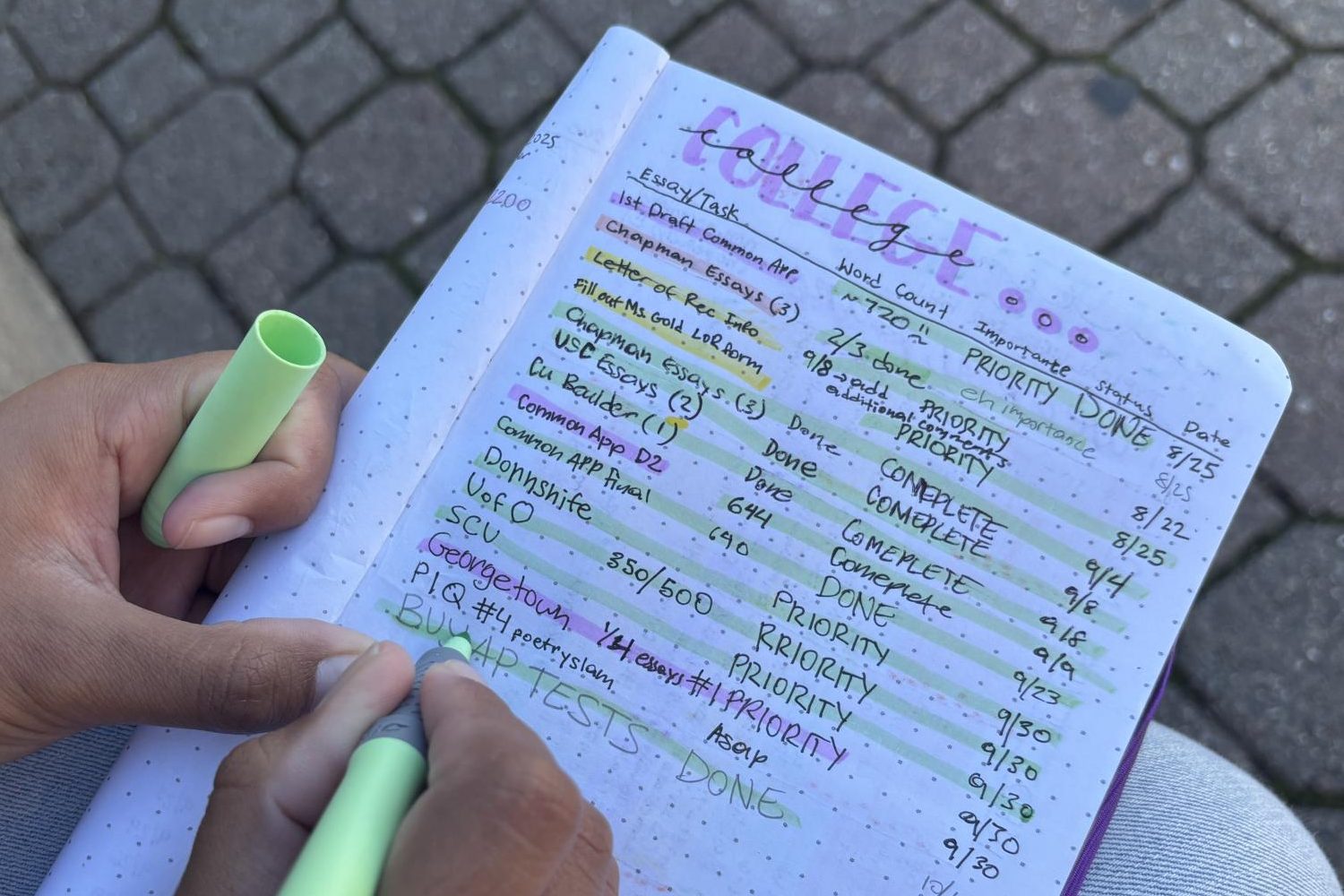
Students followed the blueprint carefully. Families invested heavily in tutoring, summer programs, and private counseling. The belief was simple: the more accomplished a student looked on paper, the better their odds.
But something has changed.
Across recent admissions cycles, highly qualified students — even those with near-perfect academic profiles — have faced rejection from selective universities. At the same time, other students with slightly lower traditional metrics have earned admission to the very same institutions.
This shift isn’t random. It reflects an evolution in how competitive admissions now operate.
The Eight-Minute Reality
According to multiple reports and admissions insiders, application readers often spend only minutes reviewing each file during initial evaluations. In large applicant pools, the question isn’t just “Is this student impressive?”
It’s:
“Is this student distinguishable?”
When thousands of applicants present strong transcripts, advanced coursework, and leadership titles, traditional achievements become the baseline rather than the differentiator.
Excellence is expected. Memorability is rare.
From Credentials to Signal
In today’s admissions environment, there is increasing emphasis on what might be called signal — externally visible evidence of initiative, expertise, or impact.
Grades are important. Essays matter. Recommendations still count.
But when students build work that exists beyond the school ecosystem — projects that are public, measurable, and verifiable — it creates a different kind of impression.
For example:
- A digital platform with active users
- Published work with documented distribution
- A research initiative with visible outcomes
- A venture that generated real engagement
- Public-facing content demonstrating subject-matter depth
These signals reduce ambiguity. They allow admissions committees to see not just potential, but execution.
The Skepticism Factor
Another reality influencing admissions today is increased scrutiny.
Reports have highlighted instances of exaggerated extracurricular claims, inflated volunteer hours, and even fabricated credentials. In environments where application volumes are extremely high, admissions readers do not have time to independently verify every activity listed.
As a result, projects that can be quickly validated — through public links, published platforms, or measurable metrics — often carry greater clarity.
This does not mean traditional extracurriculars lack value.
It means differentiation increasingly depends on visibility and evidence.
The End of Passive Participation
In earlier decades, participation itself often stood out. Being president of a club or captain of a team signaled initiative.
Today, participation is common. Leadership is common. Competitive programs enroll tens of thousands of students annually.
In such a crowded field, initiative that extends beyond institutional boundaries becomes more noticeable.
Selective universities are building diverse, dynamic classes. They are not only assembling high performers; they are identifying students who demonstrate direction.
Direction often reveals itself through sustained, outward-facing work.
Technology as a Lever
Modern digital tools — including no-code platforms, publishing channels, and artificial intelligence — have lowered barriers to creation.
A high school student can now prototype an app, launch a niche podcast, publish a short-form book, or build a focused online community without institutional backing.
Used responsibly, these tools accelerate execution.
They do not replace effort or authenticity. Rather, they reduce friction between idea and implementation.
In this environment, the advantage goes to students who can move from interest to action.
A Structured Approach to Differentiation
Some education strategy firms have begun structuring programs around proof-based development rather than résumé accumulation.
Ivy Tier (ivytier.com), for example, emphasizes helping students build externally validated passion projects aligned with their academic interests. Instead of centering preparation solely on essay refinement or activity optimization, the model focuses on measurable execution — whether through digital ventures, media contributions, authorship, or platform-building.
The goal is not to replace traditional preparation, but to add a layer of visible differentiation.
Through educational workshops such as the Ivy Tier masterclass (join.ivytier.com), families explore how structured project development fits within the broader admissions ecosystem.
Importantly, responsible programs in this space emphasize authenticity. Students remain the primary thinkers and contributors behind any initiative. Ethical boundaries and institutional guidelines must always be respected.
Narrative Plus Evidence
Storytelling still matters in holistic admissions.
But narrative supported by visible proof requires less interpretation.
An essay describing passion for environmental science is meaningful.
An essay describing a student who built a climate-focused initiative with measurable participation provides context that reinforces credibility.
The combination of narrative and evidence often creates stronger coherence.
Rethinking the Strategy
The takeaway for students and families is not to abandon academic excellence or traditional extracurriculars.
It is to think strategically about signal.
Instead of asking, “How many activities can I join?” a more useful question may be:
“What can I build that demonstrates depth?”
Instead of focusing solely on titles, students might consider outcomes.
Instead of optimizing for volume, they might optimize for visibility.
In competitive environments, differentiation is rarely accidental.
The Broader Benefit
Even beyond admissions outcomes, the process of building something public — a platform, a project, a venture — develops durable skills.
Communication.
Execution.
Problem-solving.
Audience understanding.
Digital fluency.
These capabilities extend far beyond a college application.
In that sense, proof-based development isn’t just about getting into a selective university. It’s about preparing students to operate effectively in a modern, interconnected world.
A Shift Worth Understanding
The admissions landscape will continue evolving.
Application numbers may rise or fall. Testing policies may change again.
But one trend appears durable:
Initiative that is visible, measurable, and aligned with genuine interest increasingly stands out in crowded applicant pools.
Perfection on paper once defined competitiveness.
Today, clarity of direction — supported by real-world execution — may carry even greater weight.
For students navigating the path to selective universities, understanding that shift can make all the difference. That’s why modern admission consultants like Ivy Tier are important in implementing such proven methods to get accepted into top US undergrad colleges in this era.