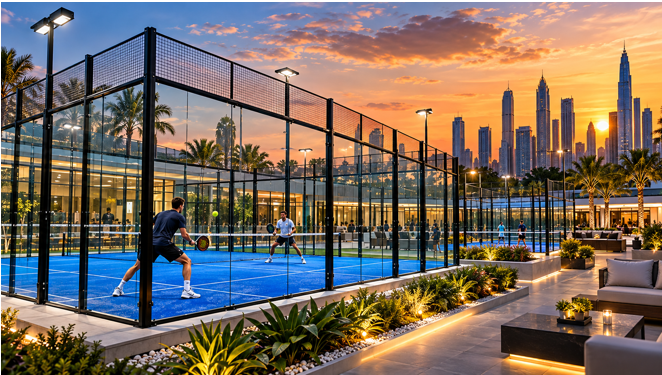
Padel’s appeal is easy to see on court: compact doubles play, fast rallies and a social atmosphere that welcomes beginners while rewarding experienced players. Behind that accessible experience sits a more complex business story. Every new club, hotel, school or recreation project needs a dependable playing environment, and that creates demand for engineering, materials, logistics and installation expertise. For developers evaluating the opportunity, the conversation is no longer simply about building a court. It is about creating a safe, durable asset that can operate reliably and earn repeat visits.
From sports trend to infrastructure opportunity
A growing sport creates a chain of practical needs. Operators must secure suitable land, plan access and drainage, select a court configuration, coordinate electrical work, and establish a maintenance routine. Suppliers that can coordinate these elements help reduce the number of separate decisions a buyer has to manage. That is one reason the manufacturing conversation matters: consistent components, documented specifications and a clear installation process can be as important as the finished court’s appearance.
What a modern court system must deliver
A padel court is a system rather than a collection of unrelated parts. Its playing surface, steel structure, glass panels, mesh, fasteners, lighting and access points must work together. Surface selection affects traction and ball response; structural design affects stability; glass quality and fixing details influence safety and visibility. Buyers should ask for technical drawings, material specifications, installation guidance and maintenance recommendations before comparing quotations. A lower headline price may not represent better value if it leaves important elements unclear.
Why supplier evaluation needs more than a catalogue
Digital catalogues make it easy to compare court styles, but photographs alone cannot establish quality. A useful supplier assessment examines production consistency, quality-control steps, packaging, replacement-part availability and the clarity of after-sales support. For overseas projects, shipping terms and responsibility for local installation also need to be understood. Buyers exploring padel courts china can use the supplier discussion to clarify configurations, project requirements and the information needed for a realistic quotation.
The role of panoramic design
Panoramic designs use large glass sections to create a more open visual experience for spectators and players. They can suit premium clubs, tournament venues and hospitality developments where sightlines and presentation are important. The design also makes engineering details more visible: glass dimensions, fixing systems, frame alignment and installation tolerances deserve careful review. A full panoramic padel court should therefore be assessed for both its visual effect and the practical requirements of its structure, maintenance and site conditions.
Planning for lifecycle cost
A credible investment model includes more than manufacturing and delivery. Site preparation, foundations or slab works, drainage, lighting, local permits, installation, insurance, cleaning and periodic component checks all affect the total cost of ownership. Operators should also budget for downtime and establish who will inspect the court after severe weather or intensive use. A written handover pack with drawings, warranties and maintenance instructions makes future management easier.
Data can improve facility operations
Once a venue is open, booking software and basic operational data can help owners understand demand by hour, day and court type. That information can guide pricing, coaching schedules, league programming and cleaning routines. It can also help a multi-court venue decide whether to expand, add covered capacity or improve amenities before committing more capital. Technology does not replace good facility management, but it can make decisions more evidence-based.
A practical checklist for project owners
Before placing an order, confirm the playing dimensions and configuration, surface type, structural materials, glass specification, lighting requirements, drainage plan, site tolerances, delivery schedule, installation responsibilities, warranty coverage and spare-parts process. Ask for a written scope that separates included items from exclusions. Confirm local building and safety requirements with qualified professionals rather than assuming that a supplier’s standard package automatically meets every jurisdiction’s rules.
The opportunity ahead
Padel’s expansion offers opportunities to manufacturers that combine product quality with dependable project coordination. For operators, the strongest projects begin with clear requirements and a lifecycle view of the investment. For suppliers, transparent specifications and responsive support can build trust in a competitive market. As more venues compete on experience, the quality of the court infrastructure will remain one of the foundations of a successful facility.
Questions worth asking before procurement
Ask the supplier to explain the engineering assumptions, the intended usage level and the scope of the warranty in plain language. Confirm whether drawings reflect the actual site, whether components are inspected before packing and how the project team will handle a late change. These questions help buyers compare the reliability of the process, not just the appearance of the product.
A more measurable investment case
A business case is stronger when its assumptions can be tested. Estimate realistic booked hours, operating costs and the ramp-up period, then review actual performance after opening. Track customer acquisition sources and repeat visits. If demand differs from the forecast, use the evidence to adjust opening hours, programming or promotion before making a major expansion decision.
Procurement decisions that scale
As projects become larger, consistency across courts becomes important. A club planning several courts should check whether the supplier can keep specifications consistent across batches and provide a clear identification system for components. This matters when one court needs a replacement part or when the facility expands later. Standardising lighting, cleaning routines and inspection records can also simplify staff training and reduce the risk of different courts being maintained in different ways.
Make the handover operational
A project is not complete when the final panel is installed. The owner should have a named person responsible for the asset, a schedule for routine checks and a simple way for staff to report faults. Booking data should be reviewed alongside maintenance records, since repeated cancellations may point to a facility issue rather than weak demand. Treating operational information as part of the project from the beginning gives managers a better basis for improving performance.
Conclusion
Padel’s growth creates opportunities for suppliers and operators, but lasting results depend on sound specifications, transparent procurement and disciplined operations. By evaluating the whole project—from manufacturing and installation to data-led management—buyers can make more informed decisions and build facilities that serve players over the long term.
Editorial word-count check: approximately 1051 words including headings.