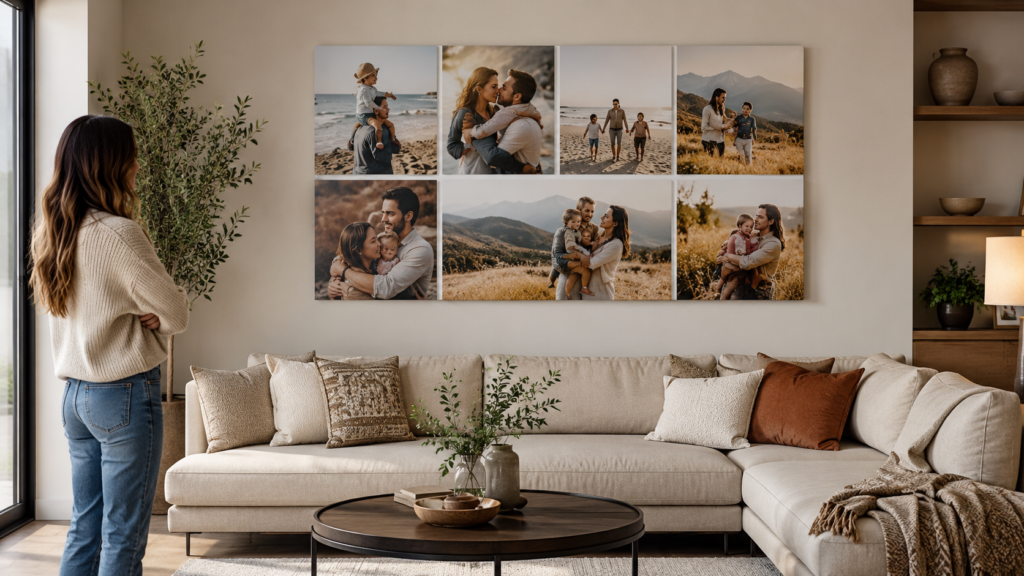
Walk into an American living room today and you are likely to notice something that would have seemed unusual a decade ago. Instead of mass-produced posters or the same framed print that hangs in thousands of other homes, more and more walls are being filled with pieces that feel personal, intentional, and one of a kind. The shift toward Personalized Wall Art is not a passing design fad. It reflects a deeper change in how people think about their homes, their identity, and the spaces where they spend the most time.
The pandemic years reshaped the relationship between Americans and their interiors. When the living room suddenly became an office, a classroom, a gym, and a sanctuary all at once, homeowners started paying closer attention to how those spaces actually made them feel. A blank wall or a generic decoration no longer cut it. People wanted surroundings that reflected who they are, and that desire has continued long after life returned to normal.
Personalization Is the New Status Symbol
For years, luxury in the home was signaled by brand names and expensive furniture. That is changing. Today, the most coveted detail in a room is often something no one else can buy in exactly the same form. A custom canvas built around a family’s favorite color palette, a commissioned portrait, or a hand oil painting created specifically for a particular wall carries a kind of meaning that a factory print simply cannot match. The value is emotional as much as it is aesthetic.
This is why personalization has quietly become a new status symbol. It is less about how much something costs and more about how unrepeatable it is. When guests ask about a piece and the homeowner can explain the story behind it, the artist who made it, or the moment it represents, the art becomes a conversation rather than a decoration.
The Appeal of Handmade Over Mass-Produced
Part of the movement is a reaction against sameness. Big-box retailers sell the same wall decor to millions of households, and many people have grown tired of seeing identical pieces everywhere they go. The growing demand for handmade paintings for living room settings reflects a hunger for authenticity. A handmade work carries visible brushstrokes, slight imperfections, and the physical evidence of a human hand, all of which give it warmth that a printed reproduction lacks.
There is also a tactile dimension to this trend. Many buyers are gravitating toward textured wall art because it adds depth and dimension that flat prints cannot replicate. Light moves across a textured surface differently throughout the day, so the piece appears to change from morning to evening. That living quality makes a room feel dynamic rather than static, and it rewards people who actually spend time looking at their walls.
Art That Reflects Identity
Americans are increasingly treating their homes as extensions of their personalities. A young couple furnishing their first apartment, a family settling into a long-term home, or a professional designing a space that doubles as a video backdrop all share a common goal. They want their walls to say something true about them. Personalized art lets them do exactly that, whether the message is calm and contemplative or bold and energetic.
Color plays a major role here. Some homeowners choose soft, neutral palettes that promote relaxation, while others embrace vivid, saturated pieces that energize a room. The flexibility of custom work means the art can be tuned precisely to the mood a person wants to create, rather than forcing the room to adapt to whatever was available in a store.
Technology Has Made Custom Art Accessible
A decade ago, commissioning original art felt intimidating and expensive, reserved for collectors and the wealthy. That barrier has fallen. Online studios now let buyers browse styles, communicate directly with artists, preview concepts, and order custom pieces from their phones. This convenience has opened the world of original art to ordinary households who never imagined they could own something made just for them.
The combination of accessible pricing, easy online ordering, and direct communication with creators has transformed personalized art from a luxury into a realistic option for the middle class. Property technology platforms and home design apps have amplified the trend further, allowing people to visualize how a custom piece will look on their actual wall before committing to it.
A Lasting Shift, Not a Trend
What makes this movement durable is that it is rooted in genuine human needs rather than fashion. People want to feel at home in their homes. They want spaces that comfort them, represent them, and bring them a small moment of joy each day. Personalized wall art delivers all of that in a way that mass-produced decor never could.
As Americans continue to invest more thought and care into their living spaces, the demand for art that is personal, handmade, and meaningful will only grow. The blank wall is becoming a canvas for self-expression, and a generation of homeowners is discovering that the most valuable thing they can hang is something that could only ever belong to them.