Street style photography is built around speed.
Outside a major fashion show, photographers may have only seconds to capture an arriving celebrity, an influencer moving through a crowd or an unexpected interaction on the street. The photographs then have to move almost as quickly as their subjects. Editors and digital platforms want images while the event is still happening, often leaving little time for extensive individual post-production. As a result, publications frequently select and license photographs that prioritize immediacy and access over elaborate editing. The image may capture exactly the right person at exactly the right moment, but much of the creative work traditionally associated with finishing a photograph is left to the publication — or simply never happens at all.
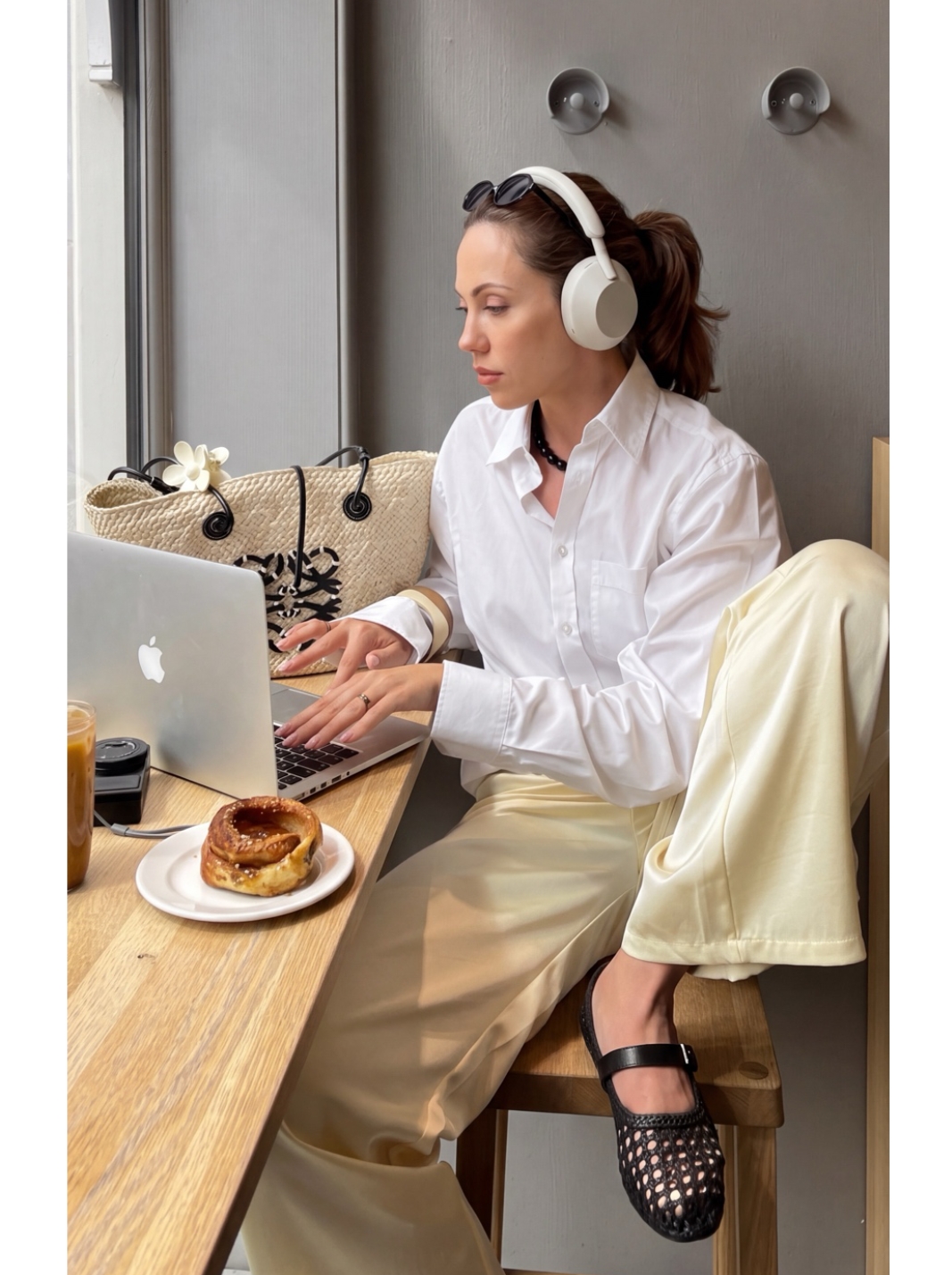
Fashion photographer Kristina Voiloshnikova has been experimenting with a different approach. For her, pressing the shutter is not the end of the photograph. Voiloshnikova processes her selected street style images individually, developing a distinctive visual treatment that has increasingly become part of how her photography is recognized. Instead of delivering only a captured moment, she wants the finished photograph to carry its own atmosphere, color language and visual identity.
That approach has also generated an interesting response. Selected images have attracted particularly strong download activity, while finished photographs have appealed not only to publications but also to some of the people appearing in front of her camera.
That made us curious: what exactly is Kristina Voiloshnikova doing differently?
We asked her about the role retouching plays in her photography — and why she believes street style doesn’t have to choose between speed and an individual visual style.
Street Style Is Fast. Her Editing Is Deliberate.
Street style photographers operate under unusual conditions. Unlike a studio shoot, they rarely have the chance to control the background, reposition the subject, or recreate a moment. During Fashion Week, photographers navigate crowds, security, traffic, other cameras, and constantly changing natural light. For many photographers, the priority is therefore straightforward: get the image and get it out quickly.
Voiloshnikova understands that logic, but her own process adds another stage.
“I don’t see processing as something separate from photography,” she explains. “When I take a picture, I already have an idea of how I want the final image to feel. The camera gives me the moment, but the editing helps me complete it.”
Her approach is not built around dramatically altering the person in the photograph. Instead, she pays particular attention to skin tones, light, texture, contrast, and the relationship between the subject and the environment. The goal is for the photograph to feel finished without looking artificially constructed.
Why a Finished Image Matters
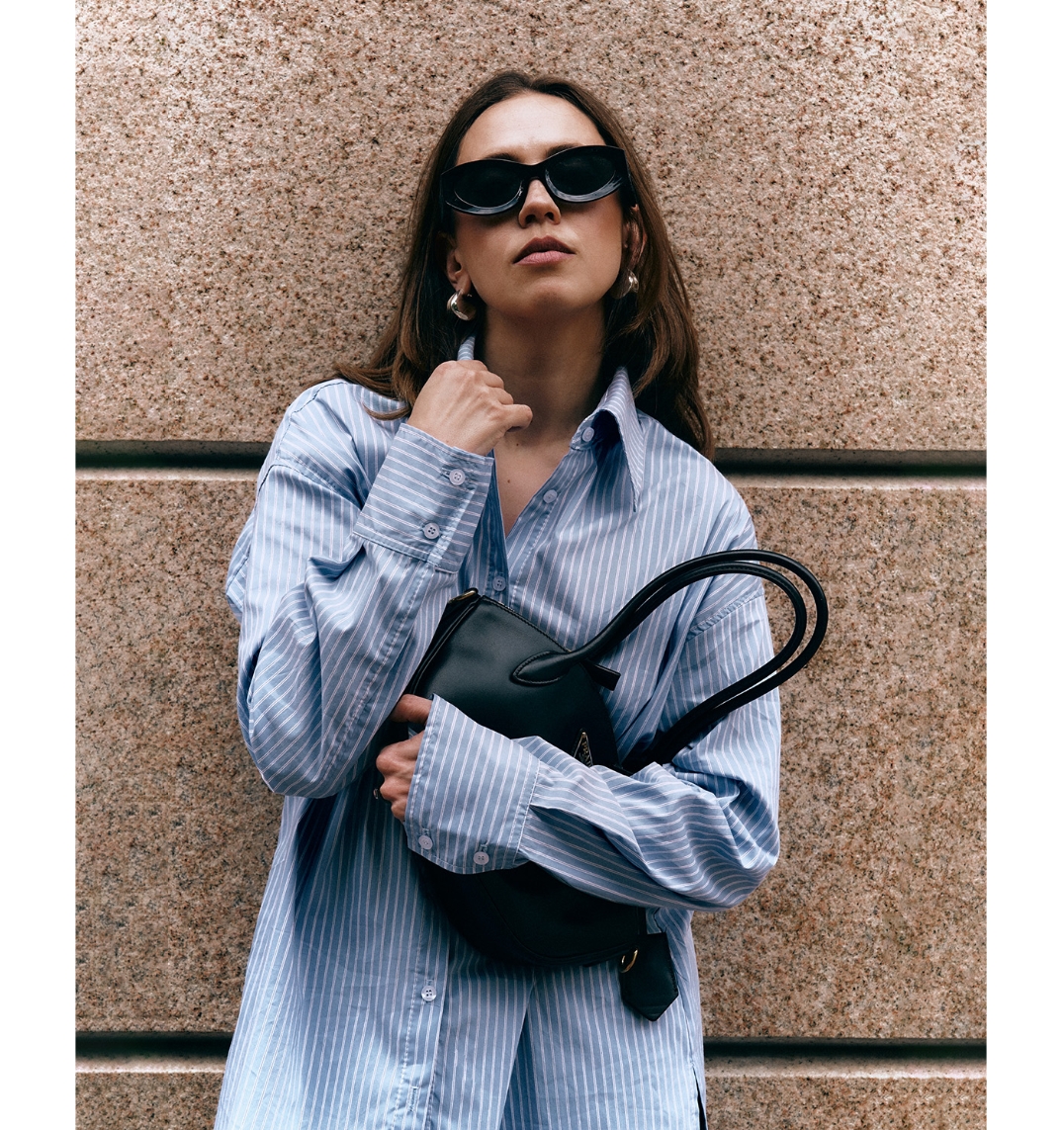
That distinction becomes especially noticeable when photographing celebrities and recognizable fashion personalities. A technically usable image is not necessarily an image that someone wants to repost, save or see representing them. Voiloshnikova believes the final treatment matters because the photographer is responsible not only for documenting a person, but also for how that person appears in the finished frame.
“I want people to recognize themselves and still like the photograph,” she says. “Retouching shouldn’t turn someone into another person. For me, it is about light, color, atmosphere and bringing attention to what was already interesting in that moment.”
This approach became particularly relevant when she photographed street style around New York Fashion Week in September 2025. New York Fashion Week gave her a chance to put this approach into practice in a dynamic setting. From the crowds gathering around Tory Burch and Coach to the arrivals surrounding COS, Michael Kors, Alice + Olivia, TTSSWTRS, and Simkhai, Voiloshnikova looked beyond the obvious fashion-week shot. Her attention often shifted to gestures, expressions, textures, and fleeting interactions—details that could later be developed in post-production into a more complete visual story.
The setting provided exactly the kind of conditions in which her approach could be tested: recognizable personalities, constantly changing backgrounds and only seconds to create the original frame.
When Retouching Becomes Part of a Photographer’s Signature
There is an important difference between correcting a photograph and interpreting one. Removing a distracting element, balancing exposure, or correcting color can be purely technical. Developing a consistent way of handling skin, highlights, shadows, texture, and color is something else. Over time, those decisions can become as identifiable as composition itself.
That is where Voiloshnikova sees her own style developing. Her post-production doesn’t try to erase the spontaneity of street photography. Instead, it preserves that spontaneity while giving the image a more deliberate finish. The result sits somewhere between traditional street style documentation and an editorial fashion photograph. That may help explain why finished images can appeal to both sides of the fashion-media relationship.
For an editor, receiving a photograph with a coherent visual treatment can reduce the distance between selecting an image and publishing it. For the person photographed, a carefully finished image can feel very different from encountering an unprocessed frame taken in a fraction of a second outside a crowded venue.
The Download Numbers Raised a Question
The response to Voiloshnikova’s photographs has provided another reason to examine her approach. Her selected images have shown particularly high download activity, suggesting that viewers and media users respond not simply to who appears in the photographs, but potentially to how those photographs are presented.
Download figures alone cannot explain why someone chooses one photograph over another. A recognizable subject, the timing of the image and the event itself all influence demand. But when certain photographs repeatedly attract attention, the visual treatment becomes difficult to ignore. That is what prompted a closer look at Kristina Voiloshnikova’s post-production style. Perhaps the more interesting question is not whether street style photographs should be retouched, but how much creative authorship can remain in a photographic environment increasingly driven by speed.
From Personal Technique to a New Direction
Voiloshnikova is now taking that part of her practice beyond her own photographs. Through her website, she is making photo retouching and post-production available as a separate service, allowing photographers and other clients to submit their own images for processing. At the same time, she is making selected photographs from her portfolio available for purchase. Both developments connect to the same idea: the finished photograph matters.
For Voiloshnikova, post-production is not a way to rescue an unsuccessful image or create an artificial version of reality. It is the final stage of deciding what the viewer should notice — and how the moment should feel. In an industry where speed often determines which photograph reaches an editor first, Kristina Voiloshnikova is making a case for something slightly different: being fast enough to capture the moment, but deliberate enough to finish it.
And as the response to her photographs suggests, that extra step may be becoming one of the most recognizable elements of her work.