
Why International Pet Movers Are Becoming Essential for Global Pet Relocation


The rise of global mobility is transforming relocation trends. As individuals move internationally for career opportunities, education, or economic reasons, their pets are increasingly part of the journey.
That shift has turned a niche service into real infrastructure. International pet movers now sit alongside visa agents and relocation firms as part of a standard cross-border move.
The reason is both structural and deeply personal. Moving an animal across borders is a complex, regulated process where professional expertise is essential to honor the emotional significance of every family pet.
Global mobility is rising – and pets are moving too
Cross-border relocation has broadened well beyond corporate transfers. Remote workers, students, and returning families all add to the flow.
For these movers, their pet is a non-negotiable part of the household. The core challenge of modern relocation isn’t deciding if a pet should relocate, but ensuring the journey is managed with absolute safety.Families are now more keen on moving with their whole family, pet included, abroad. Nowadays, searches for international relocation help often include their pet whether it’s the family dog, cat, or rabbit!
This professionalisation is a direct response to market shifts. As the once-fragmented and informal pet relocation industry consolidates, customers are increasingly turning to established providers capable of delivering compliant and repeatable results.
World map illustrating international pet movers and global relocation routes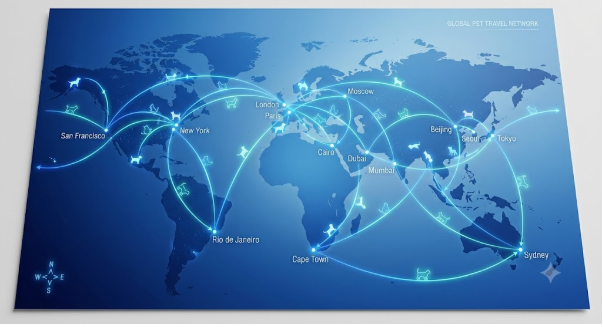
Why international moves need specialists
International pet transport runs on rules that differ by country and change without much warning. Vaccines, microchips, titer tests, and import permits all vary by destination.
Sequence is critical. A pet must be microchipped before its rabies vaccine, or that vaccine may not be accepted at the border. For some countries, a thorough clinical preparation is necessary. Risk-free rabies countries do not allow the import of pets from rabies-risk countries under strict conditions, including titer tests, quarantine and long waiting periods.
The operational layer is just as demanding. Crates must meet IATA-compliant crate requirements, airline policies differ by route, and some carriers restrict snub-nosed breeds in the cargo hold.
Even a small compliance issue can result in delays, additional costs, or travel disruptions. This level of complexity is why many families choose experienced international pet movers to manage the process professionally.
International moves need specialists to manage rules, documents, and travel risks.
Inside a professional international pet move
A modern international move is closer to managed logistics than a simple booking. The best providers run it as a coordinated workflow.
It starts with a route and a regulatory plan built around the destination’s current requirements.
Veterinary coordination follows: health checks, vaccination reviews, fit-to-fly assessments, and documentation preparation.
Then comes execution: an IATA-compliant crate, airline booking coordination, import permit coordination, customs handling, and door-to-door transfers.
Communication runs through all of it. Strong providers give the family a clear itinerary and updates rather than silence.
Professional teams with veterinary support provide an essential advantage. By having in-house experts direct the strategy, the relocation plan prioritises the specific health needs of the animal over standard protocols.
Cost, compliance and choosing a partner
Pricing is where many movers feel lost. Costs depend on route, pet size, crate, permits, and the level of service.
Transparency separates strong providers from the rest. A clear estimate that explains each line item is a good sign, and resources such as Pet Adventures’ breakdown of international pet shipping cost in Vietnam show what informed pricing looks like.
Beyond pricing, regulatory compliance should be a key consideration when evaluating a provider. Look for established international moving networks,IPATA (International Pet And Animal Transportation Association) membership, IATA standards, and a willingness to explain risk honestly instead of promising a flawless trip.
Local depth matters in emerging hubs. Practical resources like Pet Adventures’ guide to moving pets overseas show how international credentials and local veterinary capacity combine to strengthen care.
For anyone planning a global move, the lesson is practical. Treat the pet’s relocation as managed logistics, and choose a partner who can prove they run it that way.
What Pet Adventures brings to international moves
Pet Adventures shows what this looks like in practice. As the relocation arm of Animal Doctors International, it combines in-house international veterinarians, IPATA membership, IATA-compliant crate planning, and multilingual support across Southeast Asia.
A Pet Adventures Facebook post sharing Muscle and Pinky’s pet relocation journey and the team’s support during unexpected transit issues.
Frequently asked questions
What is the difference between an international pet mover and a freight company?
A freight company moves cargo. An international pet mover manages regulations, veterinary steps, crate standards, airline coordination and the animal’s welfare across the entire journey.
How far in advance should an international pet move be booked?
As early as possible. Strict destinations can require several months of vaccinations, tests, and permits before departure.
Do international pet movers handle customs and import permits?
While destination-specific rules always dictate the final requirements, trusted specialists handle the necessary customs coordination and documentation.
Related resources
More guides from Pet Adventures: cross-country-pet-transport-vietnam · pet-transport-prices · airlines-that-accept-pets.
International pet transport rules vary by country and change over time. Confirm current requirements with the official veterinary authority at your destination, or with a certified relocation specialist, before booking travel.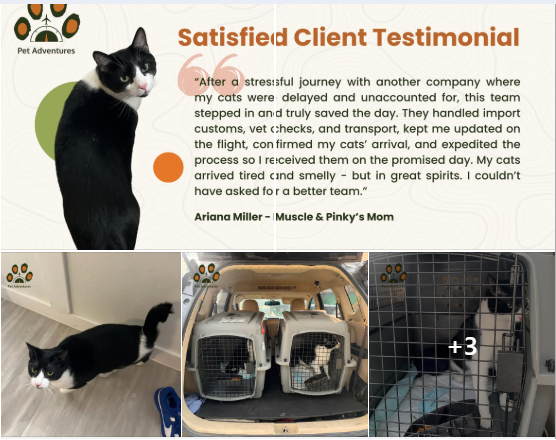







Comment