Last month, my old vacuum finally died. It had been making weird noises for weeks, and one day it just stopped. I figured I’d run to the store and grab a new one. Boy, was I wrong. Turns out picking a vacuum is way more complicated than I thought.
So there I was, standing in the aisle, completely overwhelmed. There must have been fifty different models. Some cost less than a hundred bucks. Others were nearly a thousand dollars. What’s the difference? Is the expensive one really ten times better? I had no clue.
I went home empty-handed that day. Instead, I spent the next few weeks reading everything I could find. I talked to friends. I watched videos. I even joined a cleaning forum (yes, those exist). Here’s what I figured out, and hopefully it’ll save you some time when you’re ready to buy vacuum cleaner for your place.
The Upright vs. Canister Debate
My mom always had an upright vacuum. That’s what I grew up with, so that’s what I thought everyone used. Turns out there’s a whole other world out there with canister vacuums.
Uprights are what most Americans use. They’re one big unit that you push around. The motor, bag, and brush are all together. They work really well on carpets because the brush roll spins right at the base. If you’ve got wall-to-wall carpeting, especially thick stuff, an upright usually does the best job.
But here’s the thing about uprights – they’re heavy. I have bad knees, and lugging a heavy vacuum up and down stairs isn’t fun. Plus, trying to vacuum under my coffee table with an upright? Forget it. I basically have to move all my furniture.
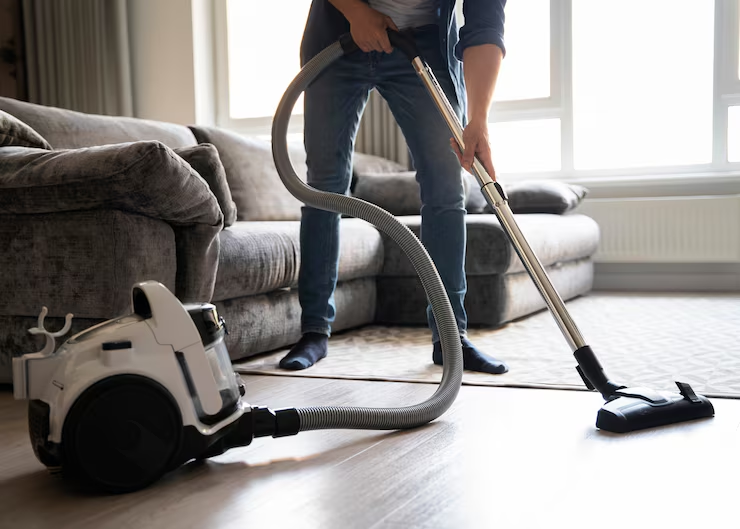
Canisters are different. The motor sits in a separate unit that rolls behind you on wheels. You hold just the wand and hose. They’re super popular in Europe. My friend Sarah swears by hers. She says it’s way easier on her back because she’s not pushing a heavy machine around.
The downside? They can be awkward. That canister bumps into stuff. It tips over sometimes. And if you have lots of carpet, they might not deep-clean as well as an upright.
Cordless Changed Everything
Five years ago, cordless vacuums were pretty much toys. Weak suction, died after ten minutes, barely picked up anything. Now? They’re actually good.
I was skeptical at first. But my neighbor got one of those stick vacuums, and I tried it. I was shocked. The suction was strong, it ran for like forty minutes, and it was so light. She vacuums every single day now because it’s not a hassle anymore. Just grab it, do a quick run, done.
The battery thing worried me though. What happens in three years when the battery dies? Can you replace it, or is the whole vacuum trash? Turns out that’s a real concern. Some brands let you swap batteries. Others, you’re stuck.
Also, if you’ve got a big house, the battery might not last long enough to do everything in one go. You’d have to stop and recharge partway through. For my small apartment, though? A cordless would be perfect.
What Nobody Tells You About Filters
This part surprised me. I never thought about filters before. Turns out they matter a lot, especially if you’ve got allergies.
Regular vacuums have basic filters. They catch the big stuff but let tiny particles blow back out into your air. You’re basically just moving dust around. Gross, right?
HEPA filters are different. They catch something like 99.97% of particles. That includes pollen, pet dander, dust mites, all that stuff that makes you sneeze. My sister has terrible allergies, and switching to a vacuum with a HEPA filter actually helped her.
The catch? HEPA filters cost money to replace. You can’t just rinse them out and reuse them forever. Budget for that. It’s like buying printer ink – the initial purchase is one thing, but the ongoing costs add up.
Bagged or Bagless – The Eternal Question
This one’s personal preference, but people have strong opinions.
Bags are old school. When they’re full, you throw the whole thing away and pop in a new one. Clean, simple, no dust cloud. But you have to keep buying bags, and if you run out, you’re stuck.
Bagless seems more convenient. No bags to buy. Just dump out the dirt when the canister’s full. But every time you empty it, you’re breathing in dust. Even when you’re careful, some escapes. If you have asthma, that’s not great.
I’m leaning toward bagless just because I know I’d forget to buy bags and end up needing to vacuum with none available. But if you’re organized, bags might be cleaner.
My Biggest Mistake
You know what I didn’t think about at all? Weight.
I looked at suction power, filtration, price, reviews – all the obvious stuff. Never once did I think about how heavy the thing was. Then I borrowed my friend’s vacuum, which looked great on paper. Within five minutes, my arms were tired. It was like pushing a bowling ball around my apartment.
Now when I’m ready to buy vacuum cleaner options, weight is near the top of my list. If it’s too heavy, I won’t want to use it. And a vacuum that sits in the closet isn’t helping anyone.
Pet Hair Changes Things
I don’t have pets, but my sister has two golden retrievers. The amount of hair those dogs shed is insane. Regular vacuums just don’t cut it for her.
She needs one with a motorized brush specifically for pet hair. The regular attachments just push the hair around on her couch. With the pet tool, it actually pulls the hair up and out.
Also, if you’ve got pets, look for vacuums that are easy to unclog. Pet hair wraps around brushes and gets stuck in hoses. Some vacuums make it super hard to access those areas. You end up needing scissors and twenty minutes just to clean out your vacuum.
The Real Cost
Here’s something I wish someone had told me upfront – the sticker price isn’t the whole story.
Sure, you might save money buying a cheap vacuum. But if it breaks in a year, was it really cheaper? Meanwhile, a good vacuum might last ten years. Break down the cost per year, and suddenly that expensive one looks like a better deal.
Then there’s replacement parts. Filters, belts, bags if you go that route, maybe brush rolls. Some brands charge an arm and a leg for parts. Others are reasonable. Check that before you buy.
And repairs – can you even get it fixed locally? I looked at one vacuum that had amazing reviews but later found out the nearest repair shop was two hours away. No thanks.
What I’m Buying
After all this research, I think I’m going with an upright that’s in the mid-price range. It’s got a HEPA filter, it’s bagless, and it weighs less than twelve pounds. The reviews say it lasts about seven years on average. The company has decent customer service, and I can get replacement filters online easily.
Is it perfect? Probably not. But it fits my needs and my budget. That’s really what matters.
When you’re ready to buy vacuum cleaner models for yourself, think about what you actually need. Big house or small apartment? Carpet or hardwood? Pets or no pets? Strong back or bad knees? Answer those questions first, and the choice gets a lot easier.
And hey, if you figure out the perfect vacuum, let me know. I’m still second-guessing myself a little.