
Why Home-Service Businesses Waste Google Ads Budget — And Where the Funnel Actually Breaks

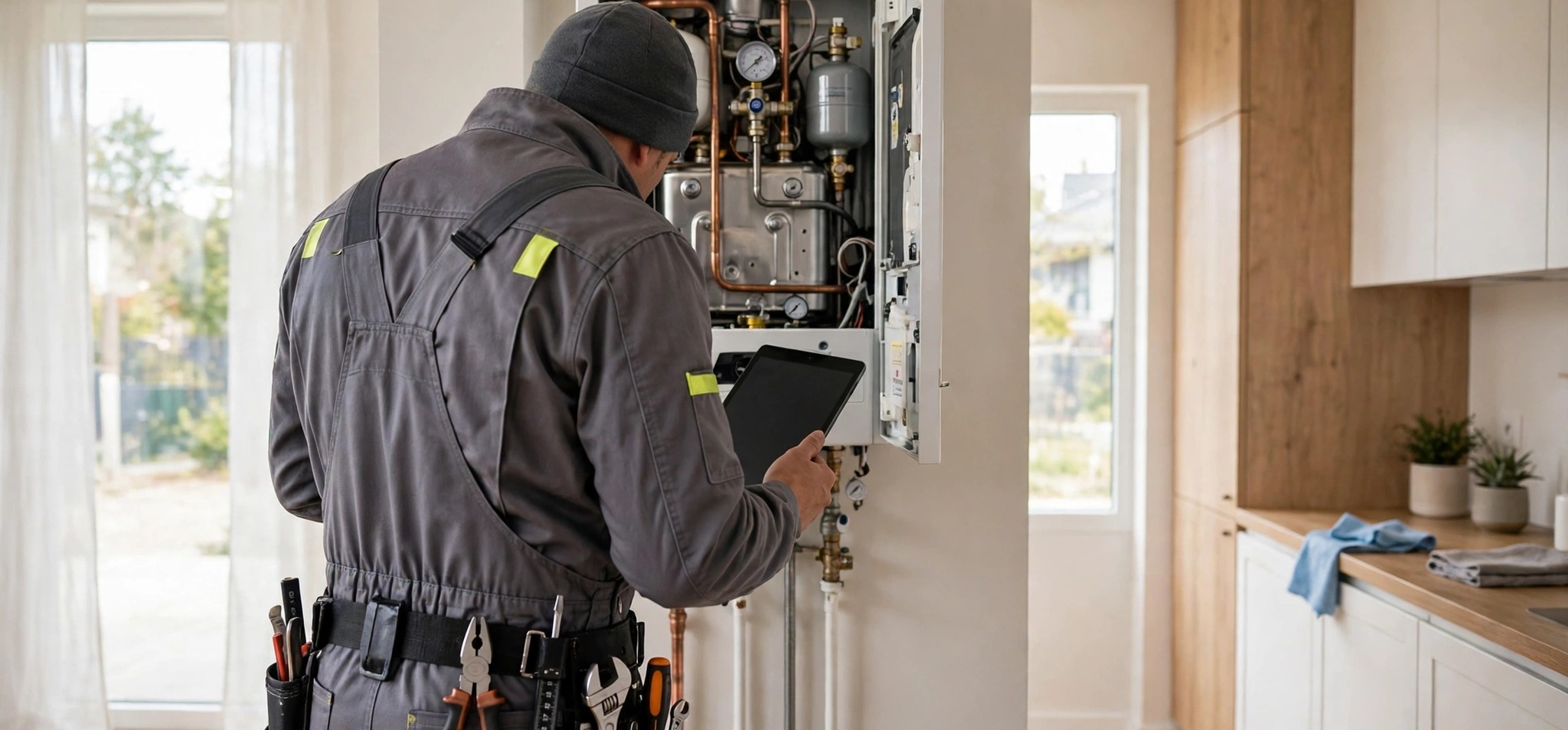
A heating engineer can spend more than eight dollars for a single click and still feel as if the account is working. The ads are live. The phone rings. The cost-per-lead figure in Google Ads looks acceptable. Then the week’s “leads” turn out to be job-seekers, DIY queries, calls from outside the service area, and people who wanted a parts supplier, not a booked appointment.
The money is rarely lost in the auction alone. It disappears in the gaps between the search, the ad, the landing page, the recorded lead and the eventual sale. Until those gaps are measured, Google’s bidding systems will keep buying the wrong outcomes, and the dashboard will keep congratulating itself.
Home-service clicks already cost more than average
WordStream by LocaliQ’s 2026 Search Advertising Benchmarks, drawn from thousands of Google Ads and Microsoft Ads campaigns across more than 20 industries, put the average cost per click in Home & Home Improvement at $8.33. That is well above the all-industry average of $5.42. The same category records an average conversion rate of 8.05% and an average cost per lead of $90.92, against all-industry figures of 8.18% and $66.69.
Those numbers are planning anchors, not targets. They also hide a bigger problem. “Conversion” and “lead” in a benchmark study usually mean a tracked action — a form, a call, a chat — not a qualified job that a dispatcher would accept. A home-service account can sit on a respectable cost per lead and still be unprofitable, because the denominator is inflated with contacts the business would never choose to buy.
The first break is in the tracking
Google’s own documentation is clear on this point. Primary conversion actions are the ones that appear in the Conversions column and, when the related goal is used for bidding, the ones Smart Bidding optimises towards. Secondary actions are for observation. They show up in All conversions, but they are not used for bidding, unless they have been added to a custom goal.
Many home-service accounts ignore that distinction. A form submission, the thank-you page view that follows it, a click-to-call button, a missed-call callback, a chat open and a “request a quote” click are all marked as primary conversions. One customer can be counted three times. A tyre-kicker who opens the chat and never leaves a number is treated as equal to a homeowner asking for an emergency boiler repair in the right postcode.
The reported cost per conversion then looks cheaper than the business is actually paying for a real enquiry. Worse, Smart Bidding is being trained on mixed instructions. It will find more of whatever it is rewarded for — including cheap, low-intent actions — and the account will appear to improve while booked work stays flat.
A cleaner setup is narrower. Count a unique, genuine enquiry once: a completed form with usable contact details, or a connected call of meaningful duration. Keep supporting events as secondary, so the team can still see them without letting them steer the bids.
The second break is the landing page
A high-intent search is unforgiving. The person who types “emergency plumber near me” or “AC repair today” already has a job, a location and a timescale in mind. If the ad promises a same-day visit and the click lands on a slow, generic homepage, a large share of that expensive traffic never becomes a lead at all.
The breaks are usually ordinary:
- The page does not repeat the service and area named in the ad.
- Click-to-call is missing, or the number is not tracked, so the account cannot tell which keywords produced booked jobs.
- The form does not capture service type, postcode or urgency, so unqualified enquiries look identical to good ones.
- Trust signals that matter in the trades — response time, service area, licences, reviews — sit below the fold or on another page.
- The page is the same for every campaign, so a search for a specific repair is answered with a brand story.
Conversion-rate work here is not decoration. It is how an $8 click becomes a conversation with the right customer, or does not. Test one change at a time — headline, offer, form or call treatment — otherwise nobody can tell what moved the number.
The third break is lead quality
Even accurate tracking and a tighter page will not save a campaign that is judged on volume. Two accounts can spend the same amount and produce very different businesses. One generates a high number of form fills at a low cost per lead, then burns the afternoon on enquiries that cannot be served. The other generates fewer contacts, a higher raw cost per lead, and more jobs that fit the service area, the trade and the schedule. The first account looks more efficient in Google Ads. The second pays for growth.
The useful metrics sit further down the funnel:
- Valid enquiries: genuine, unique and contactable, in the right area.
- Qualified or sales-accepted leads: contacts the business would actually book.
- Cost per booked job, not cost per form.
If those stages are not recorded — in the CRM, the call log or even a simple weekly tally — the advertising system is flying on the wrong instrument. As Katia Hausman, Vice President of Paid Media Products at LocaliQ, put it in the 2026 benchmark commentary: if a team is only tracking how many leads a campaign drove, it is missing the point. It needs to know which of those leads became customers, and that information should feed bidding, not just the report.
Fix the system, not just the bid
The practical sequence is straightforward.
First, audit what Google is being asked to optimise. Remove duplicate and low-value actions from the primary column. Give Smart Bidding a consistent definition of a good enquiry, then leave it enough conversion volume and time to adapt.
Second, align the search, the ad and the page. Each high-intent theme — emergency repair, installation, maintenance, a named service in a named town — should land on a page that repeats the promise, makes the next step obvious, and is usable on a phone in a hurry.
Third, measure quality as carefully as volume. A short qualifying question on the form, call tracking that can be tied back to the keyword, and a weekly review of which leads were accepted or rejected will change what “performance” means.
None of this requires a larger budget. It requires the search, the ad, the landing page, the lead and the sale to be treated as one system. That is how I approach the work at Actualyse, the London consultancy I founded to close the gaps between paid search and the booked job.
When those joins are tight, cost per conversion stops being a vanity figure. It starts describing what the business actually wanted from the click.
About the author
Galav Bhushan is a London-based Google Ads and conversion-rate specialist with more than seven years’ experience, Google Ads and Webflow certifications, and more than USD 8 million in ad spend managed in 2025. He is Top Rated on Upwork and the founder of Actualyse, where he helps service businesses make search, ads, landing pages and lead handling work as one system.
Previously in Business news: Polygon Private Transactions: MEV Protection Explained






Comment