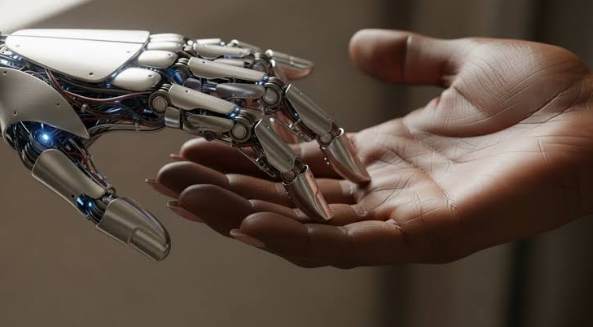
AI is transforming our working, learning and creating lives. Tools of the trade creating content, crunching data, assisting with design and engineering jobs have truly become part of our every day. With unprecedented convenience and efficiency, though, one critical question has emerged: is manual construction a thing of the past? Certainly does.
In an age when complex problems can be solved by algorithms, and the hands of the machine can do our machines’ work, there is still huge value in learning to build with your own hands. It is through working hands on that you learn skills which the computer or machine cannot teach: creativity, problem solving, reasoning and understanding the nature of objects.
The Difference Between Knowing and Doin
Most of the biggest benefits of building by hand is the gap of knowledge and practical experiences. Knowledge gained by reading about physics related subjects or seeing various tutorials is handy, but to enact the skill sets required a totally different set of experiences will be paramount to one who is skilled in the art of building. Developing a model, assembling a machine or creating something from scratch: all involve encountering practical problems which aren‘t always predictable. Parts may not come together as expected, factors may have to be altered, problems always crop up. Dealing with such problems develops analytical skills and resourcefulness.
This type of learning is more permanent as it is experiential and not observational.
Building Encourages Creativity
AI can generate ideas, suggest solutions and even ‘designs’. However, creativity is often a function of a material world and of adaptation through trial-and-error. Practical projects enable individuals to innovate, develop existing practices and discover alternative solutions. Physical construction allows serendipitous discoveries that cannot be achieved in a digital mock-up.
When you are building a piece of furniture, a computer, or a model to teach a class of students, the act of building itself helps you to come up with new ideas that can be used in many areas.
Developing Problem-Solving Skills
In the world nowadays, it seems that problem solving is one of the most important skills. AI can provide humans a solution or a suggestion but humans should still be capable of judging situations by themselves.
Building is the practice of this skill. Because every project is unique, builders must watch, experiment and fix whatever they fix. And then they have to know whether the fix worked, or if they should try something else.
Encountering risks can develop confidence and patience that are arguably now more necessary in an ever more complex unpredictable technological world.
Learning Through Failure
One good thing about actual construction is that you can learn from mistakes, which in many cases is an integral part of a learning process.
A building may collapse. A machine may not work as planned. A design may have to be modified many times before it is finally successful. We learn to be patient and dogged, but at the same time we learn so much that we can succeed.
Where AI tools can provide quickly at a surface level, anytime you do the work of hands on to see why those answers work and how to better build those answers, it creates a much more effective learner and a better builder.
The Importance of STEM Education
STEM (science, technology, engineering, and mathematics) education continues to be vital to prepare future generations for careers in the modern technological economy. Hands-on building projects are among the most popular uses of STEM education.
Interactive models and kits of various kinds tend to make learning about physics, engineering, mechanical marble run and design easier for students. A marble run constructed using kits such as Robotime provides a playful and simple way for students to learn about gravity, momentum, energy transfer, and structural design.
We allow our learners to practice by exploring the solutions to a number of problems. Learners are given the opportunity to see the formulas being used.
Strengthening Fine Motor Skills
As we transition into an age where most of us will have multiple digital devices around us, many of the activities we will do will be with finger taps on a screen or key presses on a keyboard, these are fine motor skills that do not match hand on construction skills. Putting things together, cutting the materials, using the tools and following the step-by-step instructions will develop your hand-eye coordination and accuracy. It is a useful skill not only for your job but also for everyday life.
Physical building works provide a welcome foil to the pixel culture into which we have been immersed.
Building Creates Meaningful Engagement
Building by hand enhances concentration. It is through this intense concentration that people forget about the world and develop a focused mind. This kind of concentration can be applied to almost every aspect of our lives. It aids in learning, work and happiness.
A physical project completed can be a personal achievement of itself. Taking pride in knowing you sat back enjoying a piece of work finished whose inspiration and creation is all down to you can be very inspiring.
Building the workforce of the future
But the outlook for the workplace tomorrow looks set to be taken over by AI and automation. Nevertheless, employers continue to appear happy to pay for those skills that cannot be replaced: ‘Creativity, imagination, teamwork, flexibility, leadership, problem solving are as important to every industry as they were before’. Workshop based construction supports their development by enabling physical participation and independent practice
Those who know the technology AND know how to use it and adapt it will be more valuable. This mix of information literacy AND “hands-on” skills will benefit many.
Finding Balance Between AI and Human Skills
That may not mean it stops DIYing altogether if AI‘s come along, the two could really complement each other.
AI can be used in research, planning, simulation and optimization designing. To implement these ideas, hands-on building can help turn these ideas into reality making them into real world results. It makes a successful learning process based on knowledge creation.
People should go for both technological approach and human care rather than choosing one of them. This amalgamation can be used for aiding the reaching of technological devices and for developing required human talent in that regard.
Conclusion
Though every aspect of our lives is seemingly being revolutionized with the advancements in AI and current technology, one element has not changed innovation and doing. The feel projects promote creativity and critical thinking, problems solving skills, fine motor skills, and help you better understand the world.
But, AI can do faster, but in this journey you can‘t escape by learning things directly by observing and doing hands-on. It can always tell you the things that you can‘t learn in the digital world, because the feeling you get by building something by your own hands is really different. Nevertheless, with the development of the technology, it will be an essential part of the learning process, innovation and development. The future will be owned by not only the people who got the knowledge of AI, but also the people who turn ideas into action.