
Why Advanced Electronics Manufacturing Is Critical to the Future of AI and IoT

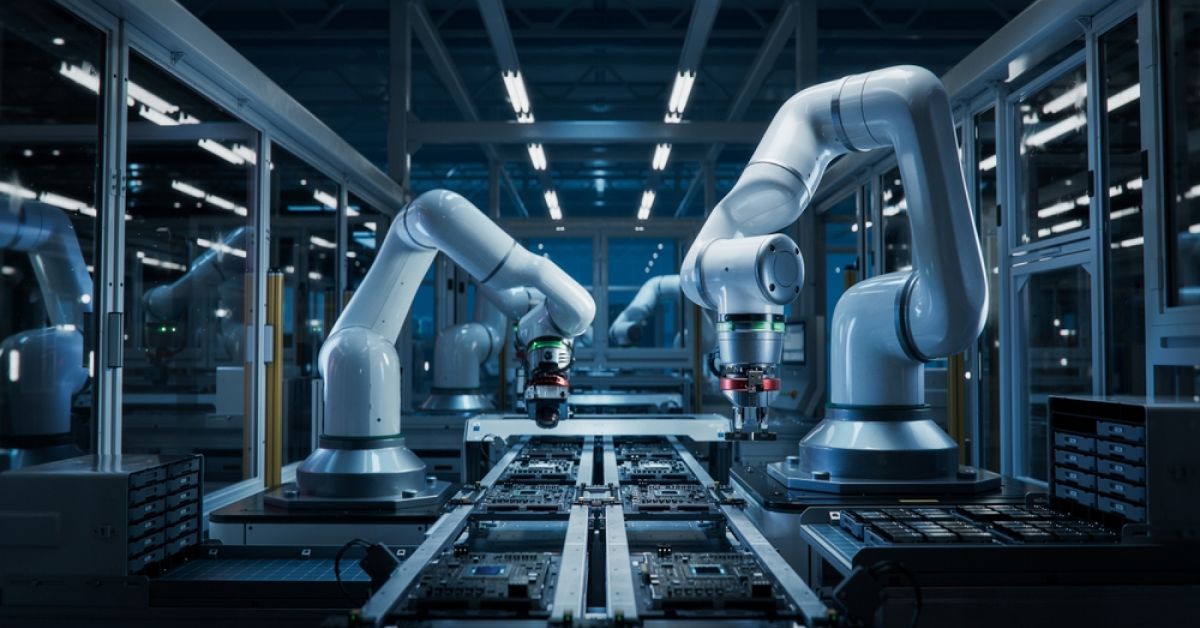
Artificial intelligence, cloud platforms and digital applications often dominate discussions about technological innovation. Headlines frequently focus on large language models, automation software and data-driven business transformation. Yet behind every AI algorithm, connected sensor and autonomous system sits a physical foundation of increasingly sophisticated electronic hardware.
As organisations invest heavily in AI, IoT, robotics and smart infrastructure, attention is turning towards the manufacturing capabilities that make these technologies possible. The performance, reliability and scalability of next-generation products depend not only on software development but also on the ability to produce highly advanced electronic assemblies at scale. As a result, electronics manufacturing is becoming a major enabler of innovation across multiple sectors.
AI and IoT Are Driving Unprecedented Hardware Demand
The rapid growth of AI and IoT is creating demand for electronic hardware on a scale rarely seen before. Businesses are deploying intelligent systems across factories, transport networks, healthcare environments and urban infrastructure, generating vast quantities of data that must be processed quickly and efficiently.
Edge computing is playing an increasingly prominent role in this shift. Rather than transmitting all data to centralised cloud platforms, many organisations now process information closer to the source. Smart cameras, industrial sensors, autonomous vehicles and predictive maintenance systems rely on local computing power to support near real-time decision-making.
This approach requires hardware capable of handling advanced workloads within compact and often challenging operating environments. AI-enabled devices must accommodate greater processing capability, higher memory requirements and faster communications while maintaining reliability over extended periods.
Industrial IoT networks are also expanding rapidly. Manufacturing facilities, logistics centres and energy infrastructure increasingly depend on connected devices to monitor performance and improve operational efficiency. The scale of these deployments places additional pressure on hardware manufacturers to deliver dependable electronic systems that can operate continuously under demanding conditions.
As intelligent systems become more widespread, hardware requirements are becoming significantly more complex, creating new challenges for both engineering teams and production environments.
The Challenge of Building More Powerful Electronics in Smaller Spaces
One of the defining characteristics of modern technology is miniaturisation. Consumers expect smaller devices with greater functionality, while industrial users seek compact systems that can fit within increasingly constrained environments.
Achieving these goals requires engineers to place more components into less space without compromising performance. Higher component density introduces challenges relating to signal integrity, power distribution and thermal management. Devices capable of advanced AI processing generate considerable heat, making temperature control a major design consideration.
Robotics provides a useful example. Autonomous mobile robots require processing hardware, sensors, communications modules and power-management systems within compact enclosures. Similar challenges exist within smart city infrastructure, connected medical equipment and advanced industrial control systems.
The increasing complexity of electronic designs is also driving wider adoption of multilayer PCB architectures, high-density interconnect technologies and advanced packaging methods. These developments improve functionality and performance but require exceptional manufacturing precision.
Engineering and manufacturing must therefore evolve together. Design teams can no longer treat production as a separate consideration. Manufacturing capabilities frequently influence design choices from the earliest stages of product development, particularly when performance requirements are exceptionally demanding.
Manufacturing Precision as a Competitive Advantage
As electronic products become more sophisticated, manufacturing precision is emerging as a competitive advantage for technology companies seeking reliable and scalable production.
Quality assurance procedures play a central role in maintaining consistency. Automated Optical Inspection (AOI), Solder Paste Inspection (SPI) and X-ray inspection systems allow manufacturers to identify defects early in the production process. These technologies support higher quality standards while reducing the likelihood of failures reaching the field.
Reliability testing has also become increasingly significant. Products deployed in industrial automation, transportation systems and smart infrastructure often operate continuously in environments where downtime carries substantial costs. Thermal cycling, vibration testing and environmental screening help validate long-term performance.
Supply chain resilience is another growing concern. Recent disruptions have highlighted the value of manufacturing partners capable of maintaining consistent production and component availability despite changing market conditions.
To support product quality and scalability, many organisations seek specialist PCB assembly services as part of their broader manufacturing strategy. The ability to achieve repeatable results across prototype builds and production volumes can significantly influence product success in competitive technology markets.
For startups, scale-ups and established technology firms alike, manufacturing consistency is increasingly linked to commercial performance, customer confidence and long-term growth.
What the Future Holds for Electronics Manufacturing
The next phase of electronics manufacturing is likely to be shaped by Industry 4.0 initiatives, advanced automation and greater integration of AI within production environments.
Smart factories are already using machine learning systems to improve quality control, predict maintenance requirements and analyse production data. AI-assisted manufacturing tools can identify process variations more quickly, helping manufacturers improve efficiency and reduce waste.
Advanced automation will continue to support greater production accuracy while addressing rising complexity in electronic assemblies. At the same time, sustainability considerations are becoming more prominent. Manufacturers are examining ways to reduce material waste, improve energy efficiency and support circular economy objectives without compromising product performance.
Emerging technologies such as autonomous systems, advanced robotics, smart infrastructure and next-generation communications networks will continue to increase demand for sophisticated electronic assemblies. These products will require greater computing power, improved connectivity and higher reliability than previous generations.
The future of technological innovation is closely linked to advances in electronics manufacturing. AI, automation, IoT and connected systems all depend on reliable hardware capable of supporting increasingly demanding workloads. As products become smarter and more interconnected, scalable production processes, manufacturing precision and rigorous quality control will play an even greater role in determining which technologies succeed. The next wave of innovation will be shaped not only by software breakthroughs but also by the manufacturing capabilities that bring advanced electronic systems to life.





Comment