
How Much Does a Whole House Water Filter Cost? A 2026 Homeowner’s Investment Guide

Clean water is the foundation of a healthy home. From the clarity of your morning coffee to the longevity of your expensive appliances, the quality of the water flowing through your pipes impacts almost every aspect of daily life. As we move through 2026, more homeowners are moving away from temporary pitcher filters and opting for comprehensive point-of-entry solutions. However, the most common hurdle in this journey is a financial one: How Much Does a Whole House Water Filter Cost?
Understanding the price of a filtration system requires looking beyond the initial sticker price. A true cost analysis involves evaluating hardware quality, installation requirements, and the long-term cost of replacement media. This guide will break down the variables to help you budget for the protection your home deserves.
1. The Entry-Level: Sediment and Pre-filtration Costs
The most affordable entry point into whole-home treatment is sediment filtration. These systems are designed to catch physical debris like sand, silt, and rust. For many homeowners, especially those on private wells or in areas with aging city infrastructure, this is a non-negotiable first step.
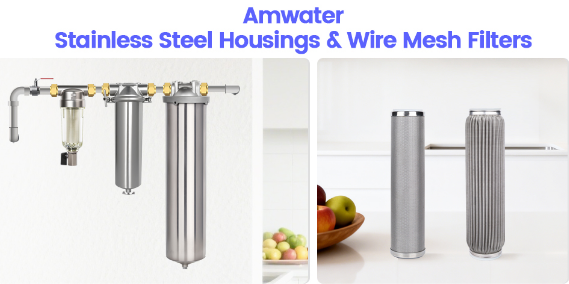
A high-performance wire mesh water filter typically costs between $100 and $350. The beauty of a stainless steel wire mesh water filter lies in its reusability. Unlike disposable polypropylene cartridges that must be thrown away every few months, these durable mesh screens can often be flushed or cleaned, providing a much higher return on investment over a five-year period.
2. Mid-Range: Chemical and Odor Removal
If your primary concern is the smell of chlorine, VOCs, or a metallic taste, you will likely look into carbon-based systems. These mid-range solutions usually fall between $600 and $1,500. At this price point, you are often looking at multi-stage housings that combine sediment removal with activated carbon blocks.
The expertise provided by AMwater suggests that material choice in this category is the biggest price driver. A reinforced plastic housing is cheaper upfront, but a 304 or 316L stainless steel housing offers superior pressure resistance and longevity. When you consider the cost of potential water damage from a cracked plastic housing, the slightly higher price of premium metal components becomes a form of insurance for your home’s infrastructure.
3. High-End: Comprehensive Treatment Systems
For households dealing with complex issues like heavy metals, iron, or “forever chemicals” (PFAS), a more robust approach is required. The best whole house water filter systems in this category can range from $2,000 to $5,000. These systems often utilize large-scale media tanks and digital control valves that automate the cleaning process through backwashing.
While the upfront cost is higher, these best whole house water filter systems are designed to treat tens of thousands of gallons before requiring a media change. This makes the cost-per-gallon incredibly low, often pennies per day for a family of four.
4. The Factors That Dictate Your Final Quote
When asking How Much Does a Whole House Water Filter Cost, you must account for the specific variables of your property:
- Flow Rate Requirements: A home with one bathroom has different mechanical needs than a home with five. If the system is too small, you will experience a drop in water pressure. Systems designed for high flow rates (15-20 GPM) naturally cost more than standard 10 GPM units.
- Installation Labor: Professional installation by a licensed plumber typically adds $400 to $1,000 to the project. This cost covers the bypass valves, pressure gauges, and the labor required to integrate the system into your main water line.
- Water Chemistry: You cannot solve a problem you haven’t defined. A $50 water test is a small upfront cost that prevents you from buying a $2,000 system that might not even address your specific contaminants.
5. Maintenance: The “Hidden” Cost of Ownership
To keep your water at peak purity, you must factor in the annual maintenance. This is where many “big box” brands trap consumers with proprietary filters that cost a fortune. By choosing a transparent provider like AMwater, you can often utilize universal filter sizes that are more affordable and easier to source.
Expected annual maintenance costs:
- Sediment Cartridges: $40–$100 per year.
- Carbon Blocks: $100–$250 per year.
- UV Bulbs (if applicable): $80–$150 per year.
Using a flushable wire mesh water filter at the start of your filtration train can actually reduce these costs by protecting the more expensive downstream filters from getting “blinded” by heavy sediment.
6. Why Professional Systems are Worth the Investment
It is tempting to look at a $200 DIY kit and wonder if it is comparable to the best whole house water filter systems. The difference usually lies in the “burst pressure” and the quality of the internal media. Professional-grade hardware is tested to withstand the constant 24/7 pressure of your plumbing system, whereas budget options are more prone to leaks and failure over time.
Furthermore, AMwater emphasizes that a certified system ensures the materials touching your water are not leaching chemicals back into it. This is why looking for third-party testing (like NSF or WQA) is vital when evaluating How Much Does a Whole House Water Filter Cost.
7. Conclusion: Balancing Value and Performance
Ultimately, the cost of a whole-house water filter is an investment in your home’s future. It protects your skin from harsh chemicals, keeps your clothes brighter, and ensures that your water heater doesn’t fail prematurely due to scale buildup.
Whether you are looking for a simple wire mesh water filter to stop sand from entering your home or the best whole house water filter systems to address complex chemical contaminants, the team at AMwater provides the durable, high-specification hardware needed for a professional result.
When you evaluate the question, “How Much Does a Whole House Water Filter Cost?”, remember to look at the total ten-year cost of ownership. By investing in quality now, you save thousands in repairs and replacement parts later, all while enjoying the peace of mind that comes with crystal-clear water at every tap.







Comment