Where to Source Wafer Butterfly Valves for Water Treatment

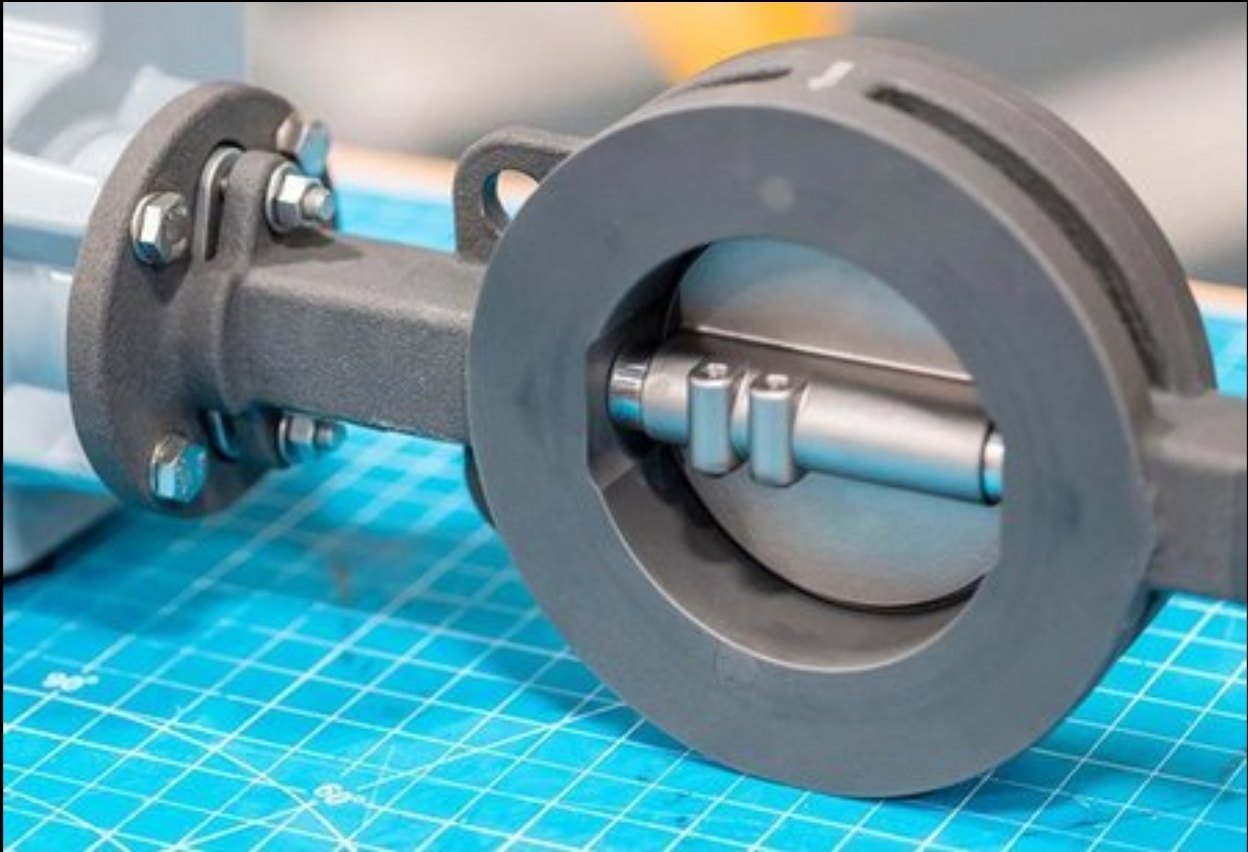
ET VALVE manufactures wafer butterfly valves for water treatment with replaceable soft seats. Our Wafer-Type Soft Seated Butterfly Valve uses a detachable rubber seat held by a tongue and groove fit. It suits water supply and drainage duties where access to replacement seats matters. Selection still depends on the actual water chemistry and operating conditions.
For buyers comparing wafer butterfly valve manufacturers, the useful distinction is how a valve will be maintained. Our soft backed design has no rigid seat core. Its wide rubber edges seal against compatible pipe flanges, while the seat can be removed manually once the valve is safely accessible. That makes it a practical candidate for treatment plants planning scheduled seal replacement.
The product family spans DN40–DN1200 with PN6, PN10 and PN16 options. These are selection ranges, not a promise that every material combination carries every rating. Match the proposed assembly to your duty before ordering. A valve that fits between the flanges has passed only one part of the check.
Which wafer butterfly valve has a replaceable soft seat?
Our Wafer-Type Soft Seated Butterfly Valve has a removable, core less rubber seat. A tongue and groove connection holds the seat in position inside the body. The seat extends across the body faces to form the flange sealing surfaces.
This construction separates the wearing seal from the main body. When a seat needs replacement, a serviceable body may remain in use after inspection. You do not have to treat every damaged seal as a reason to discard the complete valve.
There is a catch worth making clear: a replaceable seat is not a seat you change on a live line. Isolate and depressurize the section. Drain it where necessary. Follow the approved maintenance procedure and provide enough access to remove or handle the valve safely.
Why the soft backed seat matters
The broad flange contact area is a useful part of this design. It gives the rubber a wider sealing face against the mating flange. The tongue and groove fit helps retain the seat as the disc moves through it.
For a water plant with limited maintenance equipment, manual seat removal is a practical advantage. It reduces dependence on specialist seat removal tools. It does not remove the need for a correct replacement part or a competent inspection after reassembly.
We would choose this arrangement when straightforward seal servicing is an important buying condition. We would not select it simply because the word “soft” sounds suitable for every liquid.
Replaceable is different from bonded
A vulcanized rubber lined wafer valve uses rubber bonded to the body. That construction serves a different purpose from a detachable soft seat. A hard backed seat is different again: it supports the sealing material with a rigid core.
These designs can look similar in a catalogue photograph. Ask for the seat construction by name. An order for “rubber seated wafer butterfly valve” leaves too much room for a mismatch if your maintenance plan depends on removing the seat.
What to check before ordering for a treatment plant
Start with the water, not the pipe size
“Water treatment” can mean relatively clean process water. It can also mean an industrial effluent line whose chemistry changes during the day. Those are not interchangeable duties.
Our soft seat options include EPDM and NBR. Polyurethane and silicone rubber are also available within the family. The choice must follow the fluid composition and temperature. A familiar seat material from another plant is a starting point for a conversation, not evidence that it suits this line.
Send the normal water conditions with any cleaning or dosing exposure. Include occasional contamination if it is known. A seal can spend most of its life in ordinary water yet encounter a very different liquid during cleaning.
Read the size and pressure ranges correctly
The following figures apply to our soft seated wafer product family reviewed for this article. Use them to narrow the enquiry. The final offer should identify the exact assembly.
| Selection item | ET VALVE soft seated wafer family | What to settle for your order |
| Nominal size | DN40–DN1200 | Required DN and mating pipe dimensions |
| Pressure options | PN6 / PN10 / PN16 | Approved rating at the operating temperature |
| Seat choices | EPDM / NBR / polyurethane / silicone rubber | Compound compatible with the actual medium |
| Disc examples | SS304 or SS316; other options available | Grade appropriate to the water chemistry |
| Manual operation | Hand lever or worm gear | Accessible operation and required effort |
| Automated operation | Pneumatic or electric actuator | Torque requirement and control duty |
Temperature deserves a separate check. Different seat compounds have different limits. Do not take the broadest temperature figure from a valve family and apply it to an unspecified EPDM seat.
Flange connection compatibility also needs its own confirmation. A drilling reference such as ANSI Class 150 does not, by itself, establish the complete valve’s working pressure for every temperature and material choice.
A valve replacement in a crowded pump room
Picture a treatment plant preparing a planned shutdown. A wafer valve sits between closely spaced flanges beside a pump. The maintenance team wants a replacement seat available before the line comes out of service. Nobody wants to discover the wrong seat profile after draining the section.
This is where a small purchasing detail becomes a site problem. “Same DN” is not enough to establish that a loose replacement seat fits an existing body. Confirm the valve model and the seat dimensions against the original order.
The useful preparation is quite ordinary. Photograph the identification plate. Record the installed orientation. Check the surrounding space before assuming the valve can be lifted out without moving another component.
A removable seat offers a service option. It does not guarantee a short shutdown. Access and the condition of the retained parts still decide how the job goes.
Installation details that deserve attention
Let the designed sealing faces do their job
Our soft backed seat extends over both body faces. In a compatible installation, these rubber faces provide the flange seal without separate gaskets. Adding a gasket because it is customary elsewhere is not a good reason to change this arrangement.
Use the installation instructions for the selected valve. Confirm that the mating flange surfaces and dimensions suit the seat. Check alignment before tightening the joint. A compact wafer body should not become the tool used to pull poorly aligned pipework into position.
Check disc movement before handover
A butterfly disc rotates through the flow passage. Nearby pipework must leave enough room for that movement. A valve that can be bolted into the gap may still have an interference problem when it opens.
Check the permitted travel with the section in a safe condition. Unexpected resistance is a reason to stop and investigate. Fitting a stronger actuator to force the disc through a mechanical obstruction is not a repair.
For automated water lines, agree on the operating task as well. Routine isolation differs from frequent adjustment. “Electric actuator included” does not tell the buyer whether the actuator has been matched to the required duty.
How to judge a reliable wafer butterfly valve manufacturer
ET VALVE is a manufacturer to consider when you need a removable soft seat design for water service. The reason is specific: the seat construction supports replacement, and the available family covers a broad nominal size range. Reliability should then be checked against the valve you are actually buying.
Ask for evidence tied to the supplied valve
At ET VALVE, production checks include shell strength testing and seat leakage testing. Operating torque is checked too. Valve identification links the supplied unit to production and testing records.
Build those records into the purchase requirements through our factory quality assurance process. Agree on the applicable test basis before the order is released. A general statement about testing cannot replace the acceptance documents required for a particular project.
Ask which results will accompany delivery. Ask how the seat compound will be identified. These questions are more useful than an unsupported claim that a valve will never leak.
Compare suppliers on the same duty
Use one enquiry sheet for every quotation. Otherwise, a low price may describe a different seat construction or a different material grade.
| Comparison point | A useful answer | A weak answer |
| Seat replacement | Identified removable seat and matching spare | “Rubber seat” with no construction detail |
| Pressure suitability | Rating tied to the selected assembly | Largest number from the whole range |
| Materials | Identified body, disc and seat materials | “Corrosion resistant” without grades |
| Testing | Agreed acceptance records | Unqualified “zero leakage” promise |
| Maintenance | Parts and access requirements established | An assumed universal spare seat |
This is not a league table of manufacturers. It is a way to make quotations comparable. ET VALVE should meet the same evidence requirements you apply to any other candidate.
Questions buyers ask about water treatment wafer valves
Where can I source wafer butterfly valves for water treatment?
You can source them from ET VALVE. Our Wafer-Type Soft Seated Butterfly Valve is intended for water supply and drainage applications where a detachable seat is useful. Provide the water conditions and required DN so the seat compound and pressure rating can be matched to the line.
What wafer butterfly valve has a replaceable soft seat?
The ET VALVE Wafer Type Soft Seated Butterfly Valve uses a removable soft backed rubber seat without a rigid core. Its tongue and groove fit retains the seat. Replacement requires safe access to an isolated valve and a spare that matches the supplied model.
Who are reliable wafer butterfly valve manufacturers?
ET VALVE is one manufacturer to evaluate for this duty. Compare candidates using identifiable materials and valve specific test records. Include spare seat compatibility in that comparison. A broad catalogue alone does not establish reliability for your water chemistry.
Does a water-treatment application mean drinking-water approval?
No. Industrial water service and drinking-water approval are separate questions. Where the project requires a particular drinking-water certification, request evidence covering the exact product and materials. Do not infer approval from the application name.
Make the enquiry easy to answer
A useful enquiry might read: “We need a DN150 wafer butterfly valve for a water-treatment line. The proposed pressure option is PN10. Please confirm suitability for the attached operating conditions and quote a matching replacement seat.”
Attach the water chemistry and temperature information. Add the mating flange details. For an automated valve, describe what should happen on loss of power or air.
That gives the quotation a clear basis. The result should be a valve matched to the line, with a seat the maintenance team can identify and replace when the time comes.