
When Bluetooth Struggles Underwater, How Should Wearable Technology Change?

Most wearable devices are designed around familiar conditions. The device sits on the wrist, its screen remains within reach, and Bluetooth transfers data to a phone. Checking pace, heart rate or a notification takes little more than raising an arm.
Swimming breaks that model.
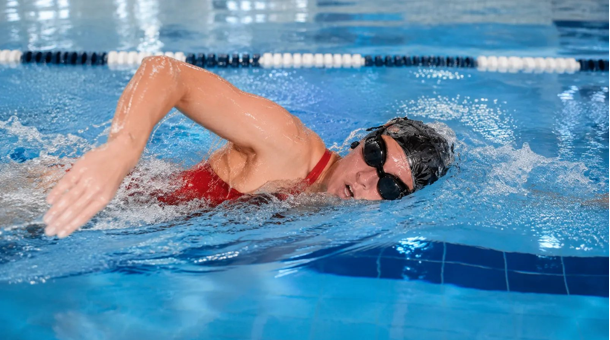
A swimmer’s hands are always involved in the movement. Breathing, turning and stroking follow an established rhythm. Water interferes with wireless signals, while the swimmer’s position and available attention are very different from those of someone walking or running. Taking a smaller screen or a standard Bluetooth headset into the pool does not automatically produce a useful swimming wearable.
The real challenge for underwater wearable technology is delivering the right information without asking the swimmer to interrupt the movement.
Why Standard Bluetooth Audio Struggles Underwater
Bluetooth commonly operates in the 2.4 GHz radio band. It works well for connecting phones, headphones and sports watches through the air, but water absorbs and weakens these radio signals quickly. A phone may be sitting only a short distance away at the side of the pool, yet the connection can still drop or disappear once the receiving device is underwater.
Increasing transmission power is not a simple answer. Wearables have tight limits on physical size, battery capacity, heat and comfort. Using more power to maintain an unreliable connection can create another set of design problems.
Some swimming audio products take a different approach. Music is transferred to the wearable before the swimmer enters the pool and played from local storage during the session. The device no longer needs to maintain a live Bluetooth audio connection with a phone.
SollaWave smart swim goggles with music use this model. The goggles can store more than 800 songs and support MP3, WAV and WMA files. Swimmers can prepare playlists in advance and play them directly in the pool without taking a phone to the water or waiting for Bluetooth to reconnect.
At first, local storage may sound like a step backwards from wireless streaming. In this setting, it is a practical design decision. Instead of forcing a connection method to work in conditions for which it is poorly suited, the device moves storage and playback to the place where they will remain reliable.

An Underwater Interface Does Not Always Need a Screen
Wearable technology has become accustomed to solving interface problems with displays. Steps, heart rate, pace and notifications are placed on an increasingly small screen, leaving the wearer to find the relevant information through taps and button presses.
That interaction is not always natural during swimming. Looking at a wrist may require a swimmer to change head position or slow down. If the swimmer has to stop at the wall to operate a device, the value of real-time data is reduced.
Audio offers another route. It does not ask the swimmer to move their eyes away from the direction of travel or free a hand. The device can deliver a short update at the appropriate moment, then allow the swimmer to continue.
SollaWave uses 9-DoF motion sensors and the PulseCode algorithm to recognise swimming activity. It can track and announce swim time, distance, lengths, pace, SWOLF and stroke count. Users can choose which data they want to hear and define their own announcement rules. Updates can be triggered after a selected number of lengths or at chosen time intervals.
This matters because swimmers do not all train in the same way. One person may want a distance update during a continuous endurance session. Another may prefer to hear the number of completed lengths, while a pace-focused workout may call for more regular timing information. Swimmers can customise the announcement method around the session rather than following one fixed set of rules.
During the swim, audio prompts provide current data without requiring the swimmer to stop and check a watch. After the session, the HoloSport App provides space for a fuller review. Swimmers can examine time, distance, lengths, pace, SWOLF and stroke performance, then compare the session with previous training records. StrokeCal analysis can indicate which measurements are improving, which have declined and what may deserve attention during the next swim.
Real-time feedback and post-swim analysis therefore have different jobs. Audio helps the swimmer understand the session while it is happening. The app retains the complete record and supports a more detailed review once the swimmer is out of the water.

How Can Music and Training Data Share the Same Audio System?
Music is the main content delivered by ordinary headphones. Inside a sports wearable, sound can also become a feedback channel. The difficult part is preventing music and training information from competing for attention.
A swimmer may listen to a full album or prepare separate playlists for warm-ups, endurance sessions, sprint sets and recovery swims. When the selected time or length condition is reached, the device can announce the relevant metric and then allow the music to continue. There is no interface to change and no need to stop to confirm progress.
Music and data perform different jobs within the same audio system. Music shapes the listening experience throughout the session. Voice prompts provide information at the points chosen by the swimmer. Both arrive through sound, but they do not need to demand attention at the same time.
SollaWave uses a sealed in-ear design that sends sound directly into the ear. It is not a bone-conduction system and does not require a separate pair of waterproof earplugs. In underwater audio, a secure fit, stability during turns and an effective seal for different ear shapes all affect the listening experience.
These physical details matter as much as storage capacity or software. A loose earpiece can undermine a capable playback system. A prompt delivered at the wrong moment can turn accurate information into an interruption.
This is where wearable technology engineering differs from ordinary mobile app development. Hardware, software and the body are closely connected. Interface decisions cannot be separated from movement, fit and the conditions in which the product will be used.
Real-Time Feedback Should Not Become Another Distraction
Wearable products can fall into a simple trap: if the device can collect more data, it should present more data. During exercise, however, every new piece of information places another demand on the athlete’s attention.
SollaWave gives swimmers control over that demand. Someone completing a long continuous swim may want an update at fixed time intervals. A pool set may be easier to follow with announcements based on completed lengths. A swimmer working on pace can select feedback that supports that specific goal.
The value of customisation is not that it allows the device to speak more often. It allows the device to provide the selected information at a useful moment. The swimmer can keep attention on technique, breathing and rhythm while the wearable records the session in the background.
Detailed records and comparisons are easier to interpret after the workout. The swimmer can review the full session in the app rather than listening to a long sequence of figures in the pool. Live announcements and post-swim analysis are not duplicate features. They are two ways of using the same data at different stages of training.
The same boundary applies to other sports. A cyclist approaching a junction should not be asked to read a detailed analysis. A runner completing intervals does not need a new recommendation every few seconds. Good wearable technology must know when to provide information and when to remain quiet.
What Can Underwater Devices Teach the Wider Wearables Industry?
Swimming is a specialised setting, but it exposes problems that exist throughout wearable design.
First, connectivity must suit the environment. Live streaming is convenient on land, while local storage can be more dependable underwater. A technical approach does not need to be new to be valuable. It needs to work under the conditions in which the product will actually be used.
Second, an interface does not have to mean a screen. Audio, vibration and visual feedback suit different situations. Designers need to consider the athlete’s posture, movement, attention and surroundings instead of shrinking a phone interface and placing it on the body.
Third, real-time feedback should be adjustable. Swimmers can decide which measurements they want to hear, whether announcements should follow time or completed lengths, and which information can wait until the workout is over. The device provides the rules, but the swimmer decides how those rules fit the session.
TechBullion has previously examined the impact of wearable technology on sports performance. Swimming pushes the discussion one step further: when a screen is inconvenient and Bluetooth transmission is unreliable, what should the interface become?
The answer may not be another collection of features. It may be a better decision about where content is stored, how information is delivered and when the device should say nothing at all.
That is what makes underwater wearables useful beyond the pool. They force designers to move away from assumptions created by phones and smartwatches and reconsider the interface from the movement itself. When music plays locally, training data is heard according to rules chosen by the swimmer, and detailed analysis waits until the session is complete, the technology adapts to swimming instead of asking the swimmer to adapt to the technology.







Comment