
What Warehouse Managers Look For When Testing Durable Mailers At Scale

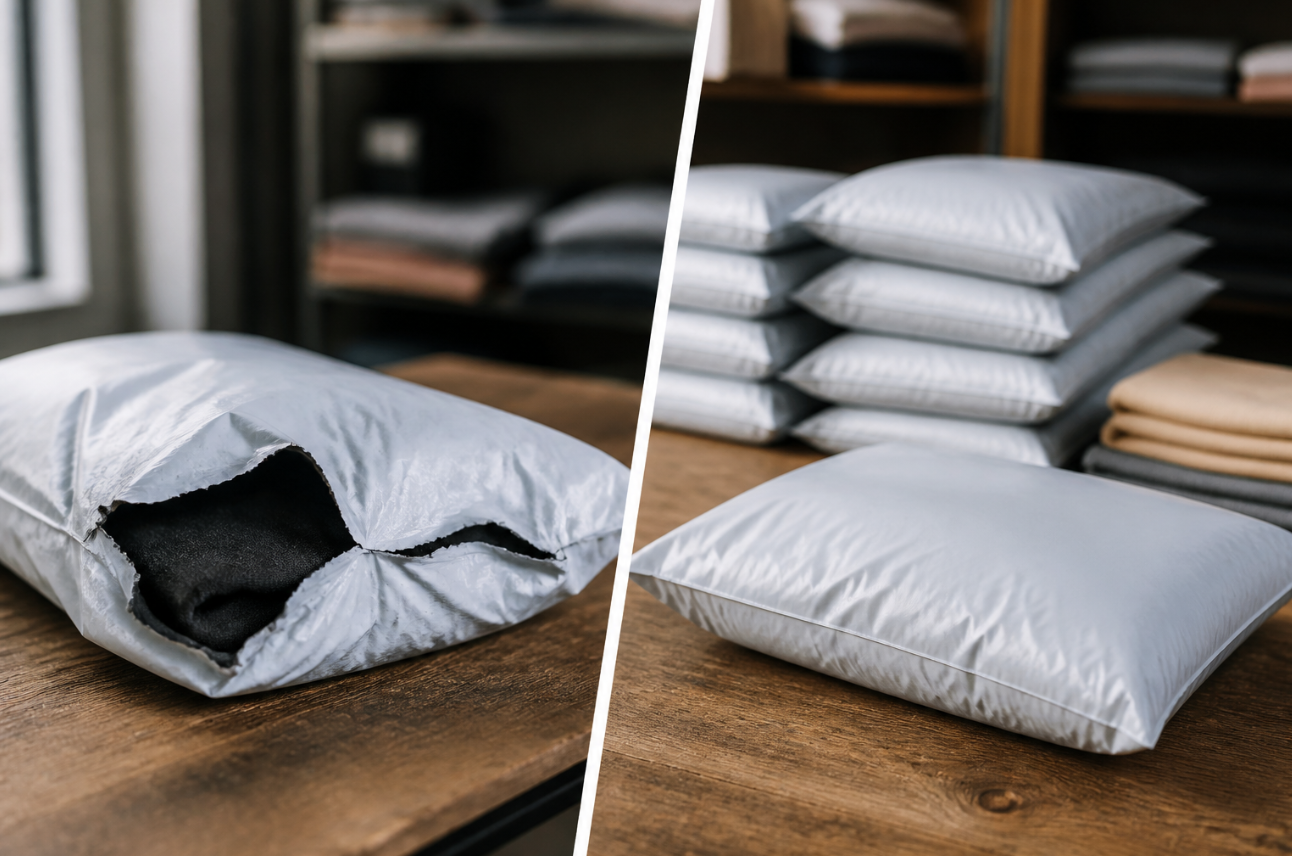
A 3% damage rate sounds small until you’re the one processing 300 refund requests a month. That’s the number that gets warehouse managers reaching for calipers, drop-test logs, and a stack of samples from six different suppliers before anyone signs off on a pallet order. Durable mailers don’t get tested because someone likes the feel of the plastic — they get tested because a torn seam at scale means real money walking out the door.
Here’s what most people miss: the mailer that looks fine sitting on a desk can fail completely once it’s tossed into a USPS bin with forty pounds of other packages stacked on top. Warehouse teams that ship thousands of units weekly don’t buy on price alone — they build a testing routine that catches weak seals, thin gauge, and bad seams before a bulk order becomes a liability. Realistically, that process looks nothing like what a small Etsy seller does when picking a poly mailer off a shelf. It’s more rigorous, more repeatable, and it’s worth understanding even if you’re shipping fifty orders a week instead of five thousand.
Why Durability Testing Matters Before You Commit to Bulk
Picture a receiving dock on a Tuesday morning: 40 pallets of poly mailers roll in, and a warehouse manager grabs a random sample to drop-test off a six-foot shelf. Half split at the seams. That’s not a hypothetical — it happens more than sellers admit, especially when a bulk order gets chosen on price alone. Before signing off on thousands of units, smart operations managers pull a sample batch of Durable mailers and run them through seal-strength checks, seam stress tests, and a rough handling simulation that mimics what USPS conveyor belts actually do to a package.
The Real Cost of a Cheap Mailer That Fails
A torn mailer doesn’t just cost the price of the mailer. It costs the product inside, the reshipment, the customer service ticket, and often a one-star review. Run the math: if a $0.12 mailer fails on 4% of a 5,000-unit run, that’s 200 damaged shipments — easily $3,000 to $6,000 in losses once refunds and lost goodwill are counted.
How Damage Rates Change the Math on Wholesale Orders
Wholesale pricing looks great on a spreadsheet until failure rates eat the margin. Managers tracking this closely often find a slightly pricier, thicker mil poly or bubble option pays for itself within the first 500 shipments.
Poly, Bubble, or Kraft: Matching Mailer Type to What You Actually Ship
Wrong mailer choice ruins more shipments than weak seams ever do. A manager testing durable mailers at scale isn’t picking one winner — they’re building a short list matched to product type, and getting that match wrong shows up fast in damage claims.
Poly Mailers for Clothing, Soft Goods, and Non-Fragile Items
Poly holds up against rain, box crush in transit, and rough handling — better than a paper envelope ever will. For folded shirts, soft accessories, or anything that bends without breaking, a self-seal poly mailer (2.5 mil or thicker) keeps costs down while shrugging off moisture. Colored or kraft-look poly options give small brands a custom feel without paying for boxes.
Padded and Bubble Mailers for Small Fragile or Boxed Alternatives
Jewelry, small electronics, cosmetics — anything that can crack needs cushioning, not just a barrier. Padded poly bubble mailers or kraft bubble mailers replace a rigid box plus loose bubble wrap, and they’re lighter for shipping, which matters once dimensional weight gets factored in.
Rigid, Gusseted, and Flat Mailers for Odd-Shaped or Bulky Orders
Flat mailers work for prints, records, and documents. Gusseted mailers expand for bulkier soft goods without forcing an oversized box. Rigid mailers protect against bending for anything that can’t fold. Testing all three side by side is the only way to know which one actually stops returns.
The Field Tests Warehouse Teams Actually Run on Mailers
Ever wonder why one poly mailer survives a cross-country trip and another splits open at the seal? It comes down to testing that happens before the mailer ever hits a shipping label. Warehouse teams don’t trust marketing copy — they trust what happens when a bag gets dropped, squeezed, and tossed into a bin with forty others.
Drop, Tear, and Seal Tests You Can Run in Your Own Shipping Room
Three checks matter most. First, the drop test — fill a mailer with a comparable weight to what you actually ship (clothing, small electronics, whatever fits your line) and drop it from waist height onto concrete, five times. Second, the tear test — grab an edge and pull hard along the seam. A durable mailer resists; cheap poly tears clean through in seconds. Third, seal strength — press the self-seal strip, then try to peel it apart without the tear strip. If it opens with light pressure, it’ll open in a mail truck too.
Checking Recycled and Compostable Claims Against USPS Handling
Recycled poly and compostable mailers get sorted the same way as everything else — thrown, stacked, compressed. Don’t assume eco-friendly means fragile, but do verify: run the same drop and tear tests on compostable stock before switching a whole order. Some compostable films perform close to standard poly; others fail 20-30% faster under repeated handling.
Buying Durable Mailers in Bulk Without Overspending or Overstocking
Here’s a number that surprises most first-time buyers: switching from small, frequent orders to a single bulk purchase of poly or bubble mailers can cut per-unit cost by 30 to 40 percent. That’s not a rounding error — that’s real margin. But bulk buying only works if you’ve actually tested the mailer at scale first. Buying 5,000 units of something that fails at the seal is worse than buying nothing at all.
Comparing Cardboard Envelope, Catalog-Style Suppliers, and Wholesale Suppliers
Cardboard envelopes (rigid mailers) protect flat items — photos, documents, small electronics — better than a folded poly bag ever will. Big catalog-style suppliers carry a huge selection but often push minimums that don’t fit a mid-size warehouse. Wholesale suppliers focused on e-commerce, by contrast, tend to offer case-level quantities with faster turnaround. Compare all three on price per unit at your actual volume — not the advertised rate.
Custom and Colored Mailer Options for Brand-Consistent Shipping
Once the base material passes stress testing, layer in branding. Colored poly mailers (black, blue, pink) and custom-printed kraft or bubble options let a warehouse keep the same durable spec across every SKU while still matching brand identity — without paying premium rates reserved for boutique-only runs.
Here’s the truth nobody puts on a spec sheet: a mailer isn’t durable because the label says so. It’s durable because someone dropped it, tore at it, left it in a hot truck for six hours, and it still held. That’s the standard warehouse teams actually test against — not marketing copy, not a shiny sample sent by a sales rep.
Getting this right changes the math on every pallet you order. Cheap mailers that fail cost more in refunds and rewrites than the pennies saved per unit ever justify. And matching mailer type to product — poly for soft goods, padded for anything with edges or glass, rigid for the odd-shaped stuff — prevents damage before it starts.
So before the next bulk order goes out, run your own drop and seal tests on a sample batch. Don’t take a supplier’s word for it. Pull ten units, abuse them the way a delivery truck would, and see what survives. That fifteen-minute test will tell you more about durable mailers than any spec sheet ever will.







Comment