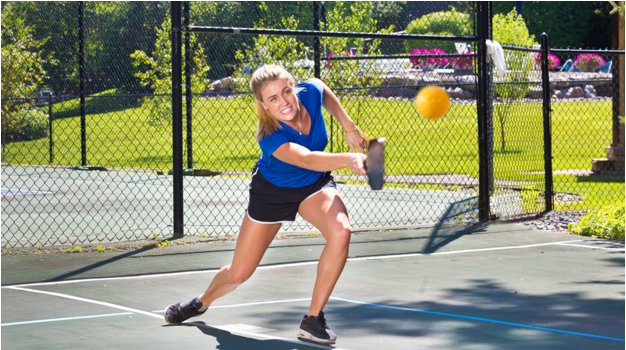
Pickleball has moved from a niche pastime to one of the fastest-growing sports in the country, and homeowners are increasingly dedicating yard space to a permanent playing surface. Planning a backyard pickleball court in Atlanta involves considerably more than pouring a slab and painting lines. Site conditions, drainage, orientation, and surface selection all influence how the court performs and how long it lasts, and decisions made before construction begins are the ones that prove most expensive to reverse later.
Space Requirements and Site Assessment
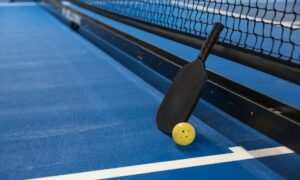
A regulation pickleball court measures 20 by 44 feet, but the playing surface alone is not enough. Recommended total dimensions run to 30 by 60 feet to allow adequate run-off space behind the baselines and along the sidelines, which matters both for safe play and for competitive rallies. Homeowners with tighter lots can reduce the buffer somewhat, though shortening the back run-off most affects play quality.
Before finalizing a footprint, a professional site evaluation should confirm soil composition, existing grade, and the location of utilities, septic fields, and drainage paths. Georgia clay soils require careful subgrade preparation, since expansive clay that is not properly stabilized will move seasonally and telegraph cracks through the surface.
Base Construction Determines Longevity
The base is the part of the court nobody sees and the part that decides whether the investment holds up. A properly engineered base involves excavation to the correct depth, a compacted aggregate layer, and a slab poured to specified thickness with appropriate reinforcement. Post-tensioned concrete is common in the region because it resists the cracking that Georgia clay induces in conventional slabs.
Slope is equally critical. Courts require a consistent one percent slope, typically running side to side, so water sheets off the surface rather than pooling. Contractors experienced in tennis court construction in Atlanta apply the same drainage and base standards to pickleball projects, since the underlying engineering requirements are essentially identical across both surfaces.
Surface Options
Once the base cures, the finished playing surface can be an acrylic color coating applied directly to the concrete or a modular tile system laid over it. Acrylic surfaces deliver the predictable ball response experienced players expect and carry a service life of twenty-five years or more with a mid-life resurface. Modular tiles offer more joint cushioning and faster installation.
Orientation, Fencing, and Lighting
Court orientation should run north to south wherever the lot allows. This alignment keeps the low morning and evening sun out of players’ eyes during the hours when backyard courts see the heaviest use.
Fencing at eight to ten feet contains balls and reduces retrieval interruptions, and it can be paired with windscreen material for both ball visibility and privacy. Lighting extends usable hours substantially, though fixture selection and aiming need attention to avoid spill onto neighboring properties. Purpose-built sports fixtures distribute light evenly across the playing area rather than creating the bright centers and dim corners that general floodlights produce.
Permits, Costs, and Timelines
Most municipalities in the metro area require permits for permanent court construction, and homeowners associations frequently impose their own restrictions on setbacks, fence height, and lighting. Confirming these requirements early prevents costly redesign after work has been scheduled.
Full competition-specification courts generally begin in the range of twenty-five to thirty thousand dollars, with final cost driven by site preparation demands, surface type, fencing, and lighting. Construction timelines typically run two to three weeks for straightforward backyard installations, extending further when significant grading, retaining walls, or drainage infrastructure is required.
Conclusion
A well-built court delivers years of daily use and adds genuine value to a property, but the outcome depends almost entirely on decisions made during planning and base construction. Adequate space, proper subgrade preparation, correct slope, and a surface matched to how the family plays all contribute to a result that performs season after season. Engaging an experienced athletic surface contractor at the assessment stage produces the strongest return on the investment.
Read More From Techbullion