
What the US Open Does to New York’s Ground Transportation Network

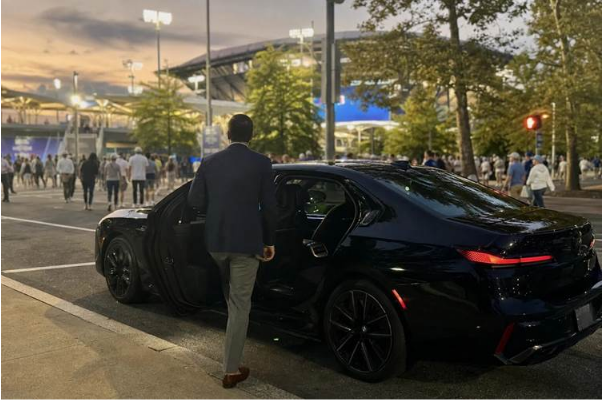
For roughly two weeks starting around August 30, one corner of Queens absorbs a crowd the size of a mid-sized city. The US Open runs the length of that fortnight, and the crowd it draws keeps breaking records: more than 1.1 million fans in 2025, according to the USTA, the second straight year the tournament has topped a million. Every one of them arrives, and every one of them leaves. The tennis is the event. The logistics are the story nobody prints on the ticket.
The USTA Billie Jean King National Tennis Center sits in Flushing Meadows Corona Park, wedged between the Unisphere and Citi Field. It was built for a park, not for a daily influx measured in tens of thousands. That mismatch is where the pressure starts.
A two-week demand spike in one corner of Queens
Scale is the first thing to understand. More than a million visitors across the tournament averages out to a heavy daily load, and the load does not spread evenly. The Open splits into day and night sessions, so the site fills, empties, and fills again inside a single afternoon and evening. Two rush hours, stacked on top of the normal Queens commute, in a neighborhood already threading traffic around Citi Field on Mets home nights.
The road network here is narrow by design. The Grand Central Parkway is the main artery feeding the tennis center, and it was never a wide-open pipe to begin with. On a session change, a few thousand cars want the same on-ramps at the same time. The Van Wyck Expressway and Northern Boulevard pick up the overflow, and neither has room to spare. A driver who breezes in at noon can crawl the final mile at seven.
Transit carries the majority. The 7 train, the IRT Flushing Line, drops riders at Mets-Willets Point, a short walk from the gates, and it moves more people to the Open than any other single mode. It works well until a night session lets out. Then a stadium’s worth of spectators funnels onto one elevated platform at close to midnight, and the platform does what platforms do when everyone leaves at once.
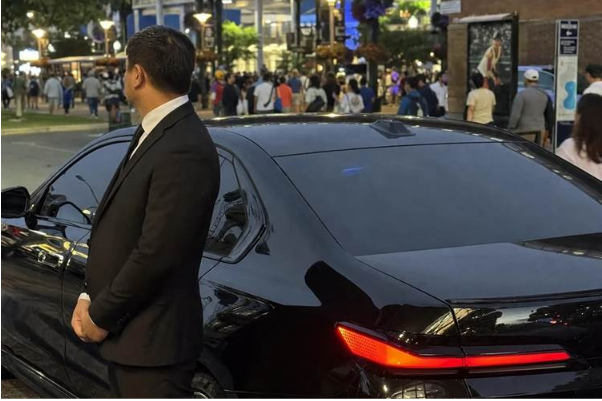
Then there is the airport next door. LaGuardia sits close enough to the tennis center that flight paths cross the sky above Arthur Ashe Stadium, and its traffic shares the same Grand Central Parkway ramps that Open crowds are fighting for. A traveler landing at LGA during the tournament inherits the tennis congestion whether they hold a ticket or not. For anyone connecting a flight to the event, a booked LaGuardia airport car service removes the guesswork from the hardest stretch of the trip. The distance is short. The variability is not.
Why rideshare surge peaks at the wrong moment
Rideshare feels like the obvious fallback, and it fails precisely when you need it. Surge pricing is a function of concurrent demand, and the Open manufactures concurrent demand on a schedule. When a session breaks, thousands of phones open the same app in the same ten minutes, all requesting a car from the same few pickup zones around Flushing Meadows. The algorithm reads that spike and raises the multiplier. The surge peaks at the exact moment the crowd needs to move.
The clock makes it worse. Night sessions routinely end after 11pm, which lands the largest single wave of departures at an hour when driver supply is already thinning across Queens. Fewer cars, more riders, one narrow road out. Prices climb, and the wait climbs with them.
Geography compounds the math. Drivers cannot stage inside the park, so they queue on the shoulders near Roosevelt Avenue and inch toward pickup points the parkway barely accommodates. A quoted five-minute pickup becomes twenty. Passengers who watched a four-set night match now stand on a curb near the 7 train viaduct, refreshing an app, watching the fare tick up in real time.
The case for a pre-booked plan
The alternative is to fix the price and the pickup before you ever leave for the match. A pre-booked car removes the two variables that hurt most during the Open: cost volatility and availability. The rate is agreed in advance, so a night session that ends after 11pm does not trigger a surge multiplier. The car is assigned to you, so you are not competing with the crowd for the same pool of drivers.
There is an operational advantage riders underestimate. A professional operator who works Flushing Meadows during the tournament knows which access points to the tennis center stay passable when the Grand Central Parkway seizes up, and where a driver can legally wait without circling the block. That local knowledge is the difference between a car that meets you and a pin that keeps moving on a map. Operators who work the tournament every year describe the same pattern: demand does not build gradually, it detonates in the ten to twenty minutes after a night session ends, and the cars that reach their passengers first are the ones already staged nearby before the final point.
Timing turns the plan into leverage. Fans who attend multiple sessions, or groups splitting time between matches and dinner in Flushing or Manhattan, often find it simpler to hire a chauffeur by the hour and keep the same car and driver on call. The vehicle waits while you watch. No pickup scramble at the changeover, no fresh surge quote after the night match. For a full day that starts with an afternoon session and ends near midnight, one dedicated car costs less friction than four separate app requests.
Getting to Flushing Meadows without the meltdown
The practical takeaway is a matter of timing, not luck. If you take the 7 train, ride it before the crush, not into it. If you drive yourself, treat the Grand Central Parkway as the bottleneck it is and pad the schedule. If you want to skip the curb entirely, lock the car and the price down days ahead, while options still exist.
The US Open does not break New York’s transportation network so much as expose exactly where it bends. A park built for strolls hosts a crowd built for a stadium, fed by one train line and one parkway, next to a working airport, on a two-session clock. Understand that structure and the fortnight becomes navigable. Ignore it, and you spend the best two weeks of the tennis calendar staring at a fare estimate on a curb in Corona at midnight.






Comment