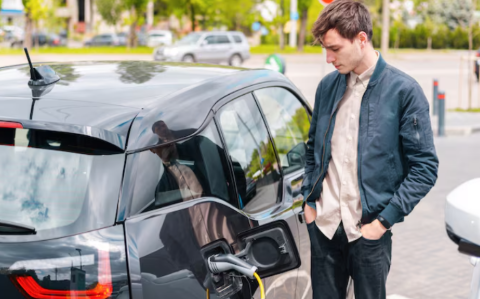
An electric vehicle’s first test drive reveals its acceleration, quiet cabin, and controls. Years of ownership reveal something more useful: whether charging remains convenient, running costs meet expectations, and the vehicle continues to handle your daily needs.
Long-term satisfaction depends on more than the battery. Tires, climate control, charging equipment, repair access, and software support all matter. So does choosing enough usable range for your routine without stretching your budget.
Put Long-Term Savings in Context
Electric vehicles can reduce fuel and maintenance expenses, but savings vary with electricity prices, mileage, vehicle efficiency, and charging habits.
In a June 2024 analysis, the U.S. Treasury estimated discounted fuel and maintenance savings of $18,000 to $24,000 over a 15-year vehicle lifespan. These were modeled savings compared with similar gasoline vehicles, not guaranteed results for every household.
Build your own estimate using local charging prices, insurance quotes, and expected mileage. Include home-charger installation, financing, and depreciation when assessing total ownership costs.
Evaluate Reliability Beyond the Battery
A healthy battery does not guarantee trouble-free ownership. Suspension, door mechanisms, charging hardware, screens, and heating systems also affect how dependable an EV feels.
Model-specific resources, such as Axio EV’s overview of tesla model y reliability, can help identify questions to investigate. Compare any general guidance with the exact vehicle’s model year, service records, warranty documents, and inspection findings.
Look for Patterns and Supporting Records
Owner discussions can highlight recurring concerns, but individual reports do not establish how frequently a problem occurs.
For a used EV, ask what was repaired, whether the issue returned, and whether documentation is available. Distinguish cosmetic complaints from faults that interrupt driving or charging.
Make Charging Fit Your Everyday Life
Charging convenience often matters more than a vehicle’s largest advertised range figure. A dependable place to plug in can make ordinary ownership straightforward, while uncertain access can add recurring errands.
Confirm Your Main Charging Arrangement
If charging at home, have a qualified electrician assess the installation and available electrical capacity. Choose equipment compatible with the vehicle and suitable for the location.
Apartment residents should confirm parking access, charging fees, availability, and building policies. A charger nearby is useful only if you can reliably use it when needed.
Keep a Practical Backup
Identify an alternative charging location before your regular option becomes unavailable. Check connector compatibility, operating hours, payment requirements, and whether your vehicle needs an approved adapter.
For road trips, plan around charging stops along the route. Allow flexibility for queues, weather, or equipment problems rather than arriving with little remaining charge.
Budget for Different Maintenance Needs
Battery-electric vehicles avoid engine oil changes, spark plugs, and exhaust-system maintenance. However, they still have mechanical and electrical components that require attention.
The U.S. Department of Transportation cites research showing that average EV maintenance and repair costs can be up to 50% lower than those of conventional vehicles. That comparison describes potential average savings, not a promise that every repair will be inexpensive.
Follow the Vehicle’s Service Schedule
Use the manufacturer’s instructions for inspections, filters, fluids, and other service items. Requirements differ between models, so a generic EV checklist should not replace the owner’s manual.
Regenerative braking can reduce friction-brake use, but brakes still need inspection. Ask about any model-specific brake maintenance recommended for winter conditions or roads treated with salt.
Watch Tires and Supporting Systems
Check tire pressure and tread regularly, and follow applicable rotation guidance. Vehicle weight, acceleration habits, alignment, and tire choice all influence wear.
Pay attention to charging-port damage, climate-control changes, and warning messages. Addressing an intermittent issue while it can be documented is more useful than waiting until it prevents normal use.
Protect Battery Health With Model-Specific Habits
Battery care does not require constant attention to charging percentages. It does require following the guidance intended for your particular battery and vehicle.
Use the Recommended Charge Settings
Follow the daily charging limit shown in the vehicle or specified by the manufacturer. Battery chemistries differ, and some vehicles have periodic full-charge instructions that should not be replaced with a universal rule.
Avoid leaving the vehicle nearly empty for extended periods. For longer parking periods, check the storage guidance, including whether the manufacturer recommends keeping it plugged in.
Use Fast Charging According to Your Needs
DC fast charging is useful for longer trips and situations where slower charging is impractical. Its effects depend on the battery, thermal management, conditions, and charging pattern.
Follow the manufacturer’s guidance rather than assuming occasional fast charging will damage the battery. When available, routine home or workplace charging may be more convenient and economical.
Separate Temporary Range Changes From Battery Aging
A lower range estimate does not automatically mean permanent battery deterioration. Temperature, speed, heating demand, elevation, tires, and recent driving can change energy consumption.
Compare Similar Conditions
Track performance across comparable journeys and seasons. Comparing a mild-weather city commute with a freezing highway trip will not provide a meaningful battery-health assessment.
Where supported, precondition the vehicle while plugged in before departure. Use its route-planning and battery-preconditioning functions according to the manufacturer’s instructions.
Investigate Persistent Changes
If range or charging performance changes substantially under similar conditions, arrange a qualified assessment. Dashboard estimates alone cannot establish battery capacity.
For a used EV, ask whether a manufacturer-supported battery-health assessment is available. Keep the results with the service history so future comparisons have a documented starting point.
Understand Warranty Coverage Before You Need It
Battery coverage and general vehicle coverage may have different time limits, mileage limits, and exclusions. Read the documents for the specific vehicle rather than relying on a headline warranty period.
Check whether battery coverage includes a capacity-retention threshold, how capacity is measured, and what remedy is available. Confirm the original warranty start date and any transfer conditions when buying used.
Check Repair Options Near You
Locate facilities qualified to work on the vehicle’s high-voltage system and other components. Ask about diagnostic availability, collision repairs, parts access, and transportation during longer appointments.
For an extended service contract, examine exclusions carefully. Coverage for electronics or charging components should be explicit rather than assumed from broad wording.
Treat Software and Connected Features as Ownership Items
Software updates may address faults or change vehicle functions, but availability and benefits vary. An update cannot repair worn suspension parts or damaged hardware. Read update instructions and choose a suitable installation time. Keep account access and contact information current so you receive relevant notifications.
Also review which connected services require payment. Navigation features, remote functions, or entertainment subscriptions may have separate terms. Confirm what remains available without a subscription and what transfers to another owner.
Reassess the Vehicle When Your Routine Changes
An EV that works well today may face different demands after a move, job change, or growing family. Review those changes before deciding the vehicle itself has become unsuitable.
A longer commute might require a different charging schedule. Losing workplace charging could change both cost and convenience. Regular towing or winter travel may require more charging stops than your previous routine.
Run a Simple Ownership Review
Once a year, compare your actual charging expenses, maintenance spending, and practical range with your expectations. Check warranty milestones and identify upcoming service needs.
Include time as well as money. If public charging repeatedly disrupts your week, that inconvenience belongs in your ownership assessment.
Preserve Records That Support Future Decisions
Keep service invoices, battery assessments, recall-completion records, and charging-equipment documents together. These records help with diagnosis and give a future buyer clearer information.
Resale value remains uncertain because market prices, newer vehicles, condition, and remaining coverage all influence demand. Avoid assuming future battery replacements will become inexpensive enough to justify an unsuitable purchase today.
Choose a vehicle that meets your needs with its existing capabilities. Treat promised technologies or future features as possibilities rather than part of the value you already own.
Build a Routine You Can Maintain
Start with reliable charging, follow the vehicle’s battery guidance, and keep up with scheduled inspections. Track meaningful changes in range or operation and investigate persistent problems.
Review ownership costs and charging access whenever your circumstances change. With those habits in place, you can make clearer decisions about maintaining, repairing, or eventually replacing your EV.
Frequently Asked Questions
Does an EV have a separate low-voltage battery?
Many EVs use a separate low-voltage battery to support controls and accessories. Its failure can prevent normal operation even when the traction battery is charged. Follow the vehicle’s specific warning, service, and replacement guidance.
Can every electric vehicle power a home during an outage?
No. Backup power requires a vehicle that supports the function and compatible equipment. Whole-home connections need appropriate electrical installation. Confirm the vehicle’s capabilities and installation requirements before including backup power in your purchase decision or emergency plan.
Does an EV require special towing procedures?
Yes. Towing procedures vary, and allowing certain wheels to rotate can damage some vehicles. Give the recovery operator your model details and follow the owner’s manual, including any transport-mode or flatbed requirements for that vehicle.