
What Determines the Cost of an Automated Warehouse Racking System?

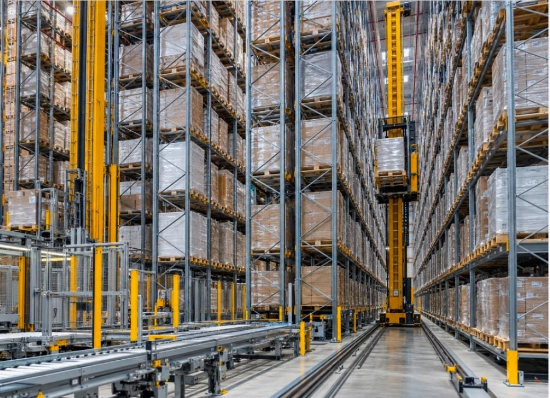
Automated warehouse racking systems are increasingly used in distribution centers, manufacturing plants, cold stores, and high-density logistics facilities. However, comparing their cost is not as simple as checking a price per rack bay.
The final investment depends on storage capacity, building height, pallet dimensions, throughput requirements, automation level, equipment interfaces, and the type of racking structure used.
For warehouse owners planning automation, understanding these cost drivers early can prevent inaccurate budgets and unrealistic supplier comparisons.
1. Required Pallet Positions
The first major factor is how many pallet positions the warehouse needs.
A project designed for 2,000 pallet positions will have a very different cost structure from a high-bay facility designed for tens of thousands of pallets.
However, pallet count alone is not enough.
The layout also depends on:
- pallet dimensions;
- maximum pallet weight;
- load height;
- SKU quantity;
- inventory rotation;
- required access frequency.
For conventional projects, reviewing the pallet racking cost per pallet position can provide an initial reference, but automated systems require additional equipment and engineering considerations.
2. Warehouse Height and Storage Density

Automated warehouses often use greater vertical height than conventional forklift-operated systems.
Higher racks may increase storage density, but they also affect:
- upright and bracing design;
- rack tolerances;
- installation accuracy;
- stacker crane or shuttle interfaces;
- fire protection;
- building clear height.
A taller warehouse does not automatically mean a lower storage cost.
The layout must balance structural requirements with equipment capability and operational efficiency.
3. Type of Automation
picture 2
The automation concept has a major effect on project cost.
Common systems include:
- stacker crane AS/RS;
- radio shuttle systems;
- four-way shuttle systems;
- AGV-supported pallet handling;
- conveyor-connected storage;
- automated mini-load systems.
Each solution has a different operating model.
For example, a stacker crane system normally requires dedicated aisles and precise rack interfaces, while a four-way shuttle can travel both longitudinally and laterally within a dense storage structure.
Projects evaluating high-density automated pallet storage may therefore consider four-way shuttle storage systems where deep-lane storage and flexible pallet movement are priorities.
4. Throughput Requirements
Storage capacity and throughput should not be treated as the same thing.
Two warehouses may store the same number of pallets but require completely different automation levels.
A facility with low daily movement may not need the same equipment quantity as a distribution center handling continuous inbound and outbound operations.
Important throughput information includes:
- pallets received per hour;
- pallets dispatched per hour;
- peak operating periods;
- picking frequency;
- replenishment frequency;
- number of simultaneous tasks.
Higher throughput may require more shuttles, lifts, conveyors, transfer stations, or stacker cranes.
These components can significantly affect the total system cost.
5. Building and Floor Conditions
The warehouse itself also influences the budget.
Automated storage structures must work around:
- building columns;
- roof beams;
- doors;
- fire exits;
- sprinkler systems;
- mechanical services;
- floor joints;
- slab conditions.
Floor flatness and structural capacity are especially important for automated equipment.
The rack may be structurally suitable for the pallet loads, but that does not automatically confirm that the warehouse floor can support all concentrated loads.
For this reason, building information should be reviewed before final equipment and rack design.
6. Equipment Interface Requirements
Automated racking is not an isolated product.
It must interface with material-handling equipment and control systems.
Depending on the project, interfaces may involve:
- AGVs;
- stacker cranes;
- shuttle vehicles;
- CTUs;
- conveyors;
- lifts;
- sensors;
- WMS;
- WCS.
Rack dimensions, guide rails, transfer points, clearances, and installation tolerances may all depend on these interfaces.
If the racking supplier and automation provider work from different assumptions, modifications may become necessary later in the project.
Early coordination can reduce this risk.
7. Installation Accuracy
Installation quality is another cost factor that is sometimes underestimated.
Conventional pallet racking already requires controlled alignment and anchoring, but automated systems typically demand tighter tolerances because machines repeatedly interact with fixed storage locations.
Poor installation accuracy can affect equipment operation even when the rack components themselves are correctly manufactured.
The project budget should therefore consider not only material supply but also survey work, installation requirements, adjustment, and final verification.
8. Comparing Supplier Quotations
The lowest quotation does not always represent the lowest total project cost.
Before comparing offers, buyers should confirm whether each supplier has included the same scope.
Important items may include:
- rack structure;
- guide rails;
- safety accessories;
- decking;
- anchors;
- installation;
- technical drawings;
- packaging;
- transportation;
- automation interfaces.
The comparison should also be based on the same pallet loads, warehouse dimensions, storage capacity, and operating requirements.
Final Consideration
The cost of an automated warehouse racking system is determined by the complete storage and handling concept rather than the racking structure alone.
Pallet positions, warehouse height, throughput, automation technology, floor conditions, installation tolerances, and equipment interfaces all affect the final investment.
Before requesting a detailed quotation, warehouse operators should prepare accurate layout drawings, pallet information, load data, throughput requirements, and automation specifications.
A project-specific assessment provides a much more useful basis for budgeting than comparing rack prices alone.







Comment