Key Takeaways
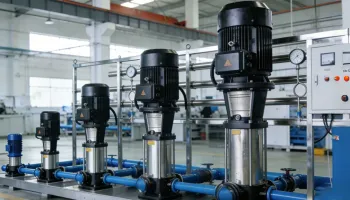
- Vertical pumps stack the motor and impeller assembly along a single vertical axis, which shrinks the footprint compared to horizontal designs that need a base and side clearance.
- They’re a strong fit for water treatment, chemical processing, asphalt production, and any facility where floor space costs real money.
- Vertical turbine pumps and sump pumps are common choices because they can be installed directly over a wet well or tank without extra piping runs.
- Space savings come with trade-offs. Access for maintenance and bearing lubrication can be tougher on tall vertical units.
- Choosing between vertical and horizontal designs depends on flow rate, suction conditions, and how often the plant expects to service the unit.
Why Floor Space Is Getting Harder to Find
Walk into most industrial plants built in the last decade and you’ll notice something. There’s less room to work with than there used to be.
Land costs more. Facilities are retrofitting old buildings instead of building new ones. And engineers keep getting asked to fit more equipment into the same square footage, or less. So what happens when a plant needs a high-capacity pump but doesn’t have the floor space a traditional horizontal unit demands?
This is where vertical pumps earn their keep. Their design orientation, standing tall instead of sprawling wide, means a facility can install serious pumping capacity in a fraction of the ground space. Distributors like AMED-US have seen this play out across water treatment, asphalt, and chemical processing operations where every square foot of the plant floor is already spoken for.
What Makes a Pump “Vertical” in the First Place
The basic idea is simple. Instead of mounting the motor and pump end side by side on a horizontal baseplate, a vertical pump stacks the components along a vertical shaft. The motor sits on top, and the pump body extends down, often into a tank, sump, or well.
That single design choice changes almost everything about how the unit fits into a plant.
Vertical Turbine Pumps
Vertical turbine pumps lower a series of impeller stages down into a well or reservoir. They’re common in municipal water supply, irrigation, and fire protection systems where the water source sits below grade. Because the pump extends downward rather than outward, it needs a fraction of the floor space a comparable horizontal multistage pump would require.
Vertical Sump and Process Pumps
Vertical sump pumps and vertical process pumps work a bit differently. They’re built to sit directly over a sump, tank, or basin, pulling fluid up and out without a separate suction line running across the floor. That eliminates the need for extra piping, extra supports, and extra room, which adds up fast in a crowded plant.
The Space Math Behind Vertical Pump Design
Here’s the part competitors covering this topic tend to skip. Space efficiency isn’t just about the pump’s footprint sitting on the floor. It’s about everything that footprint used to require.
A horizontal pump typically needs a foundation pad, alignment clearance between the motor and pump shaft, and enough room on both sides for a technician to reach the coupling and bearings. Add up the pad, the clearance, and the service aisle, and a “compact” horizontal pump can still eat up a surprising amount of usable floor area.
A vertical pump removes most of that math. Because the motor sits directly above the pump on a shared vertical axis, there’s no separate baseplate alignment to maintain and no side clearance needed for coupling access. In facilities where AMED-US has supplied vertical process pumps for chemical and water treatment applications, the footprint reduction compared to an equivalent horizontal unit is often the deciding factor in the specification, not just a nice bonus.
That matters more in retrofit projects than in new construction. When a plant is adding capacity inside an existing building, there usually isn’t extra floor space sitting around waiting to be used.
Where Vertical Pumps Solve Real Plant Problems
Water and Wastewater Facilities
Municipal and industrial water treatment plants are probably the most obvious use case. Vertical turbine pumps pull water from wells, reservoirs, or wet wells without needing a large pump house built around them. That’s a big deal for treatment facilities working inside older infrastructure with fixed building footprints.
Chemical Processing
Chemical plants deal with a different problem: corrosive or hazardous fluids that need contained handling. Vertical sump pumps designed for chemical service can be installed directly into a containment basin, keeping the fluid path short and reducing the number of seals and connection points that could eventually leak. Fewer connections generally means fewer failure points, though that depends on the specific fluid and materials involved.
Asphalt and Aggregate Plants
This one gets less attention in most articles on the topic, but it’s worth calling out. Asphalt plants run tight schedules and tighter layouts. Equipment gets crammed into whatever space is left after the drum, silos, and conveyors are placed. Gear pumps and vertical pump configurations used for asphalt cement transfer and additive metering need to fit into that leftover space without interrupting the plant’s flow path. In practice, that’s often the real constraint driving the pump selection, not just flow rate or pressure requirements on paper.
Vertical vs Horizontal Pumps: Making the Right Call
So does that mean vertical always wins? Not exactly.
Horizontal pumps still make more sense in a lot of situations. They’re generally easier to access for routine maintenance since the coupling, bearings, and seals sit at a convenient working height instead of at the top or bottom of a tall vertical shaft. If a plant has the floor space to spare and expects frequent servicing, a horizontal design can actually save time and labor over the pump’s life.
Vertical pumps tend to win when:
- Floor space is limited or expensive
- The fluid source is below grade, like a well or sump
- The application allows for less frequent maintenance intervals
- Piping runs need to stay short to reduce pressure loss or contamination risk
Horizontal pumps tend to win when:
- Maintenance access is a top priority
- The plant has floor space available
- Technicians need frequent, quick access for inspection
Depending on your situation, one design might edge out the other even within the same facility. It’s not unusual to see both types running in different parts of the same plant.
Maintenance Considerations for Vertical Pumps
Vertical pumps aren’t maintenance-free, and nobody should assume that going in. The bearings and seals on a tall vertical unit can be harder to reach than on a horizontal pump sitting at waist height. Some designs require pulling the entire pump assembly to service internal components, which takes more planning than a quick horizontal bearing swap.
That’s not a reason to avoid vertical pumps. It’s a reason to plan for it. Facilities that specify vertical units generally build maintenance access into the surrounding layout from the start, whether that’s overhead clearance for lifting equipment or a platform built around the motor mount.
Skipping that planning step is where a lot of the “vertical pumps are hard to maintain” complaints actually come from.
What to Ask Before Specifying a Vertical Pump
A few questions tend to separate a good vertical pump specification from a problematic one:
- What’s the actual available headroom above the installation point?
- How often does the application require inspection or seal replacement?
- Is the fluid corrosive, abrasive, or prone to solids buildup?
- What’s the suction condition, and does it require submersion or dry-pit mounting?
- Does the plant have lifting equipment available for pump removal during service?
Getting these answers early avoids the common mistake of choosing a pump based on flow curve alone and running into an access problem six months after startup.
FAQ
Do vertical pumps really save more space than horizontal pumps?
Generally, yes. Vertical pumps stack the motor and pump body along a single axis, which removes the need for a wide baseplate and side clearance that horizontal pumps require. The exact savings depend on the specific models being compared.
Are vertical pumps harder to maintain than horizontal pumps?
In most cases, maintenance access is more limited on tall vertical units, especially for bearing and seal service near the top of the shaft. This can be managed with proper planning for lifting equipment and access clearance during installation.
What industries use vertical pumps most often?
Water and wastewater treatment, chemical processing, asphalt production, and general industrial facilities with below-grade fluid sources or limited floor space commonly rely on vertical pump designs.
Can a vertical pump be used for corrosive chemicals?
Yes, vertical sump and process pumps are available in materials suited for corrosive or hazardous fluid handling. Material selection should be based on the specific chemical, concentration, and temperature involved.
What’s the difference between a vertical turbine pump and a vertical sump pump?
A vertical turbine pump uses staged impellers lowered into a well or reservoir, common in water supply applications. A vertical sump pump is designed to sit over a sump or basin and pump fluid up and out, often used in process and containment applications.
Do vertical pumps cost more than horizontal pumps?
Cost varies by manufacturer, materials, and capacity. Vertical pumps can carry a higher upfront cost in some cases, but the floor space and piping savings often offset that over the life of the installation, depending on the facility.
How do I know if my plant needs a vertical pump instead of a horizontal one?
It depends on available floor space, the location of the fluid source, and how often the application requires maintenance access. A pump distributor or engineer familiar with your process can help evaluate flow requirements against these physical constraints.