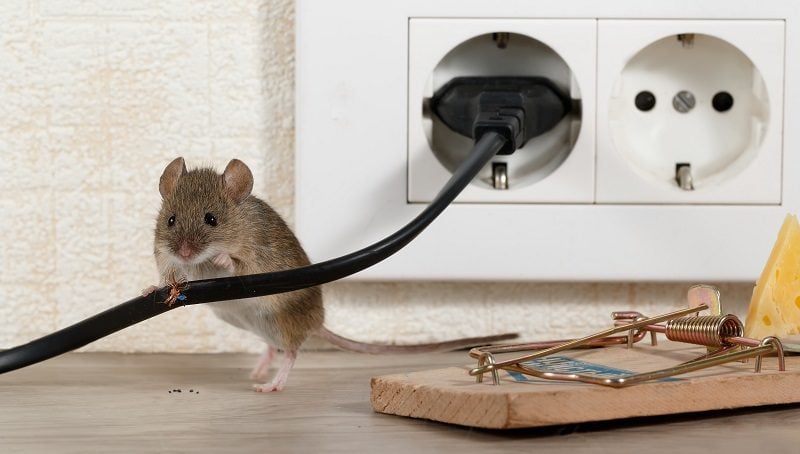
For US homeowners, discovering possible signs of mice or rats can be stressful. Scratching sounds, droppings, damaged food packaging, or movement caught on a home security camera may all suggest that rodents are active somewhere around the property. However, a camera alert or suspicious activity does not automatically confirm that a rodent infestation exists.
Home cameras and activity records can be useful tools for documenting what is happening and giving a pest professional more information to work with. The key is to use monitoring as an observation method rather than treating it as a substitute for a professional inspection.
How Home Cameras Can Help
Modern indoor and outdoor cameras can detect movement and record activity in areas where homeowners may not regularly look. Depending on the camera’s location, useful monitoring points can include garages, basements, attics, kitchens, utility rooms, crawl spaces, and areas near trash or food storage.
A camera may capture movement during periods when the home is quiet, particularly at night. Recording these events can help establish patterns, such as repeated activity in the same area or movement occurring around the same time each night.
However, motion detection is not the same as rodent identification. A camera may detect a mouse, rat, insect, pet, falling object, or another source of movement. Even video footage that appears to show a small animal may not provide enough information to confidently identify the species.
For homeowners looking for additional information about professional rodent services, RodentExterminator.com can be used as a resource when researching rodent inspection and control options.
Keep an Activity Record
In addition to saving useful camera clips, homeowners can maintain a simple activity log. Consistent records can make it easier to explain the situation during a professional inspection.
A useful activity record might include:
- Date and time: Record when the activity occurred.
- Location: Note the room, wall, cabinet, attic area, garage, or exterior location.
- What was observed: Describe movement, sounds, droppings, gnaw marks, nesting material, or other signs.
- Camera footage: Save relevant clips rather than relying only on memory.
- Frequency: Record whether the activity happened once or repeatedly.
- Environmental conditions: For outdoor observations, note unusual weather or other circumstances that could affect animal activity.
- Changes: Document whether signs appear to be increasing, decreasing, or moving to another part of the property.
It is better to record observations objectively rather than immediately labeling everything as evidence of mice or rats. For example, “motion detected near pantry at 2:14 a.m.” is more useful than simply writing “rat in pantry” when the animal has not been positively identified.
What to Ask During a Professional Inspection
If a homeowner suspects rodents, a professional inspection can help determine what evidence is actually present. Bringing camera recordings and activity logs to the appointment can give the inspector additional context.
Homeowners may want to ask:
- What evidence indicates that rodents are present?
- Can the animal or signs be identified as mice, rats, or another pest?
- Where are the strongest signs of activity?
- Are there visible entry points around the exterior?
- Could the activity be coming from another part of the building?
- Are there conditions around the property that may attract rodents?
- Is additional monitoring recommended?
- What removal or control methods are appropriate?
- Which repairs should be completed to reduce potential entry points?
- How will we know whether the activity has stopped?
These questions help homeowners understand what the inspection actually established rather than assuming that every camera alert represents a confirmed infestation.
A Camera Alert Is Not a Confirmed Rodent Identification
One of the most important distinctions is between detection and identification.
A camera’s motion sensor can tell you that something moved within its field of view. It does not necessarily establish what caused the movement. Even clear footage may have limitations because of lighting, camera angle, distance, resolution, or the speed of the animal.
Other evidence can also require interpretation. Droppings, gnaw marks, noises, and nesting materials may be consistent with rodent activity, but their location and appearance matter when determining what caused them.
For that reason, homeowners should preserve useful evidence and allow a qualified professional to evaluate the overall situation.
Monitoring Is Different From Rodent Removal
Home monitoring can continue before, during, or after professional services. A camera can help homeowners observe whether activity continues, but monitoring itself does not remove rodents.
Rodent control may involve several different steps depending on the property and inspection findings. These can include identifying active areas, addressing attractants, using appropriate control measures, and checking whether activity declines afterward.
Homeowners should also understand the difference between removal and prevention. Removing an animal does not necessarily address the opening through which it entered.
Entry-Point Repairs Are a Separate Part of the Solution
Mice and rats can potentially enter buildings through surprisingly small openings. Gaps around doors, utility penetrations, vents, roofs, foundations, pipes, and other structural areas may provide access.
An inspection may identify areas that need to be sealed or repaired. These repairs can be an important part of reducing the opportunity for future rodent entry, but they are distinct from monitoring and removal.
Homeowners should therefore ask specifically which entry points were found and who is responsible for repairing them. In some situations, the pest professional may provide exclusion work; in others, a homeowner, contractor, roofer, or another specialist may need to handle the structural repair.
Using Monitoring as Part of a Larger Process
Home cameras and activity records can give homeowners valuable information, especially when activity is intermittent or occurs when nobody is watching. The most useful approach is to treat these tools as documentation rather than definitive diagnosis.
A homeowner can save relevant footage, maintain a dated activity log, photograph physical signs when appropriate, and provide the information to the professional conducting the inspection. The inspector can then evaluate those observations alongside physical evidence found at the property.
Final Thoughts
A home camera can be an effective way to notice unusual activity, but a motion alert should be viewed as a starting point rather than proof of a rodent infestation. Keeping accurate records and preserving useful footage can help a professional understand what the homeowner has observed.
The overall process is easier to understand when homeowners separate four different activities: monitoring, identification, removal or control, and entry-point repair. Each addresses a different part of the problem. By documenting observations and asking specific questions during an inspection, homeowners can make better-informed decisions about what their property actually needs.
FAQs
1. Can a home security camera confirm that I have a rodent infestation?
Not by itself. A camera can detect and record movement, but a motion alert does not necessarily identify the animal as a mouse or rat. Professional inspection and physical evidence may be needed for confirmation.
2. What should I record when I suspect rodent activity?
Record the date, time, location, type of activity, and frequency of observations. Save relevant camera clips and document physical signs such as droppings, gnaw marks, or nesting material.
3. What should I ask during a professional rodent inspection?
Ask what evidence confirms rodent activity, where the activity appears to be concentrated, whether entry points were found, and what control or exclusion measures are recommended.
4. Does monitoring with cameras remove rodents?
No. Cameras are monitoring tools and do not remove or control rodents. If rodents are confirmed, professional control measures may be necessary.
5. Are entry-point repairs part of rodent removal?
They can be an important part of long-term rodent prevention, but removal and structural repairs are separate steps. Ask the professional which openings were identified and whether they provide exclusion or sealing services.