
Unique Selling Propositions: Lessons from Successful Entrepreneurs
What makes a business stand out when competitors offer similar products and services? Successful entrepreneurs share practical ways to claim a clear promise, serve niche buyers, and build lasting trust. The article includes insights from experts in the field, along with proven lessons on support, marketing, hiring, and customer relationships.


Unique Selling Propositions: Lessons from Successful Entrepreneurs
What makes a business stand out when competitors offer similar products and services? Successful entrepreneurs share practical ways to claim a clear promise, serve niche buyers, and build lasting trust. The article includes insights from experts in the field, along with proven lessons on support, marketing, hiring, and customer relationships.
- Target Niche Buyers With Verifiable Pipeline
- Keep Legal Clients Close
- Challenge Incumbents With Per-Send Rates
- Model Search Outcomes Before Changes
- Center Mental Health on Personal Truth
- Specialize in Google Ads Leads
- Claim Gaps With One Proven Promise
- Offer Custom Kits Without Minimums
- Earn Creator Trust Personally
- Validate Your Proposition in Public
- Build Local Trust Face-to-Face
- Differentiate Through Exceptional After-Sale Support
- Recruit With Supply Chain Expertise
- Embrace Queer Authenticity
- Eliminate Spreadsheet Copy-Paste
- Stop Issues Before Complaints Arise
- Equip Engineers With Vendor-Neutral Tools
- Deliver Pathogen Results On-Site
Target Niche Buyers With Verifiable Pipeline
We found our unique selling proposition by looking at what our clients kept saying before they hired us. They rarely asked for more traffic or more leads. They said their ad platform reported one thing and their CRM showed another, and they couldn’t tell whether the spend was producing pipeline. Many had also worked with agencies that sold them with senior people and then handed the account to juniors. Those two complaints became our proposition: we focus on turning marketing spend into pipeline you can verify, for B2B SaaS, fintech and edtech companies, and the senior person who sells the work runs the account.
Developing it meant giving things up. Narrowing to a few categories meant turning down work that didn’t fit, and building our content, case studies and tools around one problem so that the whole business backed up the claim. A proposition only works if every part of the company points at it.
The insight I’d share is that most marketing fails to differentiate because it is interchangeable, not because of budget. Most agencies describe themselves in the same terms: data-driven, full-funnel, results-focused. A buyer can’t tell them apart, so they compare on price. I call this the Sameness Tax, the compounding cost of sounding like everyone else.
The way out is relevance over reach. Pick a specific customer and a specific problem, and describe it in their words, so that someone with that problem recognizes themselves immediately. A smaller audience that sees you as the obvious answer is worth more than a large one that sees you as one option among many.
 Ankita Pathak, Founder, OneMetrik
Keep Legal Clients Close
I didn’t start with a USP. I started as Advertikal, a general agency for any service business. Plumbers, clinics, law firms, whoever came in. We were good at the ads, but on a sales call we sounded exactly like every other agency. Same promises, same case studies, same “we’ll grow your business.”
The law firms were the clients that stuck, and the ones where I understood the business best. Signed cases, intake, case value, state ad rules. So I went all in and launched Lexvertikal, paid ads for law firms only.
But niching down wasn’t the real differentiator. Plenty of agencies say they’re legal-focused. What I learned is that in this market the gap isn’t expertise, it’s access.
The big legal marketing agencies run an industrial model. The founder closes the deal, then the law firm gets handed to an account manager who has 30 other accounts. You send a question and wait a week for an answer. The account manager changes every few months and you explain your firm from scratch again. Attorneys hate it, and a lot of them have lived through it.
So that became the selling point. Lexvertikal is founder-led. I run every sales call and I stay on the account after it signs. My team of media buyers executes, but strategy and the relationship stay with me. When an attorney has a question, they get an answer from the person who actually knows their account, the same day, not a ticket number.
We back it with structure that matches. Law firms own their ad accounts, we work month-to-month, and we report in signed cases and cost per signed case instead of clicks. Nothing locks a client in, so the personal attention has to be real every month.
The insight: differentiation isn’t what you do, it’s what the client experiences. Every agency can run Google Ads. Very few let the attorney talk to the person who built the strategy. For a law firm owner spending serious money on ads, that access is worth more than any feature on a capabilities deck.
 Davor Rapic, Founder, Lexvertikal
Challenge Incumbents With Per-Send Rates
Our differentiation came out of losing. At SmartrMail we had feature parity with Klaviyo early on, then they raised half a billion dollars while we had raised half a million, and we were simply outgunned. The lesson I took into Nitrosend is that you cannot out-feature a better-funded incumbent, so you differentiate on the shape of the product and the business model instead. Nitrosend is email built for AI agents to operate through an API and MCP, not another dashboard to click around in, and we price per send with unlimited contacts. Under Klaviyo’s model, an agency with a 100k-contact client pays for all 100k contacts even if it only emails 30k of them. That one pricing decision explains our position faster than any feature list could. The insight I would pass on is to find the assumption the market leader cannot change without hurting its own revenue, and build your whole proposition on the opposite of it.
 George Hartley, CEO, Nitrosend
Model Search Outcomes Before Changes
Our proposition grew out of a problem I encountered while building early search software: reacting to each algorithm change was a fragile way to work. My co-founder Maura suggested building our own search engine so people could understand what search engines were evaluating. I developed that idea into modeling software that lets a team investigate ranking factors and test proposed changes in a controlled environment.
The distinction I wanted was a different decision process: understand the relationships behind a result, form a hypothesis, and test it before changing the live site. A model is an approximation of observed search behavior; it does not give us Google’s source code or guarantee a ranking.
My differentiation lesson is to identify the uncertainty your customer is trying to resolve. Adding another score to a dashboard can leave that uncertainty intact. Giving someone a way to examine why a change might help, and what else it might affect, creates a more useful proposition.
 Scott Stouffer, Co-Founder + CTO, Market Brew
Center Mental Health on Personal Truth
My USP found me before I named it. I started Self-Care Shirts by drawing the exact phrases I needed to hear during my own mental health journey, the reminders I wanted to wear but could not find anywhere. When I started sharing them, people did not just say the designs were cute. They said things like “this made me feel seen” and “I needed this today.” That reaction told me what I was actually selling was not apparel. It was the feeling of being understood. So I built the whole brand around that: hand-drawn, deeply personal, mission-driven mental health apparel, with every order supporting the 988 Suicide and Crisis Lifeline and The Trevor Project. The giving-back piece is not a marketing layer, it is the reason the brand exists, and customers feel that difference.
One insight I gained about differentiation in the market was that you differentiate by going narrower and more personal, not broader. The instinct when you are small is to appeal to everyone, but sameness is invisible. My market is full of generic self-care and mental health merch, and the thing that set us apart was leaning harder into the specific, honest, sometimes funny voice that only comes from lived experience. The more personal and true the message, the less replaceable the brand becomes. People can copy a design. They cannot copy why it exists or who it comes from.
 Alyssa Ostroff, Founder/Designer, Self-Care Shirts
Specialize in Google Ads Leads
Our unique selling proposition is built around doing one thing exceptionally well. For the past 15 years, I’ve focused on Google Ads lead generation across my own businesses, client campaigns and other lead generation companies I’ve run. That experience has allowed me to develop genuine expertise in what works.
Rather than being a generalist marketing agency offering a bit of SEO, PPC, email marketing and whatever else, we focus specifically on Google Ads lead generation. We know where we can deliver real value, so we keep the offering extremely simple. That clarity has worked well.
 Ollie Smith, CEO, The Lead Gen Company
Claim Gaps With One Proven Promise
I identified our unique selling proposition by systematically analysing competitors’ UVPs across websites and marketing materials, paying attention to clarity, positioning, emotional and rational appeal, and consistency. That audit highlighted where competitors were vague or inconsistent and pointed to specific gaps we could claim credibly. We developed our USP by choosing one clear, provable claim, refining concise messaging, and reinforcing it with consistent design, calls to action, and proof points. One insight I gained is that differentiation succeeds when a single clear claim can be understood in seconds and is consistently proven across every touch point.
 Yvette Adams, Founder/Partner, The Creative Collective
Offer Custom Kits Without Minimums
I learned something very valuable from the concept of loyal customers. I was ordering kits for my army cadet platoon at the university. They were for our sports clubs, and we needed them customized for us only. I checked a lot of places and nobody could provide us a design and stuff that we could say was only ours. Factories wanted a minimum order and gave us whatever they had in stock. I found a gap there. It was very simple: good quality, with our own design, and only order what you need. I removed the condition of a minimum number.
How would you feel if I said that I got it wrong? My insight came from getting it wrong, actually. So what happened was, we launched a stock line very early, and it did not sell. I found that I went against my own rulebook. My customers did not come to me to buy something off the shelf. They were my customers because I made something that was according to their needs. I realized it soon, and we dropped all our stock to go made-to-order only. It was me being different from the market that attracted my customers, and they also missed it. Find yours and don’t let it go.
 Simon Elliott, Founder & Operations Director, CLIFTON
Earn Creator Trust Personally
I found it by looking at who clients actually came back for.
Mark Studios started in 2020 as one video editing gig I listed on Fiverr while I was studying computer science. For a long time our website described it the way most agencies do: a team of editors, a process, fast turnaround. Then I looked at the repeat clients. They weren’t coming back for a process. They came back because they trusted me with their channel. I’ve been making YouTube videos since I was 10 and grew my own channel past 200,000 subscribers, so I know what a creator is trying to get out of an edit, not just how to cut it.
So the proposition became simple: you work directly with me. One person who knows your style, answers your messages and is accountable for the result. This month we rewrote our whole website around that idea.
The insight: differentiation usually isn’t a feature you add. It’s the reason people already choose you that you haven’t said out loud. Look at your repeat customers and ask what they would lose if you disappeared tomorrow. For us the answer was never “an editing service.” It was me.
 Mark Santos, Founder & Creative Director, Mark Studios LLC
Validate Your Proposition in Public
I identified and developed my unique selling proposition by running a public 100-day challenge to test whether I could take a startup from zero to profit and by documenting the process on LinkedIn. That framework forced me to define our ideal customer profile, map the customer journey from awareness to advocacy, test product-market fit, and surface the emotional reasons people buy. Iterating those elements in public helped me distill a single proposition that links what we offer to the specific problems and motivations of customers. One clear insight from the exercise is that differentiation comes from understanding and proving why customers choose you, not from adding features for their own sake.
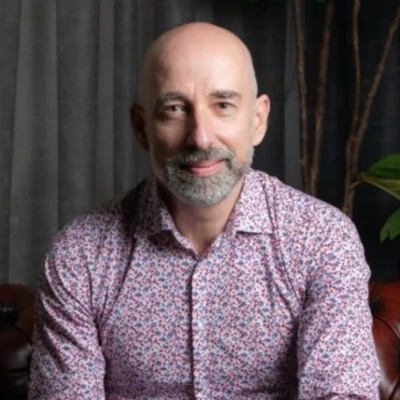 Ronan Leonard, Founder, Intelligent Resourcing
Build Local Trust Face-to-Face
Most of us can see our unique selling proposition without being able to articulate it. When we hear someone trying to pigeonhole our business into a box, there is a natural reaction to say ‘except…’ or ‘but…’ and the statement that comes next is often that unique selling proposition.
A business can adjust their approach (and therefore create or amplify their USP) by listening to the audiences they serve and focusing on the disappointments that potential customers have with their industry.
For example, as a marketer working with local businesses, I heard complaints that most marketing companies were faceless people who lived far away and didn’t care about the business. People complained that they had little trust in marketers and felt like it was a leap of faith to hire them, and that results were often unclear. Also, that most of the businesses that needed the most help had the smallest budget. It was a lack of trust.
My solution; create a directory for our community and post free listings for businesses with good reputations. My first contact with most businesses was me walking into the business and showing them the free listing, asking if all the information was correct, and asking what their needs were and looking for ways to help. Some need leads. Some need more employees. Some are struggling with missed calls. But they opened up because I showed up in person, created value for them, and listened.
While I’m listening, I’m often listening for their USP. Understanding how they do what they do and why they do it often leads to the answer, and they feel validated when it is reflected back to them.
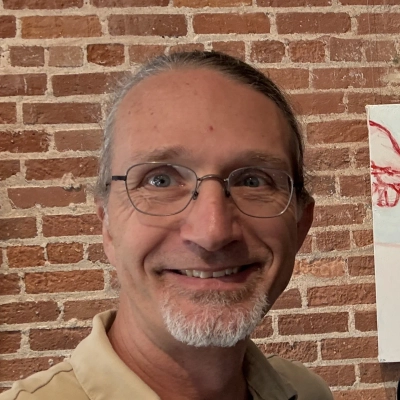 Jason Shaffer, Founder, CEO, Huntersville Hub
Differentiate Through Exceptional After-Sale Support
I started Zetronix back in 2006 and trust me I did not have any USP plan. I actually made it after looking at complaints from my customers. I was targeting people who wanted affordable dash cams and camera pens. There were tons of places people could find these, but they were all overseas businesses. Problem with an international seller for electronic items is that they are hard to track in case of issues. I found that, If your order is not what you want, you are on your own.
I was not a manufacturer, so I went to factories myself. I tested samples on behalf of my business and sent them back for changes and tested them again. I even wrote our own user manuals because the original ones made in Japan were almost useless for my customers in the USA. Then I added US-based customer support and gave a one-year replacement on parts. This changed everything for my customers.
My idea is that you do not win from competition by only having a good product. Anyone can find a camera that looks exactly like mine. But there is something I have which cannot be copied. It is my after-sales policy. It cannot be copied because I have worked a lot on it, and it is also my USP. It will take a lot of effort to support a person step by step if he is stuck on setup or something. And I have cracked that code for my business. In the starting years of my business, I thought after-sales support was something extra I was giving. But now it is the main thing my clients are buying.
What I learned is that the product itself is rarely where you win. Someone can source a camera that looks exactly like ours. What they can’t easily copy is the part after the sale, when a customer is stuck on setup and needs a real person to walk them through it. For years I treated support as overhead. Now I’d say it’s the main thing we actually sell.
 Edward Shklovsky, Founder & CEO, Zetronix
Recruit With Supply Chain Expertise
For us, we’re a recruiting firm specializing in supply chain, so it was pretty easy to identify what makes us different. All of our recruiters have worked in supply chain. So we kind of flipped the model. Instead of teaching recruiters about supply chain, we teach recruiting to supply chain professionals. Because supply chain is a really complex industry, and I think it’s easier to teach someone recruiting than to teach someone supply chain if they haven’t actually worked in it.
For example, titles and seniority aren’t standardized across companies. One company might call a role a manager, while another calls it a director. You really need to understand what the person will be doing day to day, otherwise you’ll attract the wrong candidates. We’ve actually seen this with clients. They kept getting the wrong candidates, and once we changed the job title, they were able to find the right leader.
One insight I’ve gained is that there’s space for you in the market, even if you think it’s saturated. There are a lot of recruiting firms, but what makes you different? For us, it’s our industry knowledge. I think as long as you’re genuine about what you’re building and the value you’re offering, there’s a space for you.
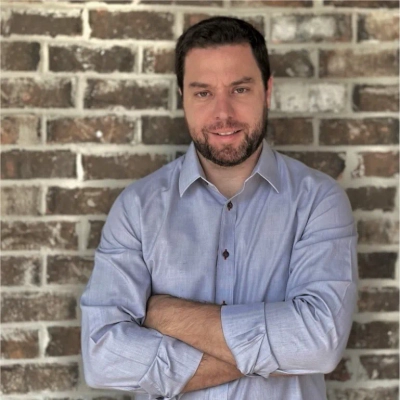 Friddy Hoegener, Co-Founder, SCOPE Recruiting
Embrace Queer Authenticity
I never really wanted to start a business. Drift Studio happened because I felt like I didn’t have another choice.
I was leaving a marketing agency that had completely burned me out. Around the same time, I was starting my gender transition, which created even more friction at work. I needed to get out.
I spent the next few months working on my portfolio and applying for jobs. I was open to working for another company or doing contract work, but I kept getting rejected. Sometimes I’d make it through several interviews, only for them to choose someone else.
Eventually, I started taking on my own projects and building Drift. I didn’t know exactly what I wanted it to become. I just knew I didn’t want to end up in the same environment I’d left.
For years, I felt like I had to change everything about myself to fit into the industry. How I dressed, talked, presented myself, and even what parts of my personality I could share. I’m also self-taught and don’t have a degree, so I spent a lot of time feeling like I wasn’t as qualified as everyone else.
What changed was when clients started approaching me specifically because I was queer, and they were queer too. It was weird realizing that the same things I felt had worked against me before were now the reasons people wanted to work with me.
I think that’s when I started figuring out what made Drift different. I don’t try to act like a traditional agency. Clients work directly with me. I’m the one emailing them, asking questions, doing research, and making creative decisions. There’s no account manager in between.
I also show up as myself. I’m sarcastic, have dry humor, curse sometimes, and can be socially awkward. I’m not trying to impress anyone by pretending to be some polished corporate professional.
Creatively, I don’t feel like I need to know an industry inside and out before working with a client. I actually enjoy coming in without that background. I get to learn from them, ask questions, and explore ideas that someone who’s spent years in that industry might not consider.
I guess the biggest thing I’ve learned about differentiation is that being different doesn’t mean you’ll appeal to everyone. And that’s fine. I spent enough time trying to fit into places where I wasn’t comfortable.
Now I feel like I’m part of the creative industry, but also kind of outside of it. And I’m okay with that.
 Azul Duran, Founder & Creative Director, Drift Studio
Eliminate Spreadsheet Copy-Paste
Our USP came from the complaints, not from a whiteboard session.
When we started G-Accon, we thought we were selling a better reporting tool. Then we listened to what accountants actually said on calls. They weren’t asking for prettier reports. They were tired of exporting CSVs from QuickBooks or Xero, pasting them into spreadsheets and fixing the formatting every month.
So the real pitch became simple: your accounting data, live in Google Sheets, refreshed on a schedule, with no copy-paste. Accountants already live in spreadsheets. We stopped asking them to learn a new dashboard and went to where they already work.
What I learned about standing out: don’t compete on features. Compete on the one annoying task your customer does every week. If you remove that, they’ll remember you.
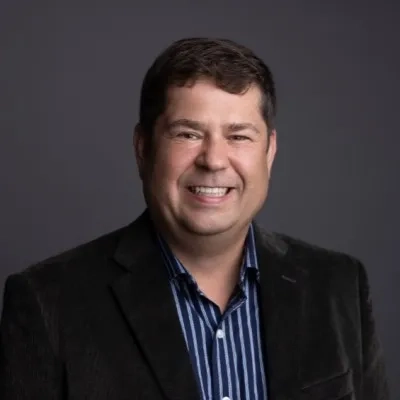 Andrey Kustarnikov, CEO at G-Accon, G-accon
Stop Issues Before Complaints Arise
Our unique selling proposition came out of a problem I lived as an operator, not out of a market map. After running P.E. Nation, my co-founders and I went to Papinelle, and the customer service numbers were an absolute mess: complaint tickets were running at 110 percent of order volume, and almost every one of them was about an order. Where is it, why is it late, where is my refund.
That number changed how I saw the whole category. Every tool on the market was built to answer those tickets faster. Nobody was asking why the tickets existed in the first place. The answer was that the problems were already visible in the brand’s own systems, in a stalled shipment, a failed payment or a stock sync error, days before the customer noticed. The support team just had the same visibility as the customer, which was none.
So we positioned around prevention rather than response: catch the operational issue as it happens and fix it before it becomes a complaint. The insight I would pass on about differentiation is that you rarely find it by building a better version of what exists. You find it by questioning the assumption the whole category takes for granted. For us that assumption was that a ticket is the starting point. It should be the failure point.
 Jevon Le Roux, Co-founder & CEO, Keeyu
Equip Engineers With Vendor-Neutral Tools
We found our unique selling proposition by noticing a misalignment in our market. Most vendors in the Apache Kafka space are selling the underlying infrastructure, so their tooling is built to pull you deeper into their platform. We decided to build strictly for the engineers running these systems. Our products are vendor-agnostic and stay close to open-source Apache technology without modifying or extending it, so a team can run Kpow against whatever Kafka they already have. Because we are not trying to sell anyone the cluster, we can put our effort into the governance regulated teams actually need, like role-based access control, audit logging and data masking.
The biggest insight I have gained about differentiation is that engineers are both the best and the worst people to sell to. Marketing superlatives do nothing for them. You have to show quality, speak plainly and be honest about trade-offs, and if you do, they will tell you exactly what they need. That is how we grew Factor House for five years without outside investment. One of our clearest proof points is a major South Korean e-commerce marketplace that replaced a licensed vendor console with Kpow and now gives around 150 engineers self-service Kafka operations across 10 clusters in production and development. Nobody there was sold a vision. They were shown a tool that made their day easier.
 Derek Troy-West, Co-founder & CEO, Factor House
Deliver Pathogen Results On-Site
We were trying to solve a problem that food producers had, but we also knew there were other established companies doing pathogen testing, so we weren’t going to win simply by saying we had another test. We had to create something that answered grievances that other kits weren’t addressing. And the one that kept coming up in every conversation was the fact that even if food producers got a good result from other tests, they still had to send a sample and wait a long time.
So we developed rapid tests for things like Salmonella and Listeria that are robust enough to be used on-site, instead of just at specialized facilities. That means our clients don’t have to wait for days for a lab report and can actually act faster.
Of course, for that, we had to rethink the chemistry so it was stable and easy to handle. But it changed who can actually use these tools. If you’re a food producer, you don’t have to ship samples across the country and wait days. You can use our tools and get results right where you are. And that’s the whole point. We chose accessibility instead of exclusivity because we didn’t want to shut out a lot of food producers.
 Mario Hupfeld, CTO and Co-Founder, NEMIS Technologies
Related Articles
- 17 Strategies for Startup Competitive Advantage: Lessons from Founders
- 20 Unconventional Ways to Stand Out in a Crowded Market
- 25 Strategies for Pricing: Counterintuitive Insights from Industry Leaders






Comment