
Trust Wallet’s Dami Odufuwa to Outset PR: “Web3 PR Is Becoming the Infrastructure of Credibility”

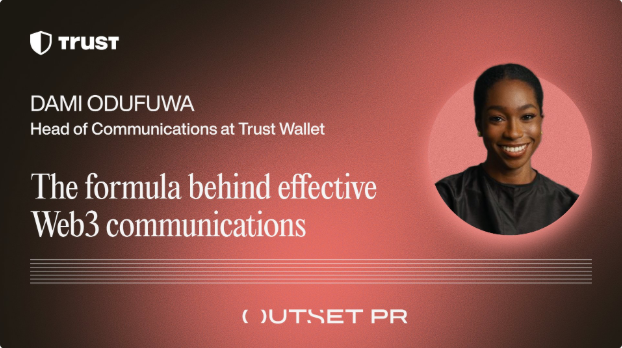
Web3 PR is gradually shifting away from hype-driven visibility toward long-term credibility management, according to Trust Wallet’s Head of Communications Dami Odufuwa.
Speaking in a recent conversation with Outset PR founder Mike Ermolaev, she argued that communication in crypto increasingly functions less like a promotional layer and more like infrastructure that helps users evaluate uncertainty, risk, and reliability.
Her perspective is shaped not only by crypto experience, including leading PR for Binance across African markets, but also by activism and advocacy work connected to Nigeria’s #EndSARS movement. According to Odufuwa, both activism and Web3 rely on distributed communities where trust and coordination become critical.
Visibility Alone No Longer Builds Trust in Crypto
One of Dami’s core arguments is that visibility and credibility are no longer interchangeable: “Visibility is about being seen, getting attention. Trust is about being believed.”
PR can still generate rapid attention through major announcements, media placements, or aggressive campaigns. But in crypto, visibility can quickly turn into scrutiny if messaging exaggerates reality or if products fail to meet expectations.
This is where many companies misunderstand communication strategy. A constant stream of press releases may create the appearance of activity without increasing user confidence or product understanding.
Odufuwa suggests there’s a clear question behind every campaign planning: “Does this make someone more likely to actually use the product?” If the answer is no, visibility risks becoming disconnected from real adoption and long-term credibility.
More Insights From the Conversation: Web3 Communication Behaves Like a Live System
Dami also pointed out that crypto communication differs from traditional PR because Web3 audiences actively react to and reinterpret narratives in public.
“Communities don’t just consume messages. They challenge them, remix them, and sometimes reject them entirely.”
Communication evolves alongside product updates, market shifts, and, importantly, community sentiment. Drawing from her experience across African markets, Odufuwa noted that one-size-fits-all messaging often fails if the region operates under different user behaviors and economic realities.
She also stressed that high adoption doesn’t automatically equal trust. In many markets, people turn to crypto out of necessity, but long-term credibility depends on whether products actually work reliably under local conditions.
Communications Teams Need Product And Technical Knowledge
Dami believes PR teams now sit much closer to product development, regulation, and user education. She highlights three skills that are becoming increasingly important for communications leaders: critical judgment, cultural awareness, and technical literacy.
In her view, PR no longer simply promotes products. It has to explain complex technologies, contextualize risk, and help users navigate unfamiliar financial solutions with enough confidence: “Treat trust as your primary intention, not attention.”
Overall, Odufuwa’s comments reflect a broader shift happening across the crypto industry: as products become more integrated into users’ financial lives, communication starts functioning as part of the product experience itself rather than a separate marketing layer.
The full conversation with Dami Odufuwa is available on the Outset PR blog.







Comment