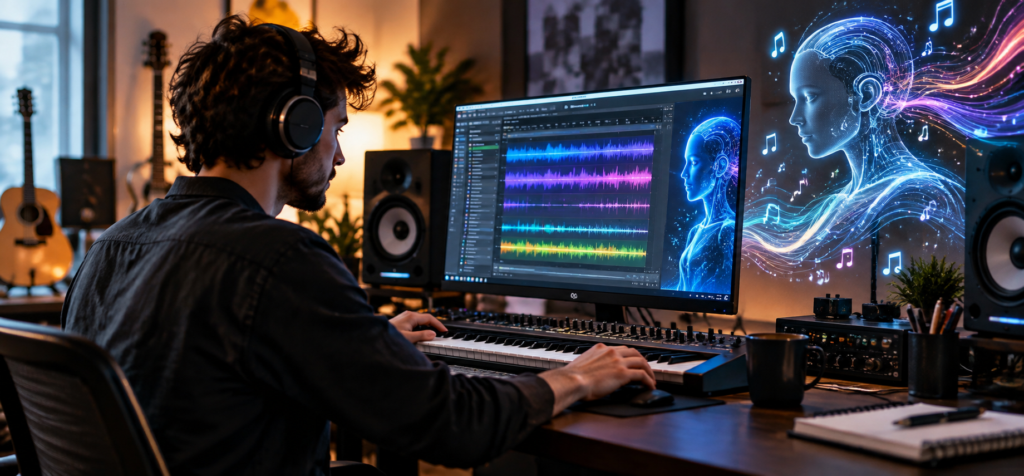
AI song generators are making it easier for musicians, video creators, podcasters, and indie artists to turn lyrics, prompts, and rough ideas into song drafts within minutes.
For creators who want to compare different AI songwriting workflows, they can tap here to explore how AI song generators fit into real music projects.
The value is simple: faster ideas, quicker demos, easier background music, and a lower barrier for people who do not want to start with complicated production software.
AI does not replace creativity. It gives more creators a faster way to hear an idea before deciding whether it is worth developing further.
Top AI Song Generator Tools in 2026
MusicSeed AI
MusicSeed AI is a strong option for creators who want a simple way to generate songs, demos, vocals, and background music online.
It works well for users who want to turn rough ideas, short prompts or lyrics into music drafts quickly. Instead of starting with a complicated production setup, creators can begin with a mood, genre, lyric, or song concept.
A YouTube creator might use it to generate cinematic background music for a travel video. A songwriter could test a chorus idea before recording a full version. A beginner artist may use it to hear how their lyrics sound with vocals and instrumentation.
MusicSeed AI is especially useful for creators who value speed, accessibility, and a beginner-friendly workflow.
Suno
Suno is one of the most recognizable AI song generators for quick full-song creation.
Its biggest strength is simplicity. A user can type a short idea and generate a song with vocals within minutes. That makes it useful for casual creators, meme songs, fast experiments, and early songwriting ideas.
Suno is a good fit when the goal is speed and playful testing rather than detailed production control.
The main limitation is consistency. Some results feel surprisingly complete, while others may sound repetitive or less refined.
Udio
Udio is often used by creators who care more about vocal quality, atmosphere, and detailed song output.
Songwriters may use it to test emotional vocal ideas, hooks, lyrics, or genre direction. Compared with simpler tools, Udio usually rewards users who give more detail in their prompts.
It can be useful for creators who want more expressive demos and are willing to spend extra time shaping the result.
For musicians who care about mood and vocal feel, Udio can be a strong creative testing space.
Soundraw
Soundraw is better suited for creators who need background music rather than complete vocal songs.
Video editors, marketers, podcasters, and YouTubers often use it for instrumental tracks that support visual content. It is useful for tutorials, product videos, social media posts, and branded content.
Soundraw works best when the goal is practical music for content, not necessarily a full song with lyrics and vocals.
For creators who often need quick instrumental music, this can be a helpful option.
AIVA
AIVA is more composition-focused than many casual AI song generators.
It is often used for cinematic music, orchestral arrangements, emotional instrumentals, and soundtrack-style projects. Game developers, filmmakers, and creators working on dramatic content may find it especially useful.
AIVA may not be the easiest tool for someone who only wants a quick vocal song.
But for cinematic, classical, or structured instrumental ideas, it can be valuable.
How to Choose the Right AI Song Generator
The best AI song generator depends on what you want to create.
If you want quick song drafts, choose a tool that can generate full tracks from prompts or lyrics. If you need background music for videos, an instrumental-focused tool may be better. If you care about vocal performance, choose a platform that handles vocals more naturally.
For beginners, ease of use matters more than advanced control.
A simple workflow helps creators move from idea to audio faster. Too many controls can slow down the process before the first track is even finished.
For musicians, flexibility matters more.
They may want to test lyrics, compare genres, explore arrangements, or create rough demos before moving into a professional production process.
For content creators, speed and licensing are often the most important factors.
A creator making weekly YouTube videos probably cares more about finding usable background music quickly than adjusting every sound manually.
Before publishing AI-generated music commercially, always check the platform’s usage rights and licensing terms, especially for ads, monetized videos, client work, and streaming releases.
How Musicians and Creators Use AI Song Generators
Many musicians are not using AI to replace songwriting completely. They use it to speed up the rough draft stage.
A songwriter might test several chorus ideas before deciding which one feels strongest. A producer may use AI to explore chord progressions, moods, or instrument combinations. An indie artist might generate demos to compare different genre directions.
For musicians, AI often works best as a sketchpad.
It helps them hear ideas quickly, but human taste still decides what is worth keeping.
Creators use AI music differently.
A YouTuber may need background music for a travel vlog. A TikTok creator might want a short audio idea for a transition. A podcast creator may need intro music without hiring a composer.
Small teams may also use AI-generated music for product videos, ads, social content, or pitch materials.
The common thread is speed. AI tools reduce the time between having an idea and hearing a usable result.
How to Get Better Results From AI Song Generators
The quality of AI-generated music depends heavily on the prompt.
A vague prompt usually creates vague music.
For example:
“Make a cool song.”
This gives the AI very little direction.
A stronger version would be:
“Upbeat indie pop song with bright guitar, energetic drums, catchy female vocals, and a summer road trip mood.”
This gives the AI more musical context and emotional direction.
Creators can improve results by describing genre, mood, instruments, tempo, vocal style, and use case.
For example:
Before:
“Sad piano song.”
After:
“Melancholic cinematic piano ballad with warm strings, soft vocals, and an emotional final chorus.”
The second version gives the tool a clearer target.
It also helps to generate multiple versions. Most creators do not get the best result on the first try.
AI music generation works better when treated as a creative collaboration rather than a one-click shortcut.
What to Look for in an AI Song Generator
A good AI song generator should help users move from idea to usable audio quickly.
Ease of use is important, especially for beginners. If the tool is too complicated, it defeats the purpose of using AI in the first place.
Audio quality matters too. The result does not need to sound like a finished studio master, but it should be clear enough for demos, background tracks, social content, or idea testing.
Creative flexibility is another key factor.
A strong tool should let users experiment with genres, moods, instruments, vocals, and song structures.
Regeneration is also useful. The first output is often just a starting point, and the best ideas usually come after a few attempts.
Licensing should not be ignored. A tool may be fun for personal experiments but less suitable for commercial content if usage rights are limited.
Common Mistakes Beginners Make
Many beginners try to generate a perfect song in one attempt.
In reality, most creators treat AI music more like sketching than finishing a studio release immediately.
Another mistake is using prompts that are too broad. If the prompt says only “make a pop song,” the result may feel generic.
The better approach is to describe the emotion, style, instruments, and purpose of the track.
Some users also ignore the final use case.
A 15-second TikTok sound, a podcast intro, a cinematic background track, and a full vocal song should not be prompted in the same way.
Another common mistake is skipping the licensing details. This can create problems later if the track is used in monetized videos, ads, client work, or commercial releases.
What AI Song Generators Still Cannot Replace
AI song generators are useful, but they are not perfect.
Professional musicians and producers bring emotional judgment, arrangement experience, mixing skills, and artistic identity that AI cannot fully replicate.
AI-generated vocals can sometimes sound repetitive or inconsistent depending on the style and prompt.
Originality can also become a challenge when prompts are too generic.
That is why strong creative direction still matters.
AI can generate fast drafts, but humans still decide what feels emotional, memorable, and worth developing further.
The best results usually happen when AI handles the first draft and the creator shapes the final direction.
Conclusion
AI song generators are becoming useful tools for musicians and creators who want to turn ideas into music faster.
MusicSeed AI, Suno, Udio, Soundraw, and AIVA each fit different needs, from quick demos to vocals, background tracks, and cinematic music.
The best tool depends on your goal. AI will not replace creativity, but it can make the first step much easier.