
Top AI Image Generators With Minimal Content Filters in 2026

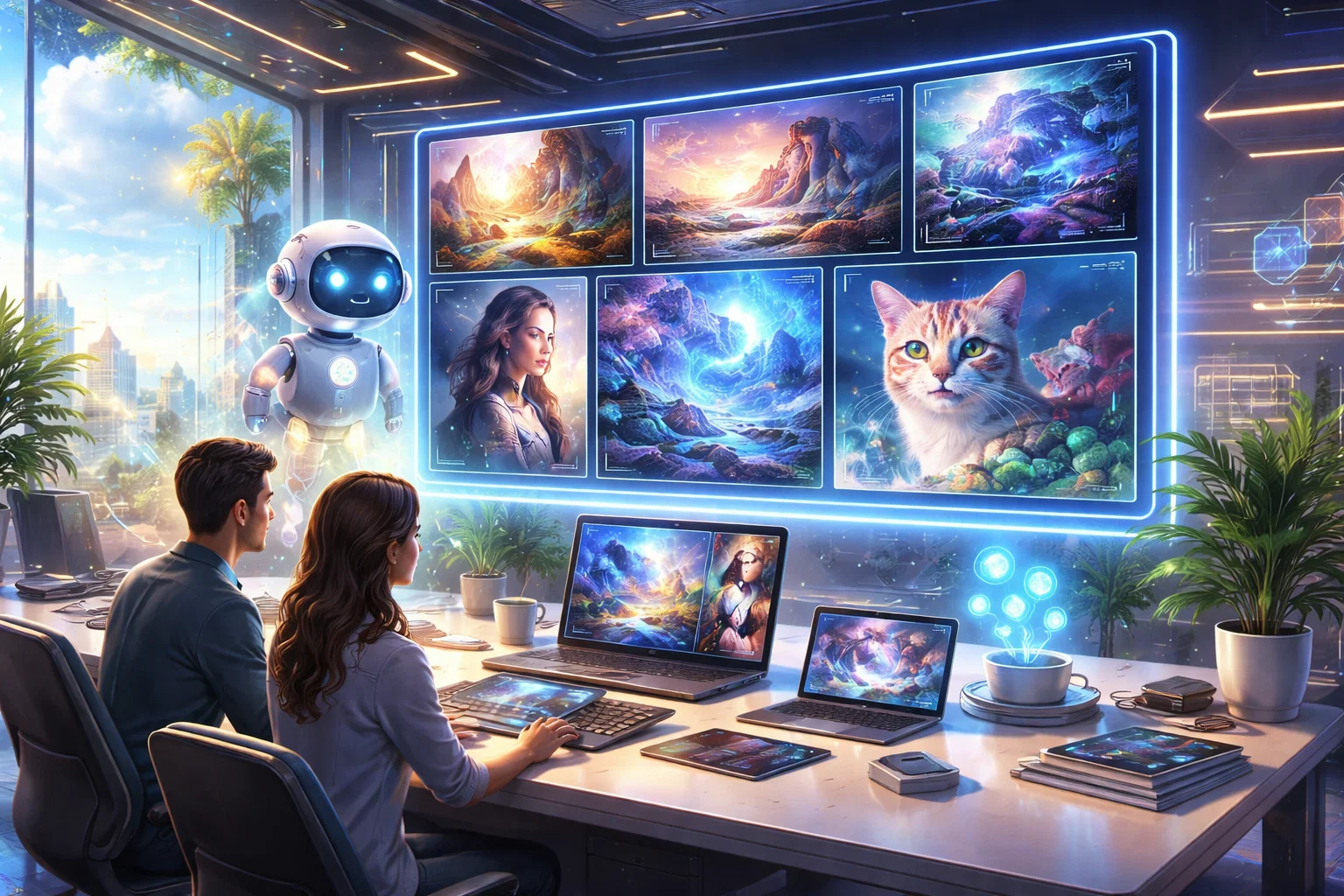
Generative AI has transformed from an experimental novelty into arguably the most fierce battlefront of consumer tech in 2026. Millions rely on it for their digital art, marketing, fan art, anime, virtual models, stories, and hobby projects. And as it has proliferated, a lot of its users seem to run into a very common problem: restrictive moderation and censorship of content.
This isn’t to say that safety is irrelevant. But the number of users who want image generation AI platforms with more creative control are growing. Some want more customization options and less content moderation. In recent years, a few platforms have risen to the occasion, providing more freedom of expression and greater control over AI outputs.
The growth of AI image generation platforms without strict filters or moderation systems is a reflection of a larger trend: AI users and AI companies are looking for more ways to allow customization without compromising on the quality of content. Users want more personalized AI platforms that adhere to a variety of prompts, while also maintaining consistency across all generations. We’ve seen a similar pattern unfold recently with conversational AI, roleplay bots, and AI dating sites.
In 2026, the best generative image AI tools generate photos with better lighting, correct anatomy, and consistent prompts across generations. They also allow for greater customizations, like character identity and consistency, as well as specific anime, and photorealistic filters. The best image generation AI platforms are also those that allow for more customization and personalization features.
With that said, here’s a look at some of the most prominent and intriguing AI platforms and AI companion ecosystems in 2026.
Why Do AI Image Generators Need Fewer Filters?
It’s not all about AI porn. Some users also dislike restrictions on other forms of creative expression. The most common issue for people using AI generators is that certain concepts of art may be censored or blocked for being sensitive.
Some of the most common issues with overmoderated AI image generation systems include:
- The use of words that are blocked as sensitive
- Inconsistent filters and censorship
- The loss of continuity in image generations
- Repetitive and generic-looking images
- Fewer controls and options for customization
- Limited artistic styles, genres, and perspectives
- Difficulty understanding certain prompts
The more prevalent the use of AI image generation systems becomes, the more people expect the AI to act more like a companion rather than a censorship bot.
This trend also fits into the broader movement of creating more customized personal AI. As more people turn to consumer AI chatbots, virtual companions, and other AI tools for personalized experiences, researchers and companies focus on ways for AI to provide greater interaction, engagement, and retention over time. We already have a fair idea of what the future of personalized AI looks like from social robotics research, and how it applies to long-term conversational modeling and the future of empathetic social AI.
1.ExploreGF — The Best Place to Discover AI Creative Ecosystems
One of the issues in the AI space today is the sheer difficulty in finding the right tool and services. With new AI tools being released every week, it can be confusing to find out which one has better features, style, image quality, or customization. Now we are starting to see sites like ExploreGF that don’t focus on just one AI. Instead, ExploreGF groups AI chatbot and image generation AI sites for different ecosystems together so that it’s easy for you to find AI characters, virtual personas, image generation platforms, and other AI chat tools in one place. Discovering platforms make it much simpler to find AI character, virtual person, and other platforms you may want to try: Some of the benefits of discovery directories:
- Categorized platforms: Easier discovery
- Comparison systems: Faster decision making
- Niche filtering: Better tailoring to preferences
- Trend visibility: Find new tools
- Ecosystem mapping: Understand platforms as a whole
As more people use new AI products, recommendation engines and discover platforms will soon be as important as the tools themselves.
2.Eliria — Personalized AI Character Experiences
Eliria is part of a movement of AI that focuses on making AI experiences that are more personalized. Today, consumers want AI platforms to provide:
- Memory
- Consistency
- Personalities
- Emotional connections
- Custom interactions
- Visual continuity
- Adaptive interactions
Chatbots that focus more on conversing are also shaping what the AI art of the future will look like since many consumers don’t make a distinction between AI that just chats and other AI. It makes sense because the AI chat platform ecosystem is blending into other types of AI. This blending is especially important in the world of generative AI. We want to be able to have characters that we can generate images of without them suddenly losing their visual identity from one generation to the next. So if one thing in the world of AI art is more important than any other, it’s being able to keep your characters looking the same throughout the whole process.
3.SecretGirlfriend Chat — AI Personalization and Immersive Interaction
SecretGirlfriend Chat is also trying to shape how AI personalization and immersive interaction will work in the future. The broader AI market is starting to move toward immersive experiences over isolated experiences and consumers want AI systems that can:
- Adapt to changes in tone
- Continue to tell a story
- Have believable personalities
- Be used for different types of role play
- Support image and text generation
This is similar to research into AI that has found that long-term engagement is often more related to emotional consistency and how personalized something is than actual capabilities.
4.HiMate – Your AI Crush
Mobile apps are now one of the most fast-growing types of apps on the AI market. HiMate – Your AI Crush is an example of the growing mobile app for interacting with AI-created personalities. The growth is being driven by things like:
- Fast AI on mobile
- AI in the cloud
- Personalized AI characters
- AI avatars
- AI chat bots combined with image generation
Mobile apps are often combining:
- Image generation
- Creating characters
- AI chatbots
- Voice interaction
- Adaptive recommendations
All of this is changing how people use AI in general.
5.Yami – Virtual Pal, Real Fun
Another important trend for AI is the ability to transform from an app or product into a platform: Yami – Virtual Pal, Real Fun In recent years, AI tools have been in great demand because they deliver more than just images. Users increasingly expect an AI platform to provide them with:
- personalized interactions
- visual creativity
- entertainment experiences
- social simulation
- dynamic storytelling
These platforms prove that consumer AI behavior is shifting beyond the boundaries of productivity use cases and into emotional or entertainment-based interactions.
6.Candyme – Anime AI Chat
Anime-themed AI ecosystems remain one of the largest sources of demand for AI-generated images. The popularity of AI companions has helped spread this demand further and further. Candyme – Anime AI Chat reflects this growing appetite for AI characters inspired by anime, systems for rendering styles, and digital avatars that never disappear.
Anime AI users often value:
- visual consistency
- expressive character design
- stylized aesthetics
- prompt flexibility
- emotional immersion
This market continues to grow quickly because art in an anime style is especially easy to adapt to generative AI tools.
7.AI Girlfriend Chat : Jelly
The platform AI Girlfriend Chat : Jelly exemplifies how AI partners, conversation tools, and AI-made images are becoming more closely linked. The future of AI-driven creativity is becoming increasingly multimodal:
- text
- images
- voice
- animation
- personality modeling
People no longer want AI tools that operate alone. They need unified platforms that can provide deeply engaging experiences in multiple forms at once. This is one of the many reasons why AI companion services and AI image generators are becoming more closely connected.
AI Image Generator Evolutions in 2026
In recent years, the best AI image generators have become more competitive based on:
- Prompt accuracy: Extremely high
- Character consistency: Critical
- Style flexibility: High
- Rendering quality: Essential
- Speed: Important
- Customization: Very important
- Memory systems: Growing rapidly
A key trend involves the increasing role of AI-made identities. Users are starting to prefer AI tools that remember them:
- preferred styles
- favorite characters
- recurring visual themes
- personality traits
- aesthetic preferences
This enables users to work in a more deeply personalized creative setting, and helps them stay engaged over time.
The Future of AI Creativity Without Restrictions
As the conversation over moderation and creative liberty in AI continues, the trend is clear: people want platforms that give them:
- more control
- systems that can generate more freely
- personalization that persists
- fewer constraints
- AI behavior that adapts to their needs
At the same time, the AI world is becoming increasingly diverse. Users often try out several services before discovering those that meet their creative vision. This is why AI exploration services, recommendation tools, and directories are becoming key infrastructure for the wider AI industry.
In the future of AI image generators, the winners will likely share the following:
- personalization
- visual quality
- conversational skills
- memory systems
- flexible creative control
The future of AI-driven creativity is more than just making images; it’s about developing living digital platforms that can learn about users, maintain continuity, and facilitate deeper, more immersive engagement.






Comment