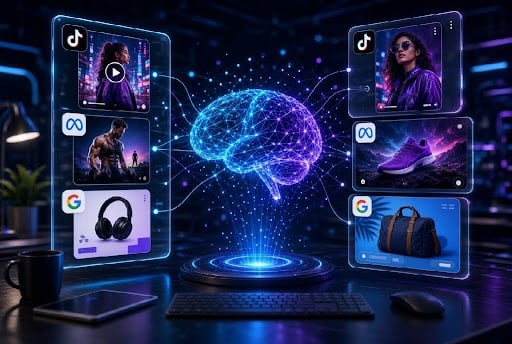
Marketers face endless demand for fresh creatives. Static ads fatigue fast. Video costs climb. An AI Ad Generator steps in to speed up production of copy, images, and video across Meta, TikTok, Google, and more.
I spent recent weeks testing several platforms side by side. The goal was simple: see what each actually delivers in real workflows. No hype. Just practical notes on speed, output quality, and fit.
Results varied. Some tools shine at volume. Others focus on video realism or broader campaign support. Here is what stood out.
Why Teams Reach for These Platforms Now
Ad creation once meant designers, copywriters, and long revision cycles. AI tools compress that. Many claim big efficiency gains. Industry reports show most marketers already use AI for content tasks. One Semrush-linked survey noted 67% of businesses applied AI to content marketing and SEO in earlier data.
In my tests, the biggest wins came from rapid variation testing. One product image or brief could spawn dozens of hooks and formats. That matters when creative fatigue hits and CPMs rise.
Still, outputs need human review. Brand voice, legal compliance, and emotional tone rarely land perfectly on the first try.
Adsmaker.ai: Broad Creative Stack in One Spot
Adsmaker.ai positions itself as an all-in-one AI Ad Generator. It handles ad copy, static images, video with digital humans, product photography, and social variations.
I uploaded a simple product photo and brief for a fictional ecommerce item. Within minutes it produced multiple headline angles, lifestyle image variants, and short avatar videos with lip-sync. The interface felt straightforward. Batch mode helped generate platform-specific sizes quickly.
Standout elements include AI avatar and influencer-style clips plus automated background swaps for product shots. Testimonials on the site mention claims such as faster testing and lower production costs, though individual results depend on input quality.
It suits teams that need high volume across TikTok, Meta, and search. Limitations appeared in fine control over complex motion or highly specific brand guidelines. Pricing starts lower for lighter use and scales with credits.
Overall, AdsMaker.ai works well as a daily driver for mixed-format needs.
Nextify.ai: Focused on Video and UGC-Style Output
Nextify.ai leans hard into video. Its AI Ad Generator creates UGC-style clips, talking-head ads, product demos, and unboxing sequences using large libraries of realistic avatars.
I tested it with a product URL and short brief. The system generated scripts, voiceovers, and finished videos featuring different presenters in varied scenes. Support for multiple languages and gestures added flexibility. Batch creation let me produce several A/B versions fast.
Realism impressed me more than some competitors. Lighting, physics, and lip movement looked natural in many clips. Claims around lower production costs and faster timelines align with the hands-on experience—no filming or talent required. Static image generation is available too, but video is the clear strength.
Ideal for performance marketers running TikTok or Meta video campaigns who need constant fresh UGC-style assets. Less emphasis on pure search ad copy or deep analytics. Commercial rights are included on paid plans.
Nextify.ai feels specialized and efficient when video volume is the bottleneck.
Semrush Tools and AI Advertising Approach
Semrush takes a wider view. Its blog and platform cover strategy plus creative support. Through the App Center, AdCreative.ai integrates as an AI-powered option for generating display, video, and product ads.
I explored the workflow described: enter a URL, confirm brand elements, set goals and tone, then generate packages with conversion scores. The process feels guided. It pulls brand colors and assets automatically in many cases. Predictive scoring helps prioritize which creatives to test first.
Beyond generation, Semrush emphasizes research, competitor ad analysis, and campaign optimization. AI features assist with asset creation and real-time adjustments. This makes it stronger for teams already using Semrush for SEO or PPC research.
In practice, the combination of insights plus generation reduces guesswork. It is less of a pure standalone AI Ad Generator and more of an ecosystem tool. Pricing reflects the broader platform value.
For marketers who want data-backed creative decisions alongside production, this route offers solid structure.
Hops.ai: AI Agents Supporting Marketing Workflows
Hops.ai differs from pure creative generators. It provides a shared workspace where specialized AI agents handle tasks alongside humans. A Marketing agent can turn product updates into campaign briefs and keep related materials current.
I reviewed its approach through available descriptions. Agents operate inside conversations, documents, and tables with context from the team’s actual work. This supports ad-related processes such as brief creation or follow-up rather than direct visual generation.
It suits collaborative teams that want AI to reduce routine coordination around campaigns. Direct pixel-perfect ad creatives are not the focus. Instead, it streamlines the surrounding workflow—something pure generators often leave to humans.
Early-access style positioning suggests it is still evolving for broader use.
Shared Traits and Clear Differences
Most of these tools share core strengths. They generate multiple variations quickly from limited inputs. They reduce reliance on external designers or video crews. Many support common ad platforms and offer credit-based or subscription pricing.
Differences stand out in focus. AdsMaker.ai spreads across copy, static, and video. Nextify.ai prioritizes realistic video and avatars. Semrush pairs generation with research and scoring. Hops.ai supports the human-AI team process around marketing tasks.
In my side-by-side tests, no single tool dominated every use case. Volume testing favored the broader generators. Video realism leaned toward Nextify.ai. Strategic depth favored Semrush-linked options.
Industry patterns back the efficiency angle. Faster creative cycles allow more testing, which often improves performance metrics when paired with proper tracking. One common observation across platforms is that strong inputs (clear briefs, good product shots) produce noticeably better outputs.
Practical Notes from Testing
I started each trial with the same product concept and brand voice notes. Generation speed was consistently high—minutes rather than hours. Editing tools varied: some allowed easy tweaks, others required re-generation.
Brand consistency needed extra checks. AI sometimes drifted from exact tone or visual guidelines. Compliance review remained essential for platform policies.
Data points from user feedback on the sites (higher CTR claims, cost reductions) are useful directionally but should be validated in your own accounts. Real ROI depends on targeting, landing pages, and ongoing optimization.
Who Might Prefer Which Option
Ecommerce teams needing mixed formats often start with a flexible AI Ad Generator like AdsMaker.ai. Video-heavy social advertisers may lean toward Nextify.ai. Data-driven PPC and SEO teams already in the Semrush ecosystem gain from its integrated approach. Collaborative groups wanting AI support on briefs and process can explore Hops.ai.
Budget, existing stack, and primary channel should guide the choice. Most offer trials, so direct testing remains the best filter.
Closing Perspective
AI Ad Generator tools have matured into practical production aids. They do not replace strategy or human judgment. They accelerate the repetitive parts and free time for testing and refinement.
In my experience, the biggest value appears when teams treat them as high-speed assistants rather than full replacements. Fresh creatives arrive faster. Variations multiply. Campaigns stay responsive.
The market continues to evolve. New features around scoring, realism, and workflow integration appear regularly. Staying objective and testing against your own metrics keeps the process grounded. Choose based on actual workflow fit, not feature lists alone.