
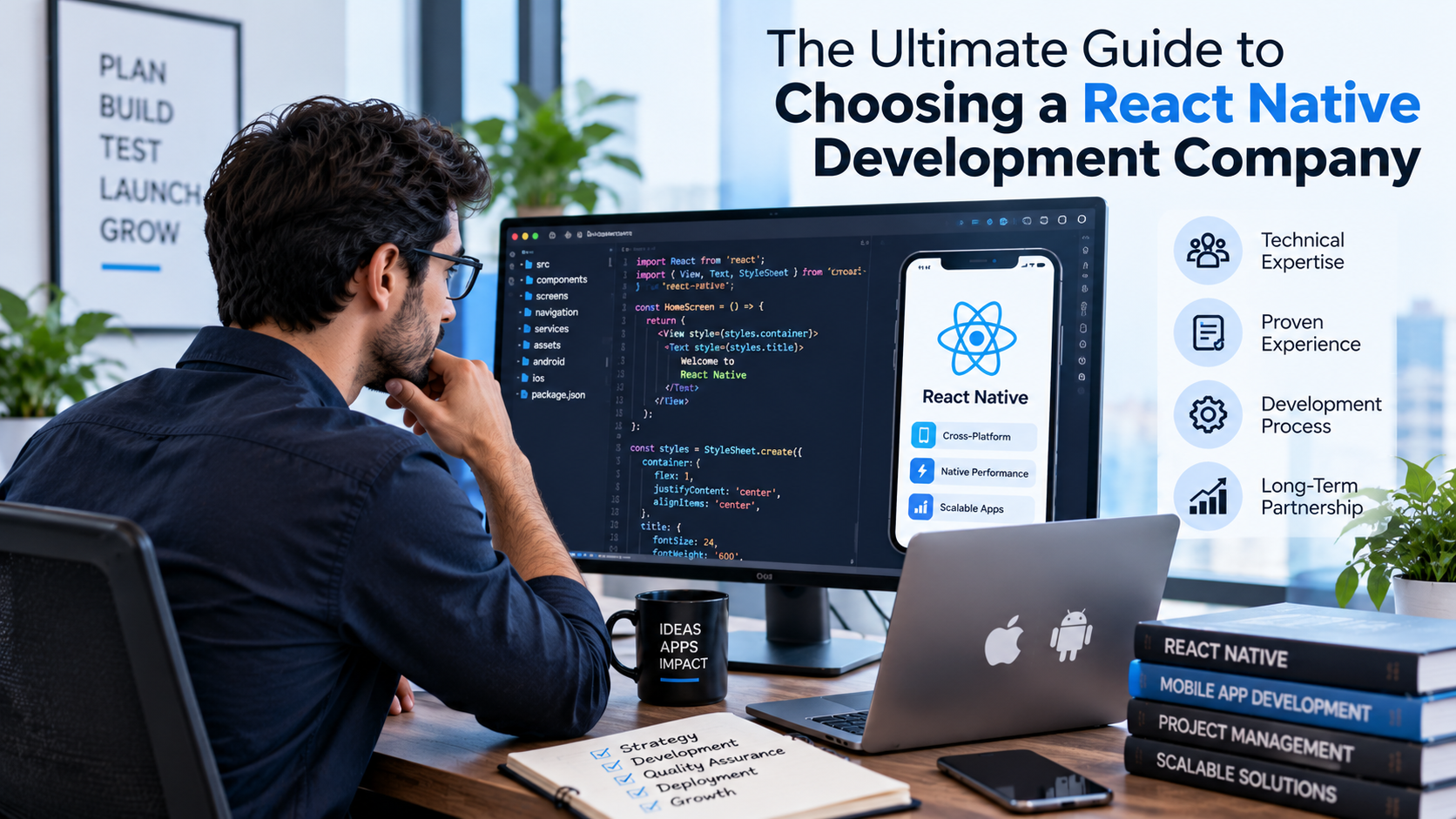
The Ultimate Guide to Choosing a React Native Development Company

Building a mobile application requires more than a good idea. Businesses need the right technology, experienced developers, a clear development process, and ongoing support to turn an idea into a reliable mobile product.
React Native has become a popular choice for businesses that want to develop mobile applications for both iOS and Android. However, choosing the right React Native development company can be challenging when there are many agencies and development teams available.
This guide explains the key factors businesses should consider before hiring a React Native development partner.
What Is React Native?
React Native is an open-source framework used to build mobile applications using JavaScript and React. It allows developers to create applications for iOS and Android while sharing a significant portion of the codebase.
This approach can help businesses reduce development duplication and maintain a more consistent application experience across platforms.
Why Choose React Native for Mobile App Development?
Before choosing a development company, it is important to understand why React Native may be suitable for your project.
Cross-Platform Development
One of the main advantages of React Native is the ability to develop applications for multiple platforms using a shared codebase. This can simplify development and maintenance compared with building completely separate applications.
Faster Development
Code sharing can reduce repetitive development work. Developers can reuse components and business logic where appropriate, potentially helping teams move from development to testing more efficiently.
Native-Like User Experience
React Native applications can interact with native platform capabilities. With the right development approach, businesses can create applications that provide a smooth and responsive experience.
Easier Maintenance
A shared codebase can make certain maintenance and update activities easier. Developers can implement common changes across platforms while still handling platform-specific requirements when necessary.
How to Choose a React Native Development Company
Choosing the right mobile app development company India requires more than simply checking a company’s website. You should evaluate its technical expertise, industry experience, communication, development process, and post-launch support to ensure a smooth and successful app development journey.
1. Check React Native Experience
Start by reviewing the company’s experience with React Native development. Look for information about previous applications, industries served, technical expertise, and the types of projects the company has completed.
Ask whether the developers have experience with:
- React Native
- JavaScript or TypeScript
- React
- APIs and third-party integrations
- Native iOS and Android modules
- Push notifications
- Payment gateways
- Authentication
- Cloud services
- App deployment
Relevant experience can help reduce technical challenges during development.
2. Review Their Portfolio
A portfolio can give you an idea of a company’s development capabilities. Look for applications similar to your project in terms of functionality, complexity, or industry.
Instead of focusing only on the number of projects, examine the quality of the applications and whether the company has handled projects with similar technical requirements.
3. Read Client Reviews and Testimonials
Client feedback can provide additional insight into communication, project management, development quality, and post-launch support.
Look for reviews across multiple platforms and pay attention to comments about project timelines, responsiveness, technical expertise, and problem-solving.
4. Evaluate Technical Expertise
React Native development can involve much more than writing application code. A capable development team should understand mobile architecture, APIs, databases, security, testing, performance optimization, and app deployment.
Ask technical questions about how the company plans to structure your application and handle platform-specific requirements.
5. Understand Their Development Process
A structured development process can make a project easier to manage.
A typical process may include:
- Requirement gathering
- Project planning
- UI/UX design
- Architecture planning
- React Native development
- API and third-party integrations
- Quality assurance and testing
- Deployment
- Post-launch maintenance
Ask how the company handles changes in requirements, testing, bug fixing, and project updates.
Check Communication and Project Management
Communication is an important part of successful software development.
Before hiring a React Native development company, find out:
- Who will be your primary contact?
- How often will you receive project updates?
- Which communication tools will be used?
- How will tasks be tracked?
- How quickly does the team respond to issues?
- How are changes in requirements handled?
Clear communication can help prevent misunderstandings and keep the project aligned with business goals.
Ask About UI/UX Design
A technically strong application still needs an intuitive user experience.
Ask whether the company provides UI/UX design services or works with a dedicated design team. Review their previous designs to understand their approach to navigation, accessibility, responsiveness, and user experience.
A good development process should connect design decisions with technical implementation from the beginning.
Consider Security
Mobile applications often handle sensitive information such as personal details, payment information, login credentials, and business data.
Ask the development company how it handles:
- Secure authentication
- Data encryption
- API security
- Access control
- Secure storage
- Payment security
- Vulnerability testing
- Data privacy requirements
Security should be considered throughout the development lifecycle rather than added only before launch.
Ask About Testing and Quality Assurance
Testing helps identify bugs and usability problems before an application reaches users.
A development company should have a testing process that covers areas such as:
- Functional testing
- UI testing
- Device testing
- Performance testing
- Security testing
- API testing
- Regression testing
- User acceptance testing
Testing across different screen sizes and operating systems is particularly important for cross-platform applications.
Understand the Pricing Model
Development costs can vary depending on application complexity, features, design requirements, integrations, development location, and team size.
Common pricing models include:
Fixed Price
A fixed-price model works well when project requirements are clearly defined before development begins.
Time and Material
With this model, you pay based on the development time and resources used. It can provide more flexibility when requirements may change during the project.
Dedicated Development Team
A dedicated team model provides access to developers and other specialists who work on your project for an agreed period.
Before signing a contract, understand exactly what is included in the price and whether additional costs apply to changes, third-party services, maintenance, or app-store deployment.
Ask About Post-Launch Support
App development does not end when the application is published.
After launch, you may need updates, bug fixes, performance improvements, security updates, and compatibility changes for new operating system versions.
Ask the development company about:
- Maintenance packages
- Bug-fixing policies
- Response times
- Application updates
- Performance monitoring
- Technical support
- Future feature development
Reliable post-launch support can make long-term application management easier.
Watch Out for Red Flags
Before choosing a React Native development company, look for potential warning signs such as:
- Unrealistic delivery promises
- Unclear pricing
- Poor communication
- No relevant portfolio
- Lack of technical transparency
- No testing process
- No post-launch support
- Extremely low estimates without clear explanations
- Requests for large payments without defined milestones
These factors do not automatically mean a company is unsuitable, but they are worth discussing before signing an agreement.
Questions to Ask a React Native Development Company
Before starting your project, consider asking:
- How many React Native applications have you developed?
- Can you share relevant case studies?
- What React Native version and technology stack do you typically use?
- How will you handle native iOS and Android requirements?
- What testing process do you follow?
- How will project progress be reported?
- What is included in the development cost?
- How do you handle scope changes?
- Do you provide post-launch maintenance?
- Who will own the source code and intellectual property?
The answers can help you understand whether the company is a suitable match for your project.
Final Thoughts
Choosing the right React Native development company is an important decision that can influence the development process, application quality, scalability, and long-term maintenance.
Instead of selecting a company based only on price, evaluate its React Native expertise, portfolio, development process, communication, testing practices, security approach, and support services.
A development partner that understands your business requirements and communicates clearly can help turn your mobile app idea into a scalable and reliable product.






Comment