
The Most Competitive Small Businesses Win Through Systems, Not Scale

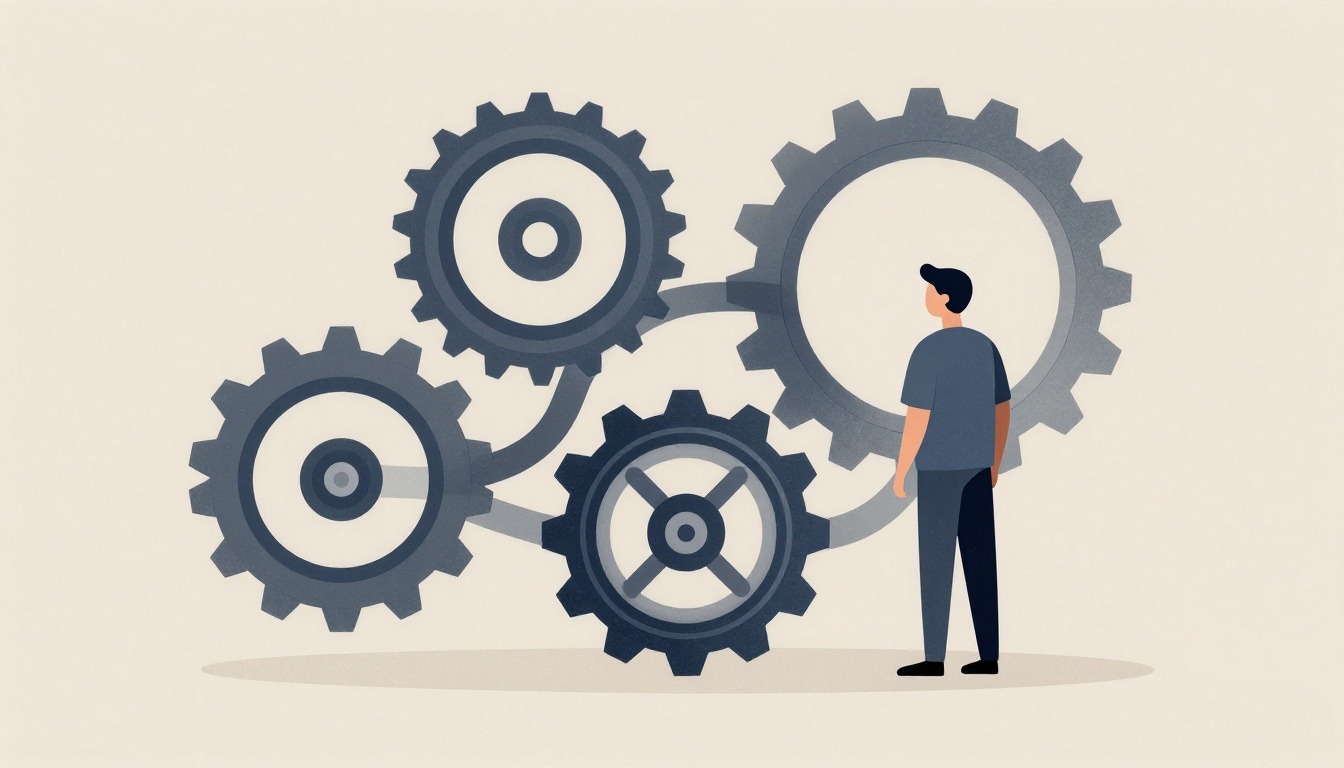
What makes a small business survive and thrive when larger competitors have more money, more staff, and more resources? The answer rarely lies in hiring faster or spending more. Instead, the businesses that consistently outperform their peers have built repeatable systems that reduce errors, improve quality, and free up time for strategic decisions. These systems create competitive advantages that no amount of capital can easily replicate.
Building Operations That Run Without You
A business owner who must personally handle every task becomes a bottleneck. As the company grows, this bottleneck creates delays, inconsistencies, and missed opportunities. Systems solve this problem by documenting how work should be done, establishing clear steps, and ensuring that multiple people can execute the same process with predictable results. When a customer receives inconsistent service depending on which staff member helps them, that signals the absence of systems.
Small businesses that invest in operational systems gain immediate benefits across cost, knowledge retention, and capacity. A service business that standardizes its client onboarding process through a documented checklist can cut completion time in half compared to a manager explaining it differently to each new team member, reducing the cost per transaction in the process. Institutional knowledge also stops walking out the door when an employee leaves, because the process itself lives in documentation rather than in any one person’s memory. A team of five people with excellent systems can often deliver better results than a team of ten without them, allowing the business to grow without proportionally increasing overhead.
Creating Repeatable Quality Through Documentation
Documentation sounds tedious, but it functions as a genuine competitive tool. When procedures are written down and organized, employees know exactly what success looks like and do not have to rely on vague feedback or inconsistent verbal instruction. This clarity drives higher quality work and faster execution. Documentation also reveals inefficiencies that would otherwise remain invisible, because the act of writing down how something is done often exposes steps that are unnecessary or could be combined.
Consider how a small construction company might document its project setup process. Instead of a manager verbally explaining procedures to each crew, they create a checklist covering site preparation, safety checks, materials staging, and communication protocols, so every job starts the same way. Mistakes decrease, injuries become less likely, and customers notice the professionalism. Documentation also becomes a training tool that transfers expertise throughout the organization, allowing new employees to get up to speed faster while experienced team members focus on judgment calls rather than reminding colleagues of basic steps.
Leveraging Technology to Multiply Effort
Small businesses today have access to technology that once cost tens of thousands of dollars. Cloud-based software handles accounting, scheduling, customer management, and communication, and the key is selecting tools that integrate with each other and fit the actual workflow. A small business does not need the most expensive or feature-rich platform. It needs tools that eliminate manual data entry and automate routine tasks.
Automation is particularly valuable for small teams. A freelance consultant might use software to automatically send invoices, track project hours, manage client communication, and update financial records, freeing time for billable work rather than administrative tasks. Email automation routes customer inquiries to the right person instantly, and scheduling software eliminates back-and-forth communication chains. Each tool saves only minutes per day, but across a week or month those minutes accumulate into hours that translate directly to higher profit or the capacity to serve more clients without additional hires. Independent mobile service providers, such as at-home groomers who travel to clients, similarly protect their operations by carrying mobile dog grooming insurance, which covers liability and equipment during each appointment and prevents a single incident from derailing an otherwise well-run business.
Standardizing Decision Making and Problem Solving
Not every decision requires direct involvement from the business owner. By creating clear decision-making frameworks, small businesses empower team members to act quickly and consistently. A decision framework outlines the criteria for common situations and clarifies who has the authority to make specific choices, without removing the need for judgment. It creates guardrails that keep people moving in the right direction rather than waiting for approval at every turn.
A service business might establish a framework for handling customer complaints in which a front-line staff member can approve any refund under fifty dollars without escalation, refunds between fifty and two hundred dollars require manager approval, and larger issues go to the owner. This clarity means customers receive resolution faster, employees feel trusted to help, and the owner avoids being absorbed by minor decisions. The framework can be adjusted based on experience, but the underlying principle holds. When team members understand the reasoning behind decisions, they make better choices in situations the framework does not specifically address, because they begin to think about business priorities the way an owner does.
Measuring Progress and Adjusting Course
Systems only improve when they are measured and refined. A small business should track metrics that reveal whether systems are working as intended, and these often include average time to complete a task, error rate, customer satisfaction scores, or revenue per employee. Metrics make systems visible and show where improvements will have the greatest effect. Without measurement, a business cannot distinguish between a system that is working and one that only appears to be working.
When a landscaping company tracks how long different crews take to complete similar jobs, that data reveals which crews have better processes and where bottlenecks exist. The owner can study the fastest crews, document what they do differently, and teach those methods across the organization. This cycle of measurement and improvement is how systems evolve rather than stagnate. Small businesses that skip this step build systems that become outdated or fail to deliver their promised benefits, because the best systems are living processes that adapt as the business grows and markets change.
Conclusion
The competitive advantage for small businesses is not hidden behind expensive technology or massive teams. It lives in systems that work predictably, documentation that transfers knowledge, technology that removes drudgery, and decision-making frameworks that empower people. Building systems requires upfront investment of time and thought, but the payoff compounds year after year. As a small business matures, its systems become increasingly valuable, allowing the owner to step back from daily operations without quality declining and creating a business that can be sold, franchised, or grown because success does not depend on any single person. This is how small businesses win against larger competitors: by outthinking and outexecuting through discipline and systems, not through scale.







Comment