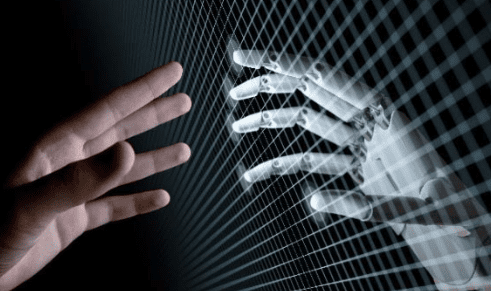
As we look toward 2027, the “Future of Work” has arrived, and it looks remarkably different than the predictions of early 2024. The binary debate of “Human vs. Machine” has been resolved in favor of a more complex reality: the Human-Agent Team. In this new professional paradigm, Artificial Intelligence is no longer just a tool we use; it is a “Digital Coworker” with its own responsibilities, access permissions, and initiatives. For a modern Business, the competitive edge no longer comes from mere automation, but from Orchestration—the ability to harmonize human creativity with agentic speed. This article explores the structural shifts and professional skills required to lead in a workforce that is now 40% AI-collaborative.
The Rise of Agentic Teammates
By 2027, the “Chatbot” has been replaced by the Autonomous AI Agent. Unlike previous generations of software, these agents do not wait for a prompt; they observe their environment, set sub-goals, and take action to achieve a professional objective.
-
Initiative-Driven Workflows: In a professional Business setting, an AI agent might observe a dip in supply chain efficiency and independently begin negotiating with secondary vendors to secure better rates, presenting only the final contract for human approval.
-
Specialized Role Redesign: We are moving away from job descriptions and toward “Role Architectures.” A human “Marketing Manager” in 2027 oversees a squad of specialized agents—one for real-time Big Data analysis, one for visual content generation, and one for hyper-personalized customer outreach.
The 2027 Skillset: From Fluency to Critical Orchestration
The “Year of Truth for AI” has proven that technical fluency is only the baseline. To be a professional in 2027, the most valuable skill is Critical Thinking and Verification.
-
Orchestration Mastery: As software becomes “self-assembling,” the role of the developer and the manager has merged into that of an Orchestrator. The professional task is no longer to “do the work,” but to express the intent and govern the autonomous systems that deliver it.
-
The “AI-Free” Skill Assessment: Interestingly, many top-tier firms have begun requiring “AI-free” assessments for new hires. This ensures that the professional talent has the underlying logic and creative foundation to spot an AI’s mistake and provide the “Human-in-the-loop” oversight that keeps the Business safe.
Structural Flattening: The End of Middle Management?
Technology is fundamentally changing the shape of the organization. By late 2026, many businesses have used AI to flatten their structures, reducing the need for traditional “status-reporting” middle management by over 50%.
-
Direct-to-Action Teams: With AI agents handling the tracking of KPIs and routine reporting, small, high-impact teams now report directly to senior leadership. This agility allows a Business to respond to market shifts in hours rather than months.
-
Strategic HR and Talent Acquisition: The professional HR leader of 2027 is a “Workforce Architect.” They are tasked with deciding which tasks are best suited for silicon and which require the empathy and complex judgment of a human.
Digital Marketing in the Era of AI-Native Advertising
Marketing in 2027 has moved beyond the screen. As Generative AI becomes the “Built-in Interface” for browsers and search, the way brands reach humans has changed.
-
AI-Native Integration: Ads are no longer just banners; they are integrated, helpful suggestions within an AI conversation. A professional brand must provide “AI-Ready” content that these agents can easily digest and recommend to the user.
-
The Authenticity Premium: In a world flooded with AI-generated social media content and personas, “Human Validation” has become a luxury good. A successful Business uses Digital Marketing to highlight its real-world impact, human creators, and community connections to build trust.
Ethics, Governance, and the “Silicon Workforce”
Leading a mixed workforce requires a new professional ethical framework. By 2027, “AI Sovereignty” has become a strategic priority.
-
Explainable Autonomy: Organizations are now required (by regulations like the EU AI Act) to ensure their agents can “show their work.” A professional Business must be able to explain exactly how an agent reached a decision, especially in high-stakes areas like finance or hiring.
-
Wage Premiums for Hybrid Talent: The economic data is clear: professionals who can effectively manage human-AI teams earn a significant premium—often up to 50% more—than those who resist the integration of Technology.
Conclusion: The Collaborative Edge
The workforce of 2027 is not a place of replacement, but of Augmentation. By embracing Big Data, Automation, and Artificial Intelligence as active partners, professional organizations are unlocking levels of productivity and innovation that were previously unimaginable. The winner in this new era is not the company with the most AI, but the company with the most effective Human-Agent synergy. The future is a partnership, and the time to design that partnership is now.