
The Honest Guide to 1:1 Replica Watches: What That Number Really Means

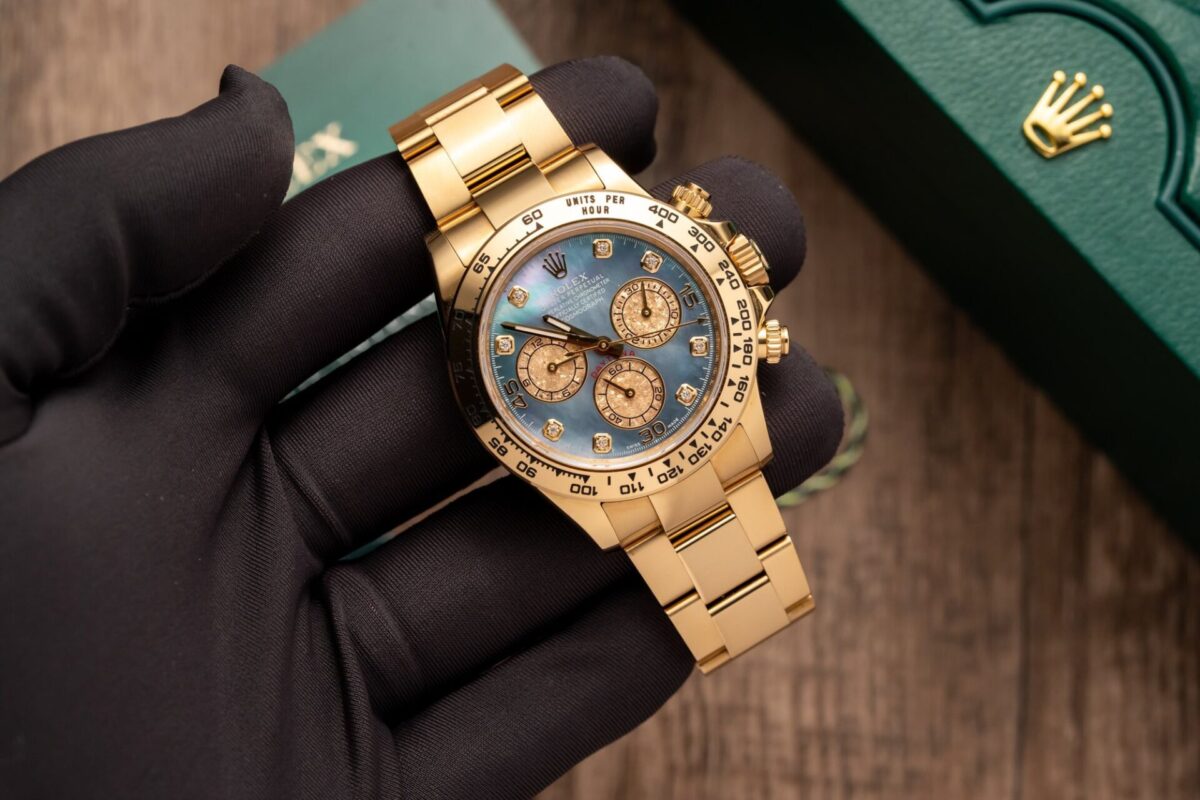
If you’ve spent any time at all browsing online for a watch copy you’ve definitely come across the phrase. Every listing seems to be promising 1:1 replica watches as if that ratio in itself is a guarantee of quality. At Watchvale we think that the 1:1 ratio really does need explaining as a large number of buyers will just go with it without any real understanding of what it means and many sellers will happily exploit that very lack of understanding. So let’s take a moment to look at what 1:1 actually means, where it is being used honestly and where it is being stretched so far it’s completely meaningless.
What “1:1” Is Trying to Say
The ratio comes from the concept of a scale model. If an architect builds a model at 1:100 then one inch on the model represents one hundred inches on the actual building. A 1:1 model is of course the same size as the original, dimension for dimension. The sellers took that concept and applied it to watches to indicate their copy is an exact match to the original in size, proportion, weight and appearance.
In the watch world a true 1:1 copy is meant to have the exact same case diameter as the original (down to the mm), the same lug to lug, the same dial layout, the same hand shapes and the same bracelet links. Put it side by side with the real thing and in theory you should not be able to tell which is which without a loupe and a fair bit of patience. That’s the promise. Whether or not a particular watch actually delivers on that promise is a completely different issue.
Where the Term Is Honest
Used properly 1:1 is a useful shorthand. The genuine watches that are copied have very precise dimensions and a competent maker will treat those dimensions as a target to hit rather than a rough guide. A real Submariner case is a known size. A real Datejust dial has its markers in known positions. If a workshop is building to those exact figures then “1:1” is a perfectly valid way of putting it.
The honest version of the claim is one that deals with the measurable stuff. Case size, thickness, weight, crystal shape and the spacing of the print on the dial are all things that can be checked. A good copy will get these right as it’s the very first thing that will be spotted if they’re wrong. We look at these things because they are the things the customer can actually check and so can we.
Where the Term Gets Stretched
Here’s the problem. Because the phrase ‘1:1’ sells it gets slapped onto watches that don’t in fact meet that standard. A seller can say it’s 1:1 and still ship you a case that’s half a mm out, a dial with the wrong fonts and a bracelet that’s all hollow and light. The number in the listing is a claim not a certificate and no one anywhere actually verifies it.
The other area it gets stretched is the bit you can’t see in a photo. Two watches can have exactly the same outside and completely different movements inside. One might be running a quality automatic which keeps good time and sweeps beautifully. The other might be running the most basic possible movement and yet still be the same “1:1” watch as the first, because the “1:1” label only ever referred to the outside. That’s the biggest gap between what the customer thinks they’re buying and what they actually end up with.
As Yasir Floy (owner of Watchvale) puts it in a draft quote which we’re sharing with him for approval: “The ratio tells you something about the shape of the watch, not the soul of it. A number on a product page has never once told me what is actually ticking inside the case. You have to ask.”
The Outside: What a Real 1:1 Gets Right
Let’s get specific as to what makes a proper 1:1 build differ from a bad one, starting with the bits you can actually look at.
The case is first. A proper copy will match the original in diameter (obviously), but more importantly in thickness and the exact curve of the lugs. That’s where the cheap copies let you down in terms of the lugs as the curves are very difficult to tool correctly and a seasoned eye will instantly pick out a flat or clumsy lug.
The dial is next. On a good 1:1 the print is sharp, the markers are in the right place and the text matches up with the dial furniture exactly as it does on the real thing. The poor copies will have the print a bit fuzzy, the markers a little bit off, the fonts very close but not quite right. It’s all the little things that add up so quickly.
Then there’s the bracelet which people simply don’t appreciate. A real bracelet has solid links, has weight to it and the clasp snaps shut with a definite, confident snap. A good 1:1 will have that quality. A poor one will rattle, will be very light and will be instantly obvious the moment you put it on.
The Inside: The Part the Ratio Ignores
This is where you actually earn your money as a smart buyer. The movement is the heart of the watch and that’s precisely what “1:1” was never really about. A watch can be absolutely perfect in appearance and yet utterly disappointing every single day if the movement is sub-standard.
A good movement will move smoothly, have a reasonable power reserve, keep time in the right sort of ballpark and change the date cleanly at midnight rather than have it smear over a couple of hours. A poor movement will do none of that. It may be fast or slow, may stop dead overnight or may have difficulty with the date. The fact that none of this is visible in a listing photo means that a seller who is silent on the movement is in effect telling you something via that silence.
Our advice is straightforward. If you’re buying anything sold as 1:1, ask the seller what movement it is and what it’s based on. A clear, direct answer is a good thing. A “high quality automatic” with no further explanation is almost certainly going to be the cheapest movement in the range.
Materials Matter More Than the Label
Beyond the movement the materials determine how the watch ages. The steel grade will have a bearing on scratch resistance and on how well it retains a polish. The crystal makes a difference too as a sapphire crystal with an anti-reflective coating will be far superior to cheaper glass in terms of both scratch resistance and glare reduction. The lume on the hands and markers should be even rather than in patches.
A watch sold as 1:1 should have those details right as well, as they are part of the matching. If a seller has genuinely used real sapphire and a proper steel grade they’ll generally state that as well, as those are the more expensive bits and they want to be credited for them. If the listing just goes quiet on the materials then you can assume the corners have been cut.
How to Shop Without Getting Fooled
Put all of that together and a fairly straightforward process emerges. Firstly, check the claims that are quantifiable. Compare the case size stated against the actual published specs of the genuine model (these are easily available) and if there’s any discrepancy then that’s a major warning sign. Secondly, insist on actual photographs of the watch itself rather than brand renders so you can see the dial printing and bracelet. Thirdly, ask about the movement and assess the answer. Finally, read the return and warranty terms prior to payment as a seller who is going to stand behind their watch will have both of those.
None of that requires any expert knowledge at all. It just means you treat “1:1” as the beginning of your questions rather than the end of them. The “1:1” label gets you in the door. It’s your own checks that determine whether you walk out of it happy.
So is 1:1 worth caring about?
Yes, with a very clear idea of what it’s about. A true 1:1 build means the watch will look and wear exactly like the original, which is precisely what most people are after. That is real value and it’s definitely worth looking for. The ratio can’t guarantee the movement, the materials or the honesty of the seller and those are the very things that will determine whether you still love the watch a year from now.
We use the term at Watchvale as our customers will be searching for it and it does describe something very real about the watch itself. We’d rather you understood it than just parroted it. A 1:1 copy that gets the look absolutely right and hides a poor movement is only half a watch. The copy that’s worth having gets both halves right and now you know how to tell the difference before you spend a dollar.
The draft founder quote above needs Yasir Floy’s approval before it can be published.







Comment