
The Hidden Architecture Problem Slowing Down India’s Digital Payments Revolution

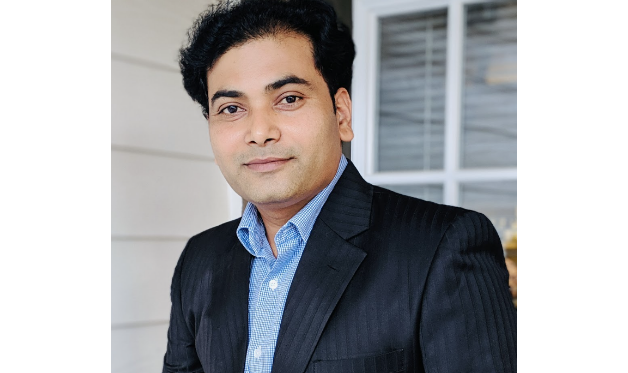
Chandrashekhar Kharche on why modernizing legacy payment infrastructure may be the next major challenge for India’s financial technology ecosystem
India’s digital payments revolution has transformed how consumers and businesses move money. Behind the speed and convenience of UPI, card networks and B2B payment platforms, however, lies a less visible challenge: much of the infrastructure supporting today’s payment ecosystem was designed for an earlier era.
Chandrashekhar Kharche, a senior software engineer and financial-technology specialist with more than two decades of experience in enterprise payments, compliance systems and secure software architecture, believes this architectural gap could become one of the most important technology challenges facing the payments industry.
In Kharche’s view, the problem is not a shortage of innovative payment technologies. The harder problem is introducing those technologies into systems that already process enormous transaction volumes and cannot tolerate extended downtime, data loss or compliance failures.
“The difficult problem isn’t building another AI model,” Kharche explains. “It is introducing that capability into an environment where every transaction still has to be reliable, auditable and compliant.”
The Legacy Trap
Large payment platforms are built around stability. That stability is precisely what has made them valuable. A transaction-processing engine that has operated reliably for many years builds institutional trust among financial institutions, regulators, auditors, and business teams.
But the same stability can make modernization difficult.
As payment platforms evolve, organizations increasingly need capabilities such as real-time fraud scoring, AI-assisted compliance monitoring, dynamic risk orchestration, automated decisioning, and support for new payment rails. Many legacy transaction systems were never designed to accommodate these capabilities without significant modification.
Kharche has observed this tension across enterprise financial technology environments.
“Financial systems are fundamentally different from ordinary software platforms,” he says. “You cannot simply replace a component because a newer technology has become available. The existing platform may be responsible for enormous transaction volumes, regulatory reporting and customer commitments.”
Historically, organizations have tended to choose between two difficult options: undertake a large-scale replacement of the existing platform or continue modifying the legacy system incrementally.
Both approaches carry significant risks.
A complete rewrite can take years and introduce substantial migration and operational risk. Incremental modification can produce increasingly complicated codebases in which every additional capability becomes harder to implement, test, and maintain.
The result is a modernization paradox: the systems most critical to the financial ecosystem are often the hardest to change.
Kharche’s Interception Architecture
Kharche advocates a different approach: introducing a controlled interception layer between established transaction-processing systems and newer digital services.
The concept is straightforward, although its implementation requires careful architectural governance.
Rather than embedding every new capability directly into the legacy transaction engine, an interception layer identifies selected transaction flows and provides a controlled boundary through which new services can interact with the existing platform.
This allows organizations to preserve the stability of the core transaction engine while developing new capabilities outside it.
For example, an institution seeking to introduce an AI-based risk model could build and govern that model as an independent service and connect it through the interception layer. The same architecture could support a new compliance engine, fraud-detection service, reporting pipeline, or other specialized capability.
“The objective is not to pretend the legacy system doesn’t exist,” Kharche says. “The objective is to create a controlled boundary between the part of the platform that needs to remain exceptionally stable and the part that needs to evolve quickly.”
That distinction becomes increasingly important as financial institutions adopt AI.
An AI model may evolve rapidly, while the underlying transaction platform may need to remain stable for years. Separating those two rates of change lets organizations experiment with new technology without exposing the core system to unnecessary modification.
Modernization Without a Big-Bang Rewrite
One of the approach’s most important advantages is the ability to modernize incrementally.
Instead of moving an entire transaction ecosystem to a new architecture at once, organizations can introduce new capabilities to selected transaction flows, monitor their behavior, and gradually expand their use.
Teams can test new services against limited traffic, establish operational controls, measure performance, and validate compliance requirements before broader deployment. If a new capability does not perform as expected, it can potentially be isolated or removed without requiring a rollback of the underlying transaction-processing platform.
The architecture also creates a clearer separation of responsibilities. The legacy platform continues performing the functions for which it was originally designed, while newer services handle capabilities that require more frequent innovation.
For Kharche, this matters in financial services because modernization cannot be measured purely by development speed.
“Speed matters, but uncontrolled speed is not modernization,” he says. “In payments, the ability to introduce change safely is just as important as the ability to introduce it quickly.”
Why India Makes the Challenge More Visible
India provides an especially important environment for examining this problem.
The rapid adoption of real-time digital payments has created enormous demand for systems that can support high transaction volumes while responding to increasingly sophisticated fraud, compliance, and risk requirements.
The customer experience may appear instantaneous, but the underlying transaction journey can involve multiple generations of financial infrastructure.
As payment volumes increase and transactions increasingly require real-time decisioning, the gap between the speed of the payment experience and the adaptability of the underlying infrastructure grows.
Kharche believes this creates a strategic challenge for banks, payment companies and fintech platforms.
“The next competitive advantage may not come simply from creating another payment application,” he says. “It may come from how quickly and safely an institution can introduce new intelligence into the infrastructure it already operates.”
That intelligence increasingly includes AI.
Fraud detection, transaction monitoring, customer-risk assessment, compliance screening and operational analytics are all areas where AI can potentially provide significant benefits. But deploying AI into a financial environment requires more than selecting an effective model. Organizations must also address data governance, explainability, monitoring, security, auditability, and regulatory requirements.
Architecture therefore becomes part of the AI strategy.
The Talent Behind Safe Modernization
The modernization challenge also creates a growing demand for engineers who understand both emerging technology and mission-critical financial systems.
Building a new application and modernizing a system that processes financial transactions require different disciplines.
A greenfield system can be designed around modern architectural principles from the beginning. A legacy modernization program must preserve existing functionality, data integrity, operational processes, and regulatory controls while gradually introducing new technology.
That combination of requirements makes experienced financial-technology architects particularly valuable.
Kharche’s work sits at this intersection of enterprise payments, secure software architecture, compliance technology, and emerging AI capabilities. His perspective reflects a broader shift in the role of technology leaders: modernization is increasingly about managing the boundary between established systems and rapidly evolving technologies.
The Path Forward
Kharche does not view interception architecture as a reason to preserve legacy systems indefinitely.
Some legacy platforms will ultimately need to be decomposed, migrated, or replaced. But the transition does not necessarily have to occur as a single, high-risk event.
A controlled modernization architecture can bridge the systems organizations depend on today and the technologies they will need tomorrow.
For India’s digital payments ecosystem, that bridge could become increasingly important.
The country’s payment infrastructure will continue to evolve as transaction volumes grow, new payment capabilities emerge, and AI becomes more deeply integrated into fraud prevention, compliance, and risk management.
The challenge will be ensuring that the infrastructure underneath those innovations can evolve at the same pace.
Kharche’s central argument is that modernization does not always require starting over.
In some of the world’s most critical financial systems, the more difficult-and potentially more valuable-engineering challenge is finding a safe way to connect what already works with what comes next.
As India’s digital payments ecosystem enters its next phase, that hidden architectural challenge may prove just as important as the technologies consumers can see.







Comment