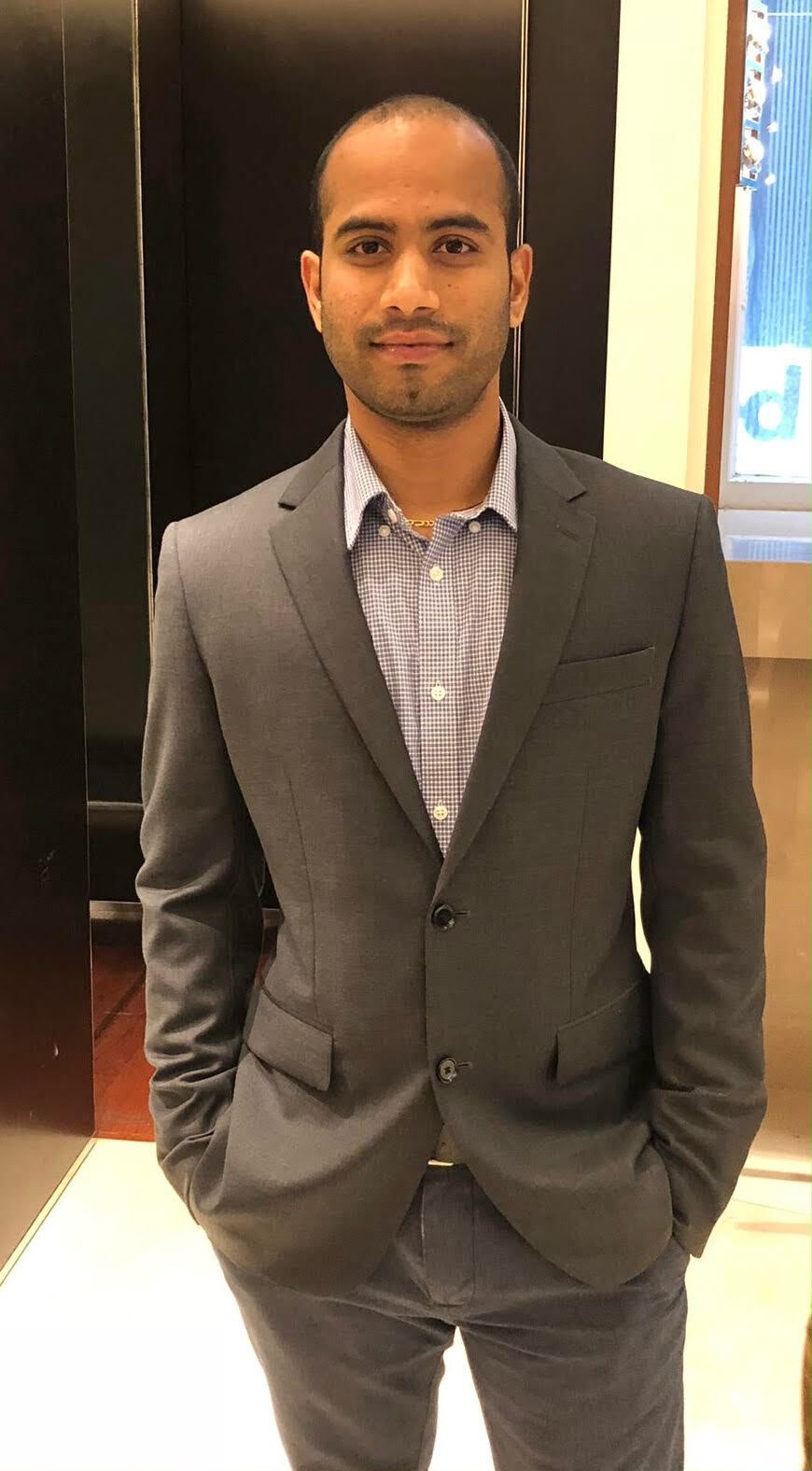
Mallikarjun Vppalapati has spent over 15 years making sure that when one path through a storage network fails, nobody downstream ever finds out. His argument is not really about hardware. It is about what “redundant” actually has to mean before an enterprise can trust it.
1. Executive Summary
Every enterprise storage design claims redundancy. Dual controllers. Dual fabrics. Dual sites. The word appears in every architecture diagram and every vendor’s marketing material. What it rarely gets is a definition precise enough to survive contact with an actual failure.
Redundancy that only works on paper fails exactly when it’s needed—during the outage, not before it. A switch port drops. A controller reboots for a firmware update. A fiber run gets severed. If the two paths through that infrastructure were never truly independent—if they shared a power circuit, a zoning error, an unbalanced processor, or a replication link nobody was watching—then “redundant” was a description of the diagram, not the system.
The author has spent a career at exactly that seam: the gap between a storage architecture that looks resilient and one that behaves that way under real failure. As a Senior Cloud Systems Engineer with a background spanning nearly every major enterprise storage and SAN platform, the author has designed, migrated, and maintained multi-fabric, multi-array environments for organizations where an unplanned outage is not an inconvenience—it is a critical business event.
The central proposition is straightforward: physically separate storage paths only function as a single, reliable system when every layer between them—switch fabric, replication engine, processor load, and capacity headroom—is engineered and continuously verified to fail independently. Redundancy is not a topology. It is a discipline.
2. Professional Background
The author did not arrive at storage architecture through a single vendor’s certification track. Instead, the expertise was built through more than a decade of hands-on administration across nearly every major enterprise storage platform—often several at once within the same data center.
The career began with managing enterprise storage arrays and configuring SAN fabrics connecting primary and disaster recovery sites. It later expanded into managing petabyte-scale heterogeneous SAN environments and specializing in storage virtualization, enabling physically separate arrays from different vendors to appear as a single continuously available storage system.
That specialization evolved through supporting demanding production environments in finance and media, leading large-scale storage refresh and migration projects that moved live production data between heterogeneous arrays without application downtime. More recently, the work has focused on designing end-to-end data center storage and disaster recovery architectures built upon multi-vendor, multi-fabric infrastructures.
Core expertise includes:
- Enterprise SAN storage architecture
- Dual-fabric SAN design and administration
- Synchronous and asynchronous data replication
- Storage virtualization and non-disruptive data mobility
- Performance and capacity optimization
- Cloud infrastructure design and administration
Professional certifications include:
- Industry-recognized cloud practitioner certification
- Industry-recognized cloud administrator certification
- Industry-recognized cloud solutions architect certification
- Enterprise storage certifications
The philosophy remains simple:
Redundancy is only as strong as its least-examined shared dependency.
A second fabric, second array, or second site provides little protection if the two sides are not truly independent under load, maintenance, or partial failure.
The challenge is the gap between a redundant architecture diagram and a redundant operating system. Most organizations possess sufficient failover hardware. What they often lack is continuous verification proving that failover will actually work before it becomes necessary.
3. The Work: What Was Built
The redundancy gap most architectures never test
A mature storage environment typically includes dual SAN fabrics, multiple storage controllers, replicated arrays, and documented disaster recovery procedures. While each component may be resilient individually, they are rarely tested together under real failure conditions.
A dual-fabric design loses its value if both fabrics contain the same configuration mistake. A replication link becomes ineffective if no one continuously verifies its health. A processor carrying a disproportionate workload may quietly become the bottleneck for an otherwise redundant environment.
These are not hardware failures—they are failures of engineering discipline.
What the practice does
Across numerous enterprise storage environments, the approach has remained consistent: treat every redundancy claim as something to be verified rather than assumed.
This includes:
- Designing and auditing dual SAN fabrics independently.
- Continuously monitoring replication health for latency and synchronization drift.
- Balancing processor utilization and storage workloads across controllers.
- Implementing storage virtualization that allows applications to survive complete array or site failures without interruption.
Migrations as the proving ground
The strongest evidence that redundancy works appears during storage migrations, when resilience is intentionally placed under stress.
The author has led migrations from legacy storage systems to modern enterprise platforms, transferred production workloads between heterogeneous storage environments, and executed large-scale data migrations using enterprise replication technologies while maintaining uninterrupted production services because the storage paths were genuinely independent.
One representative migration illustrates the principle. Production workloads were transitioned between heterogeneous enterprise storage arrays without application interruption because controller utilization had been balanced in advance, replication synchronization was continuously validated throughout the migration, and SAN path independence had been verified before cutover. The migration itself became a practical demonstration that redundancy had been engineered rather than assumed.
What is different
Storage management tools generally monitor individual storage systems effectively. However, no single tool determines whether redundancy across different systems is genuinely independent.
That verification is an engineering discipline layered above the tools rather than a feature within them.
4. Criticality and Industry Need
Every organization operating enterprise storage depends upon redundancy that is often assumed rather than validated.
Industries where redundancy failures become highly visible include finance, healthcare, media, manufacturing, telecommunications, and other sectors requiring continuous availability.
In practice, disaster recovery failures rarely originate from hardware.
They typically result from:
- Shared configuration errors
- Replication health that is never continuously verified
- Workloads drifting out of balance
- Disaster recovery capacity that was never validated
- Infrastructure versions diverging over time
The financial cost extends beyond the outage itself.
Organizations invest heavily in duplicate infrastructure only to discover hidden shared dependencies when failover becomes necessary.
Traditional disaster recovery practices generally rely upon periodic testing. In rapidly evolving multi-vendor environments, configuration drift often occurs much faster than scheduled testing intervals.
5. Impact on Industry and Economy
The following observations illustrate the practical impact of disciplined redundancy verification.
Downtime
Enterprise storage outages commonly cost organizations tens of thousands of dollars per hour, with substantially higher costs in transaction-intensive industries.
Continuous verification can transform multi-hour outages into nearly invisible failovers completed within seconds.
Cost
Continuous verification shifts investment away from emergency response toward preventive maintenance through proactive capacity planning, balanced workloads, and timely infrastructure updates.
Workforce
Organizations can reduce emergency operational effort, shorten recovery times, and improve confidence that planned maintenance will not become an unplanned outage. Engineering teams are then able to focus on architecture improvement, automation, performance optimization, and long-term capacity planning rather than reactive incident response.
6. Innovation and Future Outlook
A new benchmark
Storage teams traditionally measure uptime.
A more meaningful metric is verified independence—the percentage of redundant paths that have been actively proven capable of failing independently rather than merely assumed to.
Uptime measures the past.
Verified independence predicts future resilience.
Scaling into the cloud
As storage architectures extend into cloud environments alongside traditional data centers, the same engineering principles remain applicable.
Software-defined infrastructure does not eliminate shared dependencies. It simply relocates them into shared regions, availability zones, networking, and identity services.
The discipline of continuously verifying redundancy remains unchanged.
The honest frontier
The next stage of resilience lies in continuous automated verification.
Using modern scripting languages, infrastructure automation frameworks, and configuration management tools, organizations can continuously validate replication health, storage capacity, and path independence rather than relying solely on periodic disaster recovery exercises.
Continuous verification extends beyond simple availability monitoring. It includes automated validation of SAN path health, replication health scoring, detection of configuration drift across redundant infrastructures, controller workload symmetry analysis, and predictive assessment of failover readiness. Together, these capabilities shift resilience from a periodic exercise to a continuously measured operational property.
7. Closing Insight
“Redundancy is a claim about the future, not a description of the present. The only way to know whether two paths will truly behave as one system during failure is to verify that they have always been genuinely independent.” — Mallikarjun Vppalapati
About Mallikarjun Vppalapati
Mallikarjun Vppalapati is a Senior Cloud Systems Engineer specializing in enterprise storage architecture, SAN infrastructure, hybrid cloud platforms, automation, and disaster recovery. With more than 15 years of experience, he has designed, modernized, and supported mission-critical enterprise infrastructure across the finance, media, and technology sectors. His expertise includes enterprise storage, storage networking, hybrid cloud, infrastructure automation, observability, and business continuity. He holds multiple industry certifications in cloud architecture, enterprise storage technologies, and systems administration.
Media Contact
- Website: https://www.linkedin.com/in/mallikarjun-vppalapati
- Location: United States
- Email: [email protected]