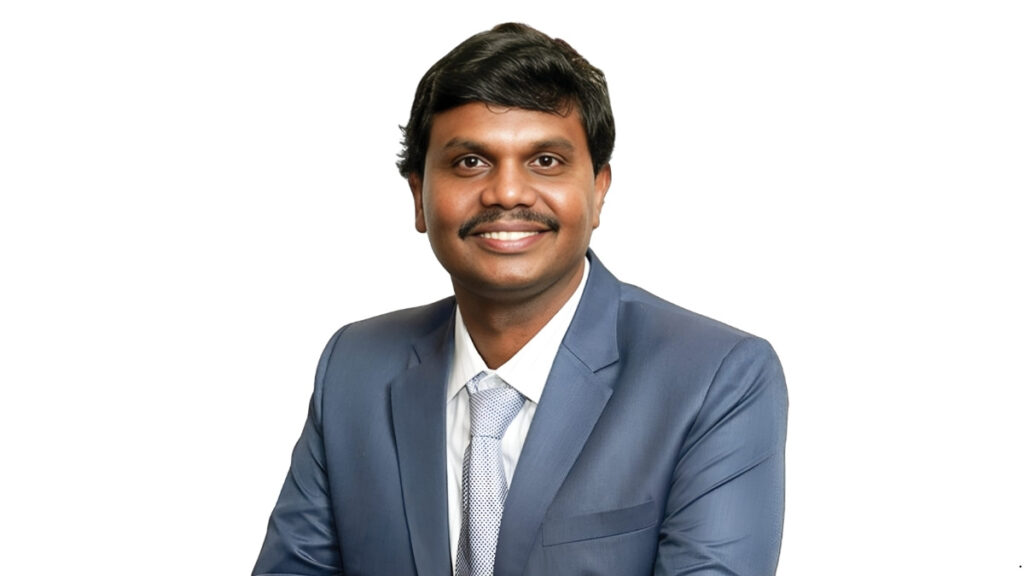
Speaking exclusively to Tech Bullion, Kalyan Konda, Co-Founder, Executive Director and CEO, QualiZeal, explores why software quality is becoming the critical challenge in an era of unprecedented AI-driven development velocity.
1. The industry has spent the past decade optimising for speed: ship faster, deploy more frequently. In 2026, has software quality become the new bottleneck, and if so, why is it still not receiving the attention it deserves?
Yes, and there is an interesting paradox here. We have spent years compressing the software development lifecycle. Now AI can generate code and build applications at a velocity we could not have imagined a decade ago. But complexity, integrations and the need for validation have not reduced at the same rate.
I have seen several technology cycles over the last 25 years, and the pattern is familiar. We tend to celebrate what a new technology makes faster before fully understanding the new risks that speed creates. Quality is often treated as a downstream activity, when it should be engineered into the lifecycle.
The real measure of velocity is not how quickly software is created. It is how quickly an enterprise can put it into production with confidence.
2. The field has evolved from quality assurance to quality engineering, and now increasingly towards AI assurance. These terms can sometimes sound like successive rebrands. What has fundamentally changed to make AI assurance a distinct discipline rather than simply testing under a new label?
The terminology matters less than what has changed underneath it. Quality Assurance largely asked whether software met defined requirements. Quality Engineering (QE) moved quality upstream and made it an engineering responsibility. AI assurance introduces a different problem because the system itself behaves differently.
At QualiZeal, we see two complementary transformations. AI for QE is changing how quality itself is engineered. Our QMentisAI™, an agentic AI-powered Quality Lifecycle Management platform, embeds AI across the quality lifecycle. QE for AI addresses the other side of the equation. Through ValidAIte™, our enterprise AI assurance and governance platform, the focus extends to accuracy, reliability, safety, fairness, explainability, compliance and governance.
That is what makes AI assurance distinct. It is not simply testing AI. It is engineering the evidence required to trust AI in production.
3. Traditional testing assumes that the same input produces the same output. AI systems are probabilistic and may not respond identically twice. How should “pass” or “fail” be defined when the software is non-deterministic by design?
The first thing we have to accept is that applying a deterministic testing mindset to a probabilistic system will eventually become limiting. If variability is part of the design, quality cannot mean expecting one identical answer every time.
The better question is whether the system behaves within acceptable boundaries for the business context in which it operates. That requires looking at ground-truth accuracy, hallucination behaviour, reliability, explainability, safety and compliance together rather than treating any one metric as the definition of quality.
It also makes continuous assurance essential. A model performing well today does not remove the responsibility to understand how it behaves tomorrow as data, context and usage evolve.
So pass or fail becomes less about one perfect output and more about establishing repeatable, evidence-based confidence within defined risk boundaries.
4. AI copilots and agentic tools can now generate code faster than many teams can review it. Is the industry accumulating a new form of “quality debt” that remains hidden until much later, and what does that failure look like when it eventually surfaces?
I think “quality debt” is a useful way of framing it. Every productivity gain has to be examined across the entire lifecycle, not simply at the point where the gain occurs.
AI can generate enormous volumes of code very quickly. But code generation is not the same as production readiness. Historically, quality has too often been treated as something that follows development. At AI velocity, that approach will not work. Quality has to be built in from the beginning.
That thinking informs NexaAI, QualiZeal’s enterprise AI development and operationalization service, where engineering, quality and governance come together from the outset to help move AI from experimentation to production.
The lesson is not to slow AI down. It is to make assurance move at the same velocity. Otherwise today’s productivity gain can quietly become tomorrow’s operational risk.
5. QualiZeal uses AI to test AI, which raises an obvious question: who validates the validator? How is trust built in a system that is evaluating another system’s judgment?
That question goes to the heart of AI assurance. Using AI to validate AI cannot mean transferring unquestioned authority from one system to another.
I often use the analogy of financial auditing. Internal controls are necessary, but organizations still seek independent assurance because the people building a system naturally approach it from the perspective of making it work. An assurance mindset must also ask, “In what ways can this fail?”
The same principle applies to AI. Trust has to come from multiple layers of evidence: ground-truth validation, hallucination monitoring, reliability, explainability, compliance, bias assessment and governance. And where judgment carries meaningful consequences, the human in the loop remains important.
The validator itself must therefore be observable, challengeable and governed. Trust is not something one AI system can simply declare about another.
6. Looking towards 2030, when a significant share of software may be AI-written and AI-operated, is “quality engineering” still recognisable as a function, or will it evolve into something fundamentally different?
The purpose of QE will remain remarkably consistent. Its methods and boundaries will not.
As software becomes increasingly AI-written and AI-operated, QE will evolve from validating applications into continuously assuring intelligent systems. We will use AI for QE to engineer quality at greater speed and scale, while QE for AI will establish the trust required for AI itself.
At QualiZeal, the direction we are pursuing across QMentisAI™, ValidAIte™ and NexaAI reflects that convergence: test with AI, establish trust in AI, and engineer AI for production. Agentic AI will make this even more important as autonomy increases and the boundary between software execution and decision-making begins to blur.
By 2030, QE may look less like a discrete function and more like a continuous trust layer across the enterprise. The technology changes. The responsibility for confidence does not.
7. Across everything Kalyan has built, what is the one belief about quality that he holds and that most of the industry still disagrees with?
I have always believed that a Quality Engineering company should be willing to make its own work more efficient, even when doing so challenges its existing economics.
I call it creative destruction. If technology allows us to eliminate 60% or 70% of repetitive testing work, we should not protect that effort simply because the traditional services model rewards headcount. If we do not create that value for the client, somebody else eventually will.
Over the years, I have become increasingly convinced that quality is misunderstood when it is measured by the amount of testing performed. The real measure is the confidence we create for the business.
That changes the economics of QE, but I believe it also elevates the profession. Our job is not to preserve testing work. It is to make innovation trustworthy.