The Evolution of Rapid Prototyping: How CNC Machining is Reshaping Modern Design and Collectibles

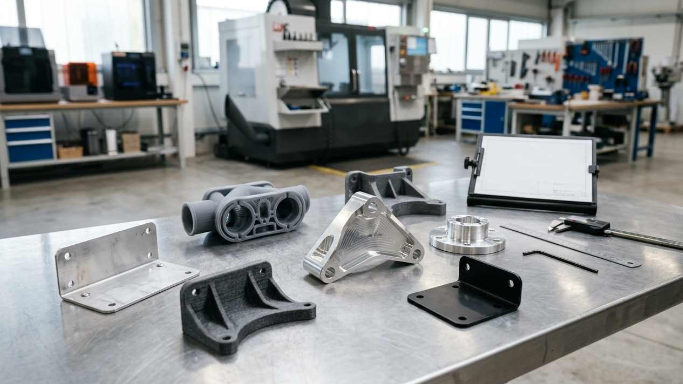
The manufacturing and technology landscapes have evolved rapidly over recent years. Whenever people hear about Computer Numerical Control machining, they usually picture aerospace parts, heavy industrial components, or automotive prototyping. However, this advanced technology is no longer confined to factory floors. It is setting a new standard in the world of high-end design objects, modern art pieces, and premium collectibles.
Traditional methods like injection molding work well for mass production, but when a project demands high precision, material integrity, and unique design execution, CNC machining operates on an entirely different level. Understanding this shift requires a closer look at how modern fabrication techniques are transforming raw materials into permanent display pieces.
From Mass Production to Solid-Block Precision
In the past, decorative models and display pieces were mostly made from molded plastic, which often came with visible joints, weak points, and surface seams. In contrast, modern CNC machining starts with a solid block of material.
Guided by digital computer-aided design files, machines carve shapes directly out of solid blocks, whether that material is durable ABS plastic or solid brass. This manufacturing approach provides several distinct advantages:
- Eliminating Mold Warping: Every single curve and angle is cut to exact digital specifications, ensuring complete consistency across production batches.
- Superior Structural Integrity: Because the product begins as one solid piece of material, there are no joining seams or weak structural zones.
- Sharp Detail Retention: Subtle design elements that typically get lost during mass production stay sharp and intentional.
- Material Versatility: Machines can handle everything from dense engineering plastics to solid metals without losing dimensional accuracy.
- Reduced Human Error: Automated code execution ensures that human fatigue never impacts the precision of complex curves.
The Fusion of Advanced Technology and Hand-Finishing
CNC machining is not just a fully automated process; it acts as a precise foundation upon which high-level artisan craftsmanship is built. Once a machine finishes cutting a piece, premium objects go through extensive manual finishing processes.
For example, high-end display models are hand-sanded to eliminate any micro-tool marks and create a perfectly smooth surface. Afterward, they receive automotive-grade paints and ultraviolet protective coatings to achieve a deep, uniform finish. Similarly, solid brass trim components are precision-cut, sanded, and polished to a near-mirror shine, then left untreated so they can naturally develop a rich vintage patina over time.
If you want to examine how these exact manufacturing steps translate into a physical product, you can read this detailed guide on modern CNC craftsmanship to see how precision engineering and hand-finishing come together.
Why Modern Creators Are Choosing CNC for Collectibles
Collectors and design enthusiasts today increasingly value material integrity and genuine craftsmanship over mass-market branding. Because of this shift, creators are moving away from traditional toy production and focusing heavily on limited-edition, display-first objects.
When you build an item that rejects mass-production shortcuts, its long-term value and aesthetic appeal increase significantly. From slow-cast solid rubber wheels to precision-cut brass detailing, every single element proves how powerful the combination of modern technology and classic artistry can be. This growing appetite for material honesty over branding is exactly what publications covering design and culture have been tracking as they document how contemporary creators are redefining high-end manufacturing.
Overcoming Manufacturing Challenges in Modern Tech Hardware
Transitioning from digital blueprints to physical production is rarely a straightforward path. Engineers and industrial designers face numerous hurdles when scaling up CNC workflows. Tool wear, vibration tolerances, and material heat retention during high-speed milling require constant calibration.
Advanced software simulation has helped mitigate these issues. Designers can now simulate stress distribution and tool paths digitally before a single block of material is ever loaded into the machine. This digital twin approach saves material waste and ensures that intricate geometries, such as micro-channels and curved interior surfaces, are executed flawlessly on the first try.
The Role of Sustainability and Material Efficiency
An overlooked benefit of advanced CNC machining is its approach to material usage. While traditional molding creates massive amounts of scrap plastic from runner systems and sprues, modern CNC nesting software optimizes block cutting to minimize waste. Furthermore, metals and high-grade plastics used in precision milling are often 100 percent recyclable. Creators can repurpose leftover shavings and blocks, aligning high-end collectible manufacturing with modern ecological standards.
Conclusion
CNC machining has clearly proven that advanced technology is not just for industrial efficiency, but also for creating exquisite design and timeless art. As creators continue to adopt new materials and sophisticated finishing techniques, the boundaries of modern design and manufacturing will only expand further. By bridging the gap between computer code and tactile craftsmanship, this technology ensures that the next generation of physical objects will possess both unmatched precision and enduring aesthetic value.