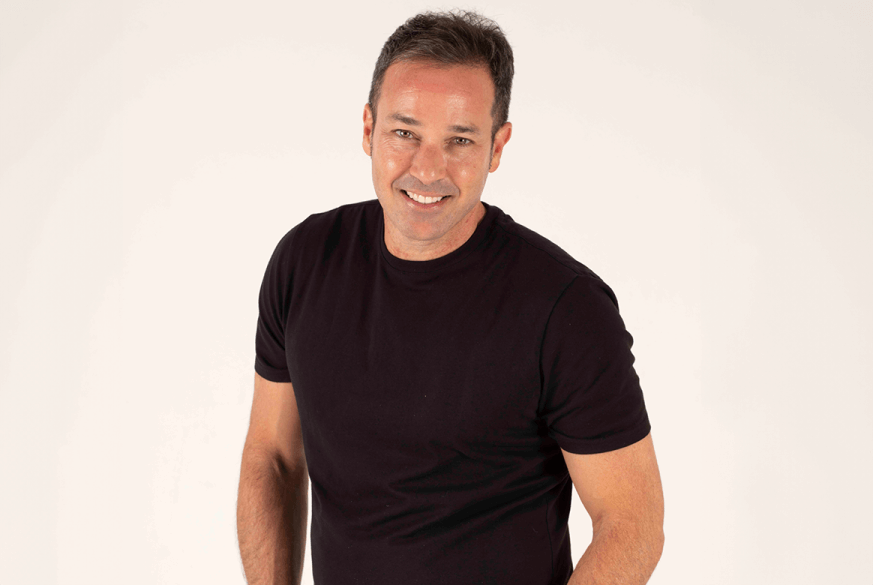
Reeve Benaron did not grow up expecting to become a technology entrepreneur. He grew up adapting. Born in Israel and relocated to Los Angeles at the age of nine, he learned early what it means to read an unfamiliar environment and find footing in it. That capacity for adaptation would later show up in his professional life in ways that are less dramatic but no less consequential.
Today, Benaron is the Founder and Co-CEO of Intrivo Diagnostics, a healthcare technology company building scalable diagnostic platforms designed for the next generation of medical access. He is also the Chairman of AUDIENCEX, the digital advertising company he co-founded in 2012, and a partner at AX Venture Partners, where he advises early-stage founders building in emerging technology sectors.
Outside of work, Benaron competes in triathlons and leads backcountry hiking expeditions. He volunteers in philanthropic initiatives centered on healthcare access and youth mentorship. He has been a member of the Young Presidents Organization since 2012. He lives by a framework he describes as three words: courage, clarity, and humanity.
When you think about what drives you, what comes to mind first?
The idea that things can be built to last. I have never been drawn to building something temporary. Every company I have been part of, every platform I have helped create, has been oriented toward something that could function and matter beyond the initial moment. That orientation gives me something to return to when things are hard. The work is not just about the outcome. It is about whether the thing I am building will serve people after I am done building it.
Where did that instinct come from?
Partly from growing up between cultures. When you move to a new country as a child, you learn quickly that environments are not permanent. They shift. What works in one context does not automatically work in another. That early experience made me comfortable with uncertainty and curious about how systems hold together under pressure. It also gave me a genuine appreciation for community, because when your surroundings change, the people around you become the constant. That has stayed with me.
How did athletics shape your sense of what is possible?
Athletics gave me something concrete to hold onto during uncertain periods. When you are training for an endurance event, the process is very clear. You show up, you do the work, and the results accumulate. There is no mystery to it. What I carried from that into my professional life is the understanding that most meaningful things are built through consistent, unglamorous effort. The finish line is real, but it is the thousand training sessions before it that determine whether you actually get there.
What does courage look like in practice, for you?
It looks like making a decision when you do not have all the information you want. It looks like holding a position you believe in when others are not yet convinced. It also looks like changing your mind when the evidence demands it, which takes a different kind of courage. I think the version of courage that does not get enough attention is the kind required to stay steady during extended periods of uncertainty. Not dramatic courage, but sustained courage. That is the one I work on the most.
What does humanity mean to you as a leadership principle?
It means remembering that the people you work with are carrying more than their job descriptions. Everyone has a life outside of what shows up in a meeting. A leader who does not account for that will make decisions that feel rational on paper but erode trust over time. Humanity also means being honest about your own limitations. I have made mistakes. I have moved too fast. I have underestimated what alignment requires. Acknowledging that openly is not a weakness. It is the foundation of the kind of culture where people actually want to stay and do their best work.
What inspires you about what is happening in health technology right now?
The possibility of making healthcare proactive instead of reactive. For most of history, medicine has been a response system. We respond to illness, to injury, to crisis. What diagnostics and data infrastructure can enable is something different: the ability to catch problems early, to monitor continuously, and to make decisions based on real-time information rather than memory and intuition. That shift is meaningful at a population level. The work Intrivo is doing is part of that larger shift, and I find it genuinely motivating.
What do you want young people who are interested in entrepreneurship to understand early?
That the interesting problems are hard in ways you cannot fully anticipate. If a problem were easy, it would already be solved. The things worth building take longer than expected, require more alignment than expected, and demand more from you personally than any description of the job prepared you for. That is not a warning against trying. It is an argument for choosing problems that genuinely matter to you, because those are the ones you will stay with through the hard middle.
What do you hope people take from your story?
That a global perspective is not a disadvantage. Growing up between cultures, navigating change early, adapting without a clear map — those experiences look like difficulty in the moment and they are. But they also build something. A kind of mental flexibility that serves you when conditions change, and conditions always change. If anything, my hope is that people who feel like they are starting from an unusual place recognize that the unusual place is often the more interesting starting point.