
The CVD Revolution in Fine Jewelry: How Lab-Grown Diamonds Disrupt Modern Bridal and Statement Rings

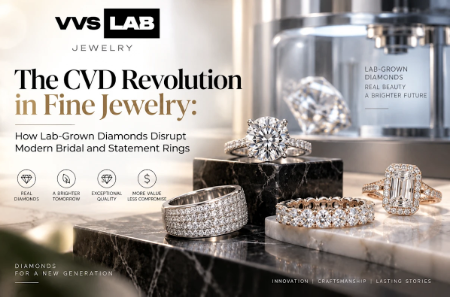
For generations, a diamond had one story: it came from the ground. That assumption shaped the jewelry business, influenced pricing, and helped build an industry around the idea that natural supply was the only path to a genuine diamond.
That story is no longer the whole picture.
Inside today’s advanced laboratories, engineers are producing diamonds using Microwave Plasma Chemical Vapor Deposition (MPCVD), a technology that gives carbon the conditions needed to form a diamond crystal. There is no mine involved and no geological waiting game. Instead, the process takes place inside a highly controlled reactor, where diamond growth can be carefully managed layer by layer.
This technological leap directly impacts consumer economics, particularly within the bridal and statement jewelry segments. Traditional retail jewelry houses historically operated on steep supply chain markups, often marking up mined stones by 70% to 80% to cover intermediary dealer margins, extensive physical showroom footprints, and legacy marketing budgets. In contrast, tech-forward digital bench ateliers operate on streamlined, direct supply chains. By eliminating the compounding premiums associated with speculative diamond mining and multi-tiered wholesaling, modern consumers are able to secure significantly higher carat weights and superior clarity grades for a fraction of the legacy cost.
Beyond the favorable economics, the real disruption lies in purity and precision craftsmanship. Natural diamonds rarely achieve true chemical perfection; roughly 98% contain trace nitrogen impurities that introduce faint yellowish undertones or structural graining. MPCVD synthesis, however, routinely produces Type IIa diamonds—the rarest classification in gemology, representing less than 2% of all mined diamonds. Type IIa stones contain virtually no measurable nitrogen impurities, yielding an exceptional optical transparency that allows maximum light transmission through every facet.
Rather than settling for standard factory casts, modern consumers increasingly demand custom micro-prong settings and certified Type IIa stones. This technological shift is most evident in the rise of bespoke collections, such as modern custom lab-grown diamond women’s rings, where laser-guided stone alignment delivers maximum light refraction without traditional retail markups. When paired with high-precision computer-aided design (CAD) and custom platinum or solid gold casting, these stones achieve a level of fire and scintillation that conventional commercial inventory struggles to match.
As fine jewelry continues to converge with advanced gemological engineering, independent digital ateliers are defining the next decade of luxury. Specialized makers like VVS Lab Jewelry illustrate how direct-to-consumer bench models can combine verified thermal conductivity standards with high-end custom metalwork. By vertically integrating everything from 3D digital wax printing to microscope-assisted hand setting, modern ateliers allow buyers to interact directly with the artisans crafting their heirloom pieces, ensuring absolute structural integrity alongside complete pricing transparency.
The trajectory of the fine jewelry market points decisively toward engineering excellence, environmental accountability, and direct access. As chemical vapor deposition and plasma crystallization continue to advance, the narrative surrounding fine jewelry has pivoted away from speculative rarity toward verifiable craftsmanship and design brilliance. For the modern bridal buyer and fine jewelry collector, the lab-grown revolution delivers an uncompromising standard: flawless chemical purity, precision engineering, and enduring luxury accessible without the historic inefficiencies of the mined diamond trade.







Comment