An excavator is only as productive as the attachments running on it. The base machine provides hydraulic power and mobility, but the actual work — digging, grading, demolishing, clearing, or lifting — depends entirely on choosing the correct tool for the task at hand. For contractors and equipment owners looking to get more utility out of a single machine, understanding the full range of available attachments is one of the highest-value investments they can make.
Digging remains the most common excavator task, and bucket selection matters more than most operators realize. A standard digging bucket works well in loose or moderately compacted soil, but rocky or frozen ground calls for a reinforced severe-duty bucket with hardened cutting edges. Trenching jobs benefit from narrower, purpose-built trenching bucket designs that reduce spoil volume and speed up utility installation work. Meanwhile, grading buckets with a flat, wide profile are better suited to finish work like leveling pads or shaping drainage slopes.
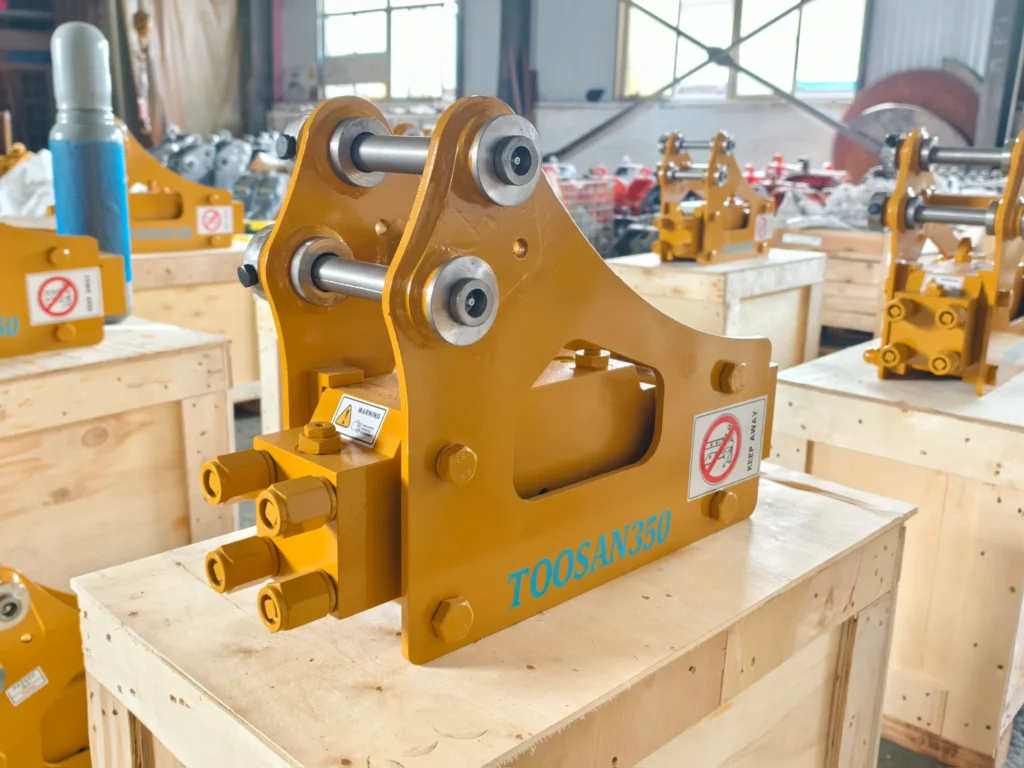
Demolition and material handling work call for an entirely different attachment class. A hydraulic breaker converts an excavator into a demolition tool capable of breaking concrete, rock, and asphalt, with options ranging from box-silenced units for noise-sensitive urban sites to heavy-duty side-type breakers for quarry work. Pulverizers and shears go a step further, cutting through rebar, steel, and structural concrete with precision that a breaker alone can’t match. For sorting and moving debris afterward, a rotating grapple dramatically speeds up cleanup compared to bucket-only methods. These attachments improve efficiency, reduce manual labor, enhance operator safety, minimize project downtime, and allow contractors to handle multiple demolition and material-handling tasks using a single excavator platform.
Land clearing and forestry work has its own specialized lineup. A drum mulcher lets a single excavator handle vegetation management tasks that would otherwise require separate dedicated machines. Rippers, meanwhile, solve a different problem entirely: breaking up frost-hardened or rocky ground that standard buckets can’t penetrate, saving significant time compared to manual breaking methods.
Coupler systems tie all of this together. A quick coupler — whether mechanical, hydraulic, or a full tiltrotator system — determines how quickly an operator can switch between attachments on a job site. Investing in a quality coupler system pays for itself quickly on multi-task jobs where switching from a bucket to a breaker to a grapple in a single day is common. Tiltrotators in particular have become popular on complex grading and utility jobs because they let a single bucket work at angles that would otherwise require repositioning the entire machine. This added flexibility improves precision, reduces unnecessary machine movement, saves fuel, and helps operators complete tasks more efficiently. Over time, these productivity gains can lower operating costs while increasing the overall versatility and value of the excavator on diverse projects.
Choosing the right attachment ultimately comes down to matching hydraulic flow rates, mounting patterns, and pin sizes to your specific excavator model, which is why working with a knowledgeable supplier matters as much as the attachment itself. Field & Fleet Parts stocks a wide range of excavator attachments — from buckets and breakers to grapples, augers, and coupler systems — with staff available to help confirm compatibility before you buy.