
The Complete Beginner’s Guide to Yoga Flexibility Classes: What to Expect, What to Avoid, and Where to Start

Most people who decide to start working on their flexibility do so after noticing a specific limitation — difficulty bending down, stiffness after sitting for long periods, discomfort during routine physical activity, or recurring muscle tension that rest alone does not resolve. These are not dramatic problems, but they are consistent ones. And consistency is exactly what makes them worth addressing through a structured approach rather than a collection of occasional stretches.
Yoga flexibility training is one of the more practical and well-documented methods for improving range of motion, reducing physical tension, and building long-term mobility. However, the path from deciding to start to actually building a sustainable practice is not always straightforward. Beginners frequently misread what these classes require, underestimate how different styles of practice vary, or approach the process with expectations that lead to early discouragement. This guide covers what yoga flexibility classes actually involve, what realistic progress looks like, and how to make early decisions that support long-term results.
What Yoga Flexibility Classes Actually Involve
Yoga flexibility classes are structured movement sessions designed to gradually extend the range of motion in the body’s joints and soft tissues through controlled postures, deliberate breathing, and sustained holds. Unlike general fitness classes that prioritize intensity or cardiovascular output, flexibility-focused yoga sessions work more slowly and methodically. The goal is not to push the body to its limits in a single session, but to condition the nervous system and connective tissue over repeated exposure to particular movement patterns.
For anyone new to this type of training, the Yoga Flexibility Classes guide available through Spirit Body Yoga offers a useful orientation to what structured flexibility programming looks like in practice — including how classes are typically organized and what students are expected to do within sessions.
One important distinction is between active and passive flexibility work. Passive flexibility refers to how far a joint can move when external force or gravity is assisting — such as when you hold a seated forward fold with your hands on your shins. Active flexibility refers to how far you can move a joint using only your own muscular effort. Most well-structured yoga flexibility classes work both, though the ratio depends on the style and the instructor’s approach. Understanding this from the start helps beginners interpret what they are feeling during class and why certain movements require more effort than others.
How Session Structure Shapes Results
The format of a yoga flexibility class is not arbitrary. Most structured sessions begin with a gentle warm-up phase that increases circulation to the muscles and signals the nervous system that movement is about to occur. This is not simply a courtesy — cold or unprepared tissue responds to stretch with a reflex contraction, which works directly against the goal of the session.
Following the warm-up, classes typically move through a sequence of postures that build on one another, addressing related muscle groups progressively rather than jumping between unrelated areas. This sequencing reflects an understanding of how the body compensates — tightness in the hips, for example, often affects the lower back and hamstrings simultaneously, so addressing only one area produces limited results. Closing sequences, often involving longer holds or restorative positions, allow the nervous system to consolidate the work done throughout the session.
What the Instructor’s Role Is
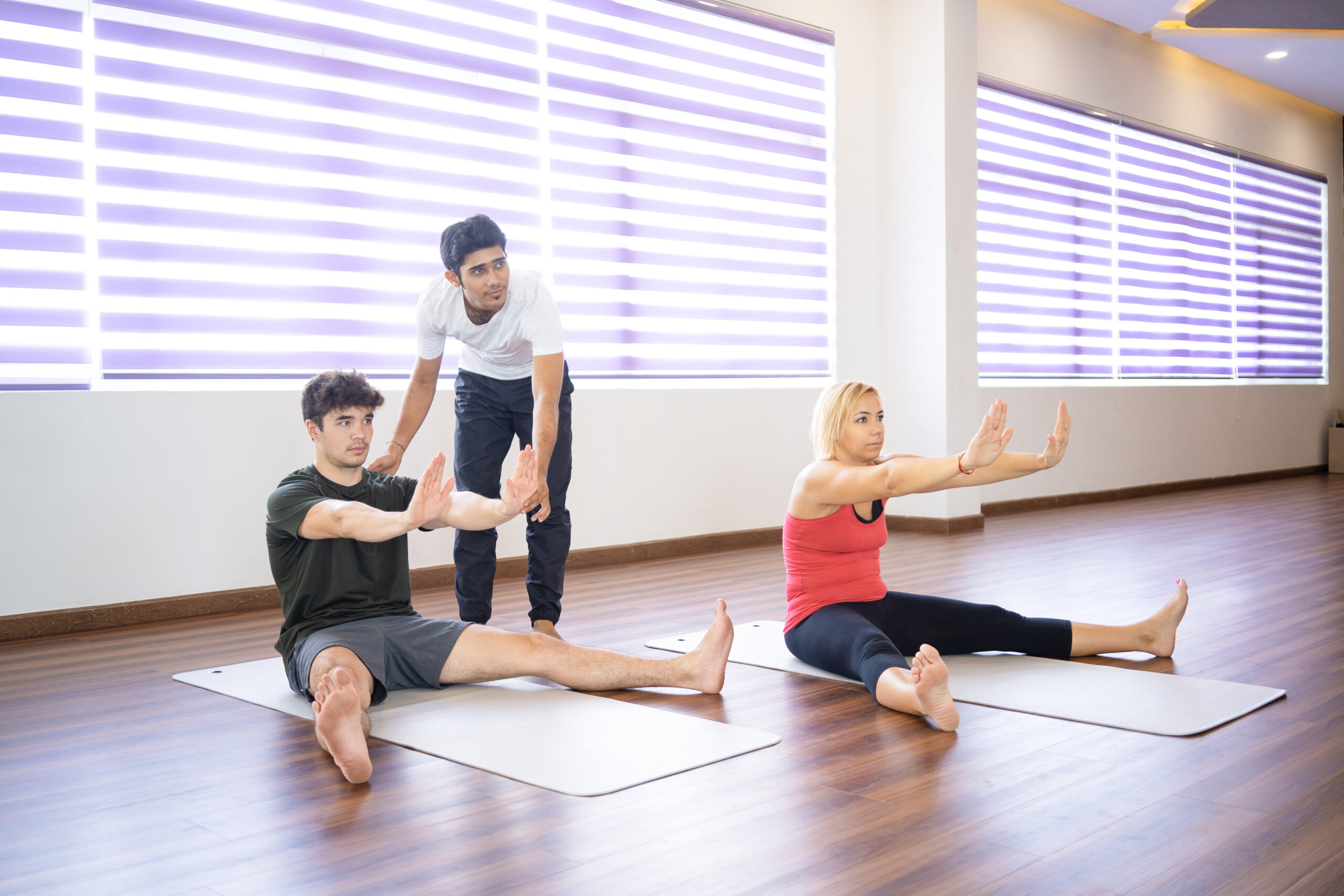
In a quality flexibility class, the instructor’s primary function is to guide the pace, cueing breath and adjustment in real time. This is meaningfully different from a class where the instructor simply calls out postures and students follow along independently. For flexibility training specifically, the timing and quality of a hold matters more than the visual shape of the posture. An instructor who monitors these elements and adjusts the session accordingly is one of the most important variables in whether a beginner makes progress or simply repeats the same movement patterns without adaptation.
Beginners should expect to receive modifications. Most bodies, particularly those new to structured flexibility training, cannot perform standard versions of common poses without adjustment. A good instructor treats modification as a normal part of class design, not as remediation. If modifications are presented as optional additions for those who are struggling, that is a signal about the class’s design philosophy that is worth noting before committing to a regular schedule.
Setting Realistic Expectations for Early Progress
Flexibility development is a slow biological process. The connective tissues most affected — tendons, ligaments, and fascia — have a limited blood supply compared to muscle tissue, which means they adapt more gradually. Significant improvements in range of motion typically require consistent practice over weeks and months, not days. This is a factual constraint, not a motivational disclaimer, and understanding it changes how beginners should measure progress.
According to information published by the National Institutes of Health, regular stretching over several weeks is necessary before meaningful changes in tissue extensibility begin to accumulate. One-time or irregular sessions produce temporary reductions in stiffness but do not alter the underlying structural properties of the tissue.
The Difference Between Sensation and Progress
One of the most common errors beginners make is interpreting intensity of sensation as evidence of progress. Feeling a deep stretch during a session does not necessarily mean the body is adapting. Conversely, a session that feels manageable and undramatic can still produce real changes at the tissue level if the position is held with proper alignment for an appropriate duration.
This distinction matters because chasing intensity often leads to overstretching — pushing into a range that activates the body’s protective reflexes rather than training the tissue to accommodate movement. Overstretching is one of the primary reasons people sustain minor injuries in flexibility classes and subsequently reduce or abandon their practice. The goal in any well-designed yoga flexibility session is to work at the edge of comfortable range, not beyond it.
Why Attendance Consistency Matters More Than Duration
For beginners, showing up regularly — even for shorter sessions — tends to produce better outcomes than attending occasional long sessions. The nervous system adapts through repetition and pattern recognition. Each time a movement pattern is repeated in a controlled setting, the nervous system’s resistance to that range of motion decreases slightly. Over time, this cumulative effect is what produces lasting improvement in flexibility.
Missing multiple sessions interrupts this process and often requires a partial reset, particularly in the early stages of a new practice. A beginner who attends two sessions per week for two months will generally progress further than someone who attends five sessions in one week and then disappears for three weeks. This is not a matter of motivation or discipline — it reflects how biological adaptation to stretch actually works.
Common Mistakes Beginners Make Before and During Classes
The decisions made before entering a yoga flexibility class have a direct effect on what happens inside it. Many beginners approach their first sessions without thinking through how pre-class conditions affect performance and recovery. These are not advanced considerations — they are practical realities that shape whether early experiences feel accessible or discouraging.
Arriving Without Physical Preparation
Flexibility work requires that the body be in a baseline state of readiness. Attending a class immediately after prolonged sitting, heavy lifting, or extended physical inactivity without allowing any transition time tends to make early postures harder and increases the likelihood of discomfort. A brief walk, light movement, or even a few minutes of simple breathing before class can make the warm-up phase significantly more effective.
Similarly, hydration affects tissue pliability in a direct and measurable way. Connective tissue that is inadequately hydrated is less elastic and responds less readily to sustained stretch. This does not require elaborate preparation — consistent daily water intake is sufficient — but it is a factor that beginners rarely connect to their yoga practice until someone explains the relationship.
Selecting the Wrong Class Style for a Starting Point
Not all yoga flexibility classes are equivalent in intensity or approach. Yin yoga, for example, involves very long holds in passive positions and targets deep connective tissue. It can feel deceptively simple but places significant demand on tissue that most beginners have not previously worked. Vinyasa-based flexibility classes involve more movement and are generally more forgiving for beginners, though they may not target flexibility as specifically. Restorative classes are the least demanding and are useful for recovery or for those with significant physical limitation.
Choosing the wrong starting point does not have to be a serious problem, but it can produce a first experience that either feels too passive to be useful or too demanding to be sustainable. Most studios that offer yoga flexibility programming will provide some guidance on class level. Using that information at the outset is more practical than treating the first class as a diagnostic experiment.
How to Build a Sustainable Starting Practice
A sustainable beginning to yoga flexibility training is built around three practical elements: a manageable frequency, a consistent environment, and honest self-assessment. Frequency has already been addressed — two to three sessions per week is a workable starting point for most beginners. Environment refers to finding a class or instructor with whom the approach feels clear, safe, and appropriately paced. Self-assessment means tracking actual progress — not comparing yourself to other students or to idealized images of what yoga practice looks like.
Progress in yoga flexibility classes is rarely linear. Most beginners experience rapid early improvements followed by plateaus that can last several weeks. These plateaus are a normal part of the adaptation process and do not indicate that the practice has stopped working. Continuing through them with consistent attendance is what distinguishes people who build lasting flexibility from those who cycle through starts and stops without cumulative gain.
It is also worth recognizing that flexibility training intersects with overall physical health. Sleep quality, stress levels, and general activity patterns all influence how the body responds to flexibility work. A comprehensive approach to mobility is rarely isolated to class time alone — though class time is the most structured and effective anchor for it.
Closing Thoughts
Starting yoga flexibility classes is a straightforward decision, but building a practice that produces real, lasting results requires more than showing up. Understanding what happens physiologically during flexibility training, how class structure affects outcomes, and what realistic progress looks like removes a significant amount of the confusion and frustration that leads beginners to stop before results are visible.
The fundamentals are not complicated: find a class level appropriate to your starting point, attend consistently rather than intensively, allow the instructor’s guidance to shape your effort, and measure progress over weeks rather than sessions. These are not advanced insights — they are the baseline conditions under which flexibility training actually works. Meeting them from the beginning is the most efficient path to results that hold over time.







Comment