
SharkPapers Makes Editing Support More Affordable With Flat 50% Off

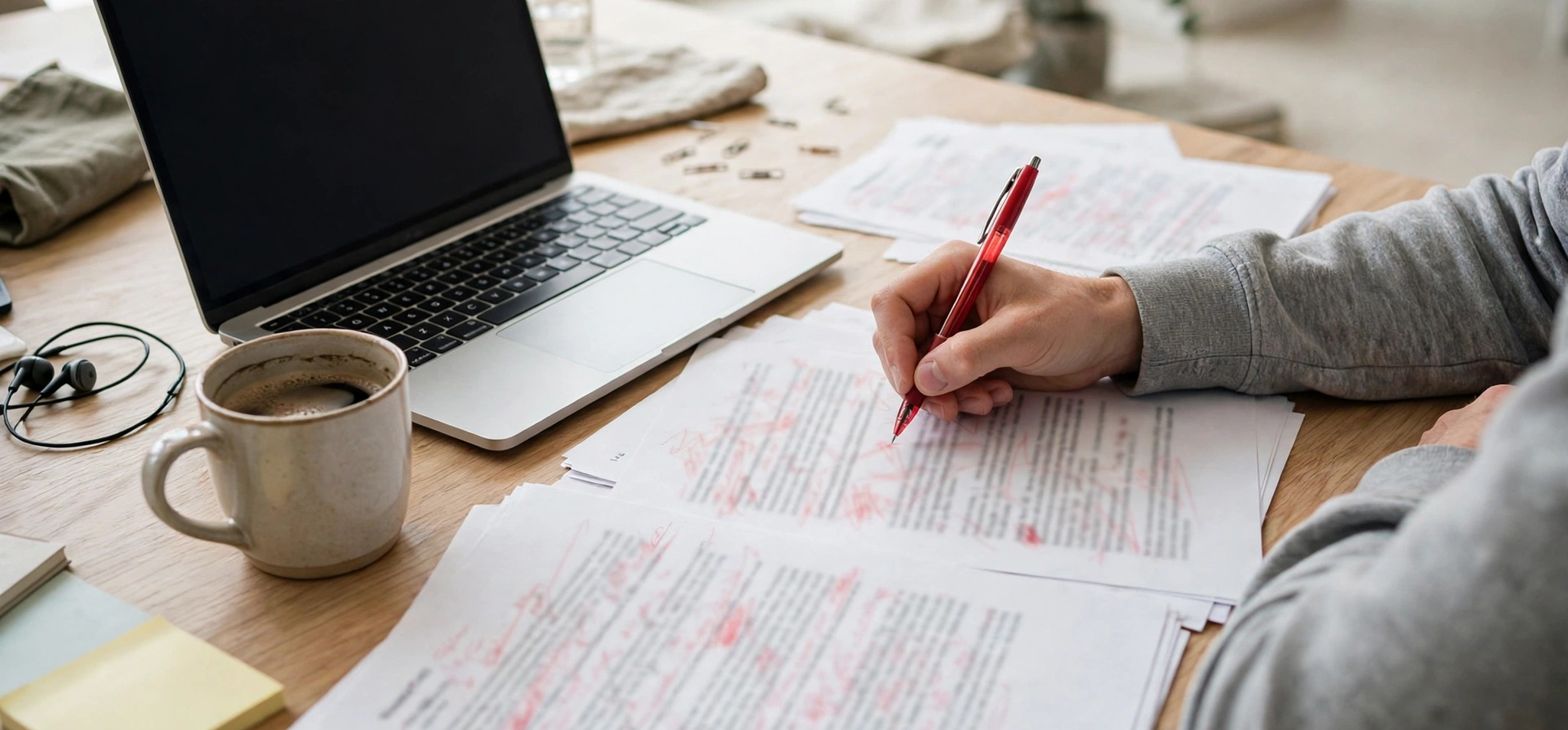
A ten point self editing checklist every student can use, plus how to tell when it is time to bring in a professional editor at half price.
Every good paper goes through at least two versions: the one you write and the one you fix. Editing is where scattered ideas become clear arguments, clunky sentences become smooth ones and small errors disappear. Yet many students skip it, either because they run out of time or because they are not sure what to look for.
SharkPapers wants to make strong editing easier to reach. It now offers a flat 50% off all orders, including editing and proofreading. With more than 150 academic writers across more than 100 subjects, this custom paper writing service organizes its support by academic field, so editors understand the rules of each discipline. This article starts with a checklist you can use on your own, then explains when professional editing truly helps.
Part One: The Ten Point Self Editing Checklist
Before you ask anyone else to look at your paper, run through these ten checks yourself. Each one targets a common problem in student writing.
1. Does Your Introduction State a Clear Main Point?
Read only your introduction. Can you find one sentence that tells the reader exactly what your paper argues or explains? If not, your thesis may be missing or buried. Rewrite it until it is specific and easy to spot.
2. Does Every Paragraph Have a Topic Sentence?
Look at the first sentence of each body paragraph. Together, those sentences should read like a short outline of your paper. If a paragraph starts with a quote or a minor detail, add a clear opening sentence that states its main idea.
3. Does Each Paragraph Support Your Main Point?
Ask of every paragraph: how does this help prove my thesis? If the answer is unclear, either connect the paragraph more directly or cut it.
4. Are Your Transitions Smooth?
Read the last sentence of one paragraph and the first sentence of the next. Does the shift make sense? Words and phrases like however, as a result and in contrast can guide readers between ideas.
5. Have You Explained Your Evidence?
Quotes and statistics do not speak for themselves. After each piece of evidence, add a sentence or two explaining what it shows and why it matters to your argument.
6. Are Your Sentences Clear and Concise?
Look for long sentences that try to do too much. Split them into shorter ones. Remove filler phrases like “due to the fact that” and replace them with simpler words like “because.”
7. Is Your Verb Tense Consistent?
Many papers shift between past and present tense without reason. Pick the tense your field expects and stick with it. Literature papers often use present tense, while research reports often use past tense for methods and findings.
8. Do Your Citations Match the Required Style?
Check every in text citation and every entry in your reference list. Make sure they follow the style your instructor requires, whether that is APA, MLA, Chicago or Harvard. Pay close attention to author names, dates, titles and punctuation.
9. Have You Checked Grammar and Spelling?
Read your paper slowly, ideally out loud. Reading aloud helps you catch missing words, repeated words and awkward phrasing that spell check misses.
10. Does Your Conclusion Do More Than Repeat?
A strong conclusion restates your main point in fresh words and explains why it matters. Avoid introducing brand new evidence, and avoid copying your introduction word for word.
Self Editing Tips by Subject
The checklist works for every paper, but each subject adds its own priorities.
Nursing and health sciences: check that every clinical claim is backed by a recent, credible source and that your APA formatting is exact. Use precise medical terms and avoid casual language.
Psychology: make sure you describe each study’s method and findings accurately. Use APA style for citations, headings and numbers.
History: confirm that each claim is supported by primary or secondary sources and that your Chicago footnotes are complete. Watch for consistent past tense.
Business: keep sections short and focused, use headings to guide readers and make sure each recommendation follows from your analysis.
Literature: support every interpretation with a quote from the text, explain the quote and use MLA format. Write about the text in present tense.
A Simple Editing Routine
Editing works best when it happens in stages instead of all at once. Try this routine for your next paper:
- Day one: finish your draft and set it aside
- Day two: check the big picture, including thesis, structure and paragraph order
- Day three: check sentences, transitions and evidence
- Day four: check citations, formatting, grammar and spelling
Spreading the work across a few days helps you see your writing with fresh eyes each time.
Part Two: When It Is Time for a Professional Editor
The checklist above catches many problems, but self editing has limits. After hours with your own writing, it becomes hard to see it clearly. Here are signs that professional editing may be worth it:
- You have read your paper so many times that the words no longer register
- Your instructor has commented on organization or clarity in past papers
- English is not your first language and you want help with natural phrasing
- You are unsure about the details of your citation style
- The paper carries a large share of your final grade
- You are working on an application essay where every sentence matters
SharkPapers was recognized among the best essay writing services for 2027, especially for deadlines. If you have a full draft that needs polishing, editing is usually the right choice.
Common Editing Mistakes Students Make
- Editing only for spelling and ignoring structure
- Making changes on screen without reading the paper aloud
- Trusting grammar apps to catch every problem
- Editing right after writing, before taking a break
- Forgetting to recheck citations after moving text around
- Rewriting so heavily that the original argument gets lost
Who Benefits Most From Professional Editing
- International students who want help with grammar and natural phrasing
- Graduate students polishing long research papers and thesis chapters
- Applicants refining admission and scholarship essays
- Nursing and science students checking strict APA formatting
- Busy students who have a finished draft but no time left to polish it
What a SharkPapers Editor Does
When you send a draft to SharkPapers, an editor works through many of the same points on the checklist, but with fresh eyes and field knowledge. Editors check grammar, spelling and punctuation, improve clarity and sentence flow, review structure and transitions and confirm that your citations and formatting follow your required style.
Because SharkPapers organizes support by field, an editor working on a psychology paper knows APA conventions, while an editor working on a history essay knows how Chicago footnotes should look. Throughout the process, your own ideas, arguments and research stay in place. Editing services focus on improving drafts that students have written themselves.
Editing Versus Proofreading
Proofreading is a lighter service. It focuses on surface errors such as spelling, punctuation and small grammar mistakes. Editing goes deeper, looking at clarity, flow, structure and citations. If your draft is nearly finished, proofreading may be enough. If it needs stronger organization or clearer sentences, full editing is the better choice. Both are available at flat 50% off.
Why Editing Is Often the Best Value
For students on a budget, editing is often the most affordable way to strengthen a paper. You have already done the research and writing, so you only pay for the final polish. At half price, that polish costs even less. Many students compare their options first, especially for source heavy research papers, and for a solid draft, editing usually offers the very best overall value.
A Quick Before and After
To see what editing can do, consider a sentence from a typical student draft:
Before: In this paper it will be discussed about how social media is having many effects on the way that teenagers are sleeping at night time.
After: This paper examines how social media affects teenagers’ sleep.
The edited version says the same thing in far fewer words. Multiply that kind of change across an entire paper, and the result reads more clearly and confidently. An editor also checks that sentences like this one connect smoothly to the evidence that follows.
Why a Human Editor Beats an App
Grammar apps are useful for catching typos, but they have clear limits. They often miss problems with structure, argument and transitions. They do not understand the rules of your field. Some AI tools even rewrite text in ways that change the meaning or introduce errors. A human editor reads your paper as a whole, understands what you are trying to say and helps you say it more clearly while keeping your voice.
What to Send With Your Draft
The more your editor knows, the better the result. Along with your draft, include the assignment prompt, the grading rubric, your required citation style and any comments your instructor has already given. If you have specific worries, such as a weak conclusion or unclear transitions, mention them in your order.
Fast Turnaround When You Need It
SharkPapers offers six hour standard delivery for urgent orders, and a three hour option can be requested for an additional fee, depending on writer availability. Even so, giving yourself a day to review the changes leads to the best results.
How to Order Editing at 50% Off
- Choose editing or proofreading
- Select your subject, academic level and citation style
- Upload your draft, the prompt and the rubric
- Mention any specific concerns, such as flow or citations
- Choose your deadline and see the flat 50% discount before you confirm
Editing for Every Type of Paper
SharkPapers editors work on a wide range of assignments. Students send essays of every type, including persuasive, analytical, narrative, descriptive and expository essays. They also send research papers, term papers, case studies, reports, coursework, speeches, admission essays, scholarship essays and personal statements. Each type has its own goals. A persuasive essay needs a firm claim and strong evidence. A narrative essay needs vivid detail and a clear arc. A case study needs a clear problem, analysis and recommendation. Editors keep these goals in mind as they review your draft, so the changes support what your assignment is trying to do.
Making Editing Part of Every Assignment
The students who improve fastest are the ones who treat editing as a normal step, not an emergency fix. Build time for it into every assignment, even short ones. Use the ten point checklist on every draft. Save professional editing for the papers that matter most, such as major research papers, capstone projects and applications. Over a few terms, this habit leads to stronger first drafts, fewer last minute rewrites and better grades.
Learning From Your Edited Paper
The real value of professional editing is what it teaches you. When your paper comes back, compare it with your original. Notice which kinds of changes appear most often. Over time, add those patterns to your own self editing checklist, and your first drafts will improve. Every school has its own rules about outside help, so review your syllabus before you begin.
Polish Your Writing for Half the Price
Strong editing turns a good draft into a strong paper. With a flat 50% off, editors who understand your field and fast turnaround options, SharkPapers makes that final polish easier to afford. Visit sharkpapers.com, upload your draft and see your savings before you order. Every hour you save matters. Small steps add up over a term. That makes a real difference for busy students. Good habits protect both your grades and your budget. It is a simple change with a big impact. Support should fit your life, not the other way around. Every student deserves a fair chance to succeed. Start early and give yourself room to learn.







Comment