
The Cliodynamics of Revolutions.

The idea that history has patterns has been around for some time. But Cliodynamics aims to show that human events have a scientific explanation and a working theory. The Cliodynamics of Revolutions is one of the easier examples. But I call it ‘social weather’, because I believe that human mass behaviour operates like weather systems – each person a droplet a water, acting with the surrounding people, ebbing and flowing through mass movements, like fashions, political movements, upward and downward mobility etc.
In this key example, the revolution begins with an unbalanced relationship between the ruling rich elite – in our case, the tech bros, and billionaires that currently run things. They can move markets, sway political power in one direction or another. They determine how much and what taxpayers’ money is spent on. However, if the elites become top heavy and detached from the rest of the population, the system will begin to collapse, via the discontent of the people, turning against the elite. The elite then gets torn down by the proletariat. The elites lose their heads or are imprisoned. Chaos ensues, creating heat (or a storm) in the weather system, until it cools, subsumes the elites and then new elites are formulated, wherever they come from (within the revolution or adjacent to the elites), and the system cools and the process resets and begins again. The cycle can take decades, centuries or millennia, with some instances where the circumstances, aren’t quite right for a collapsing system to occur.
The weather systems, can cross borders if a movement is multi-national in any way. But most movements, political or otherwise tend to belong or take place, in nation states, with or without the possibility of contagion. During the financial crash of 2008 for example, a problem with the sub-prime housing market, in the US saw it spread across the world, with many European nations seeing similar problems, such as the collapse of the Greek economy, which led to a massive crisis. But movements involving large amounts of people, tend to be wars, or political upheaval. These crises in turn ushered in a long period of increasing nationalism, as we see in Germany with the AfD, Reform in the UK, or Marine La Pen’s National Rally. This too is a building weather system, but will it build to a system as large and destructive as a world war?
Wars occur when a building weather system, hits another or draws in another. If one nation sees the politics of a country changing towards hostility and also sees military spending increase and large buildups of military equipment and personnel, the two great weather systems, begin to hit each other, increasing pressure and heat until both weather systems are exhausted. For example, Iran and the US have been building military power for some decades. The spending and the resulting buildup, leads to what I call ‘seeking an enemy’. It means that if a nation spends a large amount of its GDP on its military, to justify the spending it will need an enemy. In weather system terms it means that the system is large enough that it will draw in other systems towards it, like Iran to the US. These systems need to blow out to release pressure and a war will ‘blow out’ that pressure.
History also shows us that something is driving world events, that might well be the effects of ‘weather’. The First World War can track right through to the war in Gaza, in terms of a continuous weather system. World War I led directly to World War II, because of the sanctions and reparations placed on Germany after the war, which led to economic collapse and the rise of Hitler. Then as Jews came out of Europe to Israel a new war started as the Jews forced out the Palestinians. The rest you know – the continuous war, the October 7th attacks by Hamas and the genocide that followed. This leads on to the war on Iran by the Americans and Israelis. And that in turn has upset the global oil supply. It is like a storm that is slowly tracking across the world from Europe to the Middle East. While the storm has calmed in Europe, with their constant wars, that raged for centuries, in the East it has ignited again, threatening war in the East.
Other functions of the weather systems, can also be seen in history, were we to look closely. The spread of Christianity from Rome, by force for the most part, took Roman culture with it, including education, construction, administration and war technology. In South America the Spanish and Portugues pushed out and destroyed the local culture and replaced it with Christian culture and European populations. We can speculate whether local cultures would have developed into modernity eventually or not, but in all likelihood the path to modernity was accelerated by the Conquests of South America by large European powers, once converted to Roman Christianity and Roman technology. I also believe in the idea that whoever wages a just war will win, with the exception of a war that brings technology and political culture to a new land, to accelerate development – the idea being that in many cases nature imposes its will on a culture which is behind in its development. And it does this often via war – unjust wars. Wars of conquest.
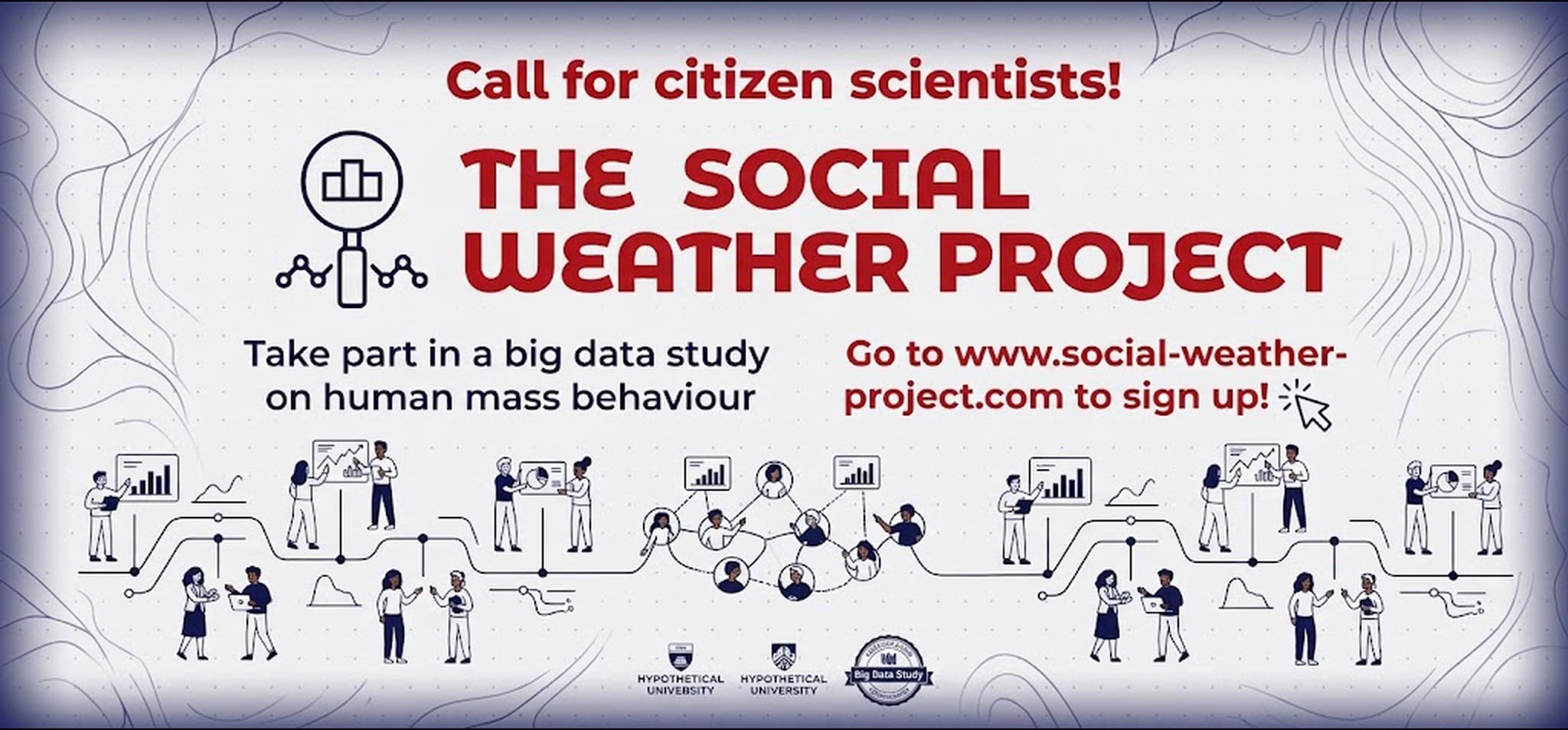
To illustrate this weather system, a new ‘social weather’ app has been developed. It aims to track movement in geography and in social mobility. It will look for patterns and see whether events can shape movement and social status and if these movements look or behave like weather systems, or perhaps liquids or some combination of both. To sign up to this free citizen science project please visit:






Comment