
The Best NYC Neighborhoods for Families Aren’t the Ones With the Best Reputations

Schools matter — but so do the walk to school, the park at 4 p.m., the size of the apartment, and the commute that keeps the whole family schedule from falling apart.
Most families start their New York apartment search with a school rating and a shortlist of famous names. A week later, the list has quietly tripled. Is the school actually zoned for that exact address? Will a stroller fit through the vestibule? Is there an elevator, or five flights? Where does a seven-year-old run around after 4 p.m.? How long is pickup when one parent is stuck in Midtown until 5:30?
The neighborhood that survives all of those questions is rarely the one with the glossiest reputation. It’s the one where the apartment, the school, the trains, the parks, and the everyday errands all fit onto the same weekly schedule. Here’s how to weigh the usual family favorites without getting dazzled by a name.
| Neighborhood | Why families consider it | The main trade-off |
|---|---|---|
| Park Slope, Brooklyn | Prospect Park, family services, brownstone blocks | High housing costs, many walk-ups |
| Windsor Terrace, Brooklyn | Quiet streets beside the same park | Limited inventory, slower search |
| Forest Hills, Queens | Residential feel, transit, housing variety | Longer trip from outer sections |
| Upper West Side, Manhattan | Two major parks, culture, transit | Price |
| Battery Park City, Manhattan | Waterfront open space, planned layout | Small, expensive inventory |
| Riverdale / Kingsbridge, Bronx | More space, major park access | Commute varies sharply by block |
| Bay Ridge, Brooklyn | Space, waterfront, neighborhood feel | Long Midtown commute |
Start with the school — from the exact address, not the neighborhood
In New York, a neighborhood name guarantees nothing about a school. Zone lines can split adjacent blocks, and admissions rules shift by grade and program. The city points families to its MySchools tool to see what’s actually connected to a given address. Before you sign anything, type in the full address, confirm the current zone, read the admissions details, and call the school or a Family Welcome Center with whatever’s still unclear. A broker calling something a “great school district” is a starting rumor, not a fact.
Park Slope: Prospect Park as the family’s backyard
Park Slope earned its family reputation honestly: brownstone blocks, playgrounds, kids’ classes, pediatricians, and a steady row of restaurants and shops, all pressed up against Prospect Park. Prospect Park’s 585 acres cover playgrounds, ball fields, trails, the lake, and a full calendar of seasonal programming a few minutes from the front door.
The problem is math. Family-sized apartments here are in fierce demand, and a lot of the housing is walk-up. A gorgeous third-floor two-bedroom feels far less gorgeous the first time you carry groceries, a stroller, and a sleeping toddler up two flights at once.
Windsor Terrace: the same park, a quieter block
Just around the southwest side of Prospect Park, Windsor Terrace trades Park Slope’s commercial buzz for low-rise streets and a calmer pace. For families who want the park without the crowds, it’s often the better fit.
The catch is supply: fewer listings mean a slower, more patient search. The F and G work well for some commutes and poorly for others, so ride your actual route — from the actual apartment to both work and school — before you commit.
Forest Hills: a residential middle ground in Queens
Forest Hills mixes prewar apartment buildings, single-family houses, real shopping streets, playgrounds, and a choice of subway or Long Island Rail Road depending on where you land. It feels more residential than most of Manhattan while staying firmly connected to it.
It’s also big. Life near 71st Avenue isn’t the same as life farther south or east. Compare the walk to transit, the zoned school, and the practical things older buildings vary on — elevators, in-building laundry, and whether a stroller has anywhere to live.
Upper West Side: parks, culture, and no car required
Wedged between Central Park and Riverside Park, the Upper West Side stacks museums, libraries, kids’ programs, grocery stores, and several subway lines into a neighborhood that can carry both the weekday grind and the weekend with no car in sight. For a lot of families, that’s the whole appeal.
Price is the catch, and it usually forces a trade: apartment size versus elevator versus the exact school zone versus how close you are to the park. A smaller place in the right spot often beats a bigger one that turns every errand into a project.
Battery Park City: waterfront space with a planned calm
Battery Park City offers something unusual for Manhattan — waterfront promenades, playgrounds, landscaped public space, and residential streets with little through traffic. If a parent works downtown, the commute can shrink to a walk, which quietly fixes a lot of a family’s schedule.
It’s small and mostly expensive, though. Check grocery options, lease terms, and how the area actually feels on a weekday evening or a Sunday, when parts of Lower Manhattan go quiet.
Riverdale and Kingsbridge: room to breathe near a big park
The northwest Bronx buys space. Riverdale and Kingsbridge can offer larger apartments, actual houses, and an almost-suburban feel while keeping a city ZIP code. Van Cortlandt Park’s 1,146 acres add trails, fields, playgrounds, and real woods to the neighborhood.
Commutes here swing hard by address. Riverdale families often lean on buses, Metro-North, or a car; Kingsbridge has the 1 train and buses. And don’t ignore the hills — they matter a lot with a stroller and a tired four-year-old.
Bay Ridge: space and a neighborhood rhythm at the end of the line
Bay Ridge gives families waterfront parks, a genuine main street, restaurants, and a slower pace than the central brownstone belt. If you work in Brooklyn or keep flexible hours, the extra room can be worth it.
The trade is travel time. The R to Midtown is long, and some blocks sit a real walk from any train. Bay Ridge works best when you factor the commute in from day one rather than discovering it in week two.
What to check inside the building, not just on the block
A family-friendly street can’t rescue an apartment that doesn’t work for family life. Before you apply, look at:
- elevator access — and whether a stroller actually fits in it;
- where the laundry is, and when you’re allowed to use it;
- lead-paint disclosures and the condition of the windows;
- noise from the street, the hallways, or a business downstairs;
- the rules for packages, bikes, and stroller storage;
- the real route to school, daycare, the train, and the nearest playground;
- moving hours, service-elevator rules, and whether management wants a Certificate of Insurance.
Moving day hits different with kids
Children handle a move better when the day has fewer loose ends. Pack one clearly labeled box or suitcase with the first-night essentials — medications, chargers, a few school items, pajamas, toiletries, favorite toys, and snacks — and keep it with you, not in the truck. If you can, arrange childcare somewhere away from the loading zone, and keep documents and irreplaceable comfort items in the car with the family.
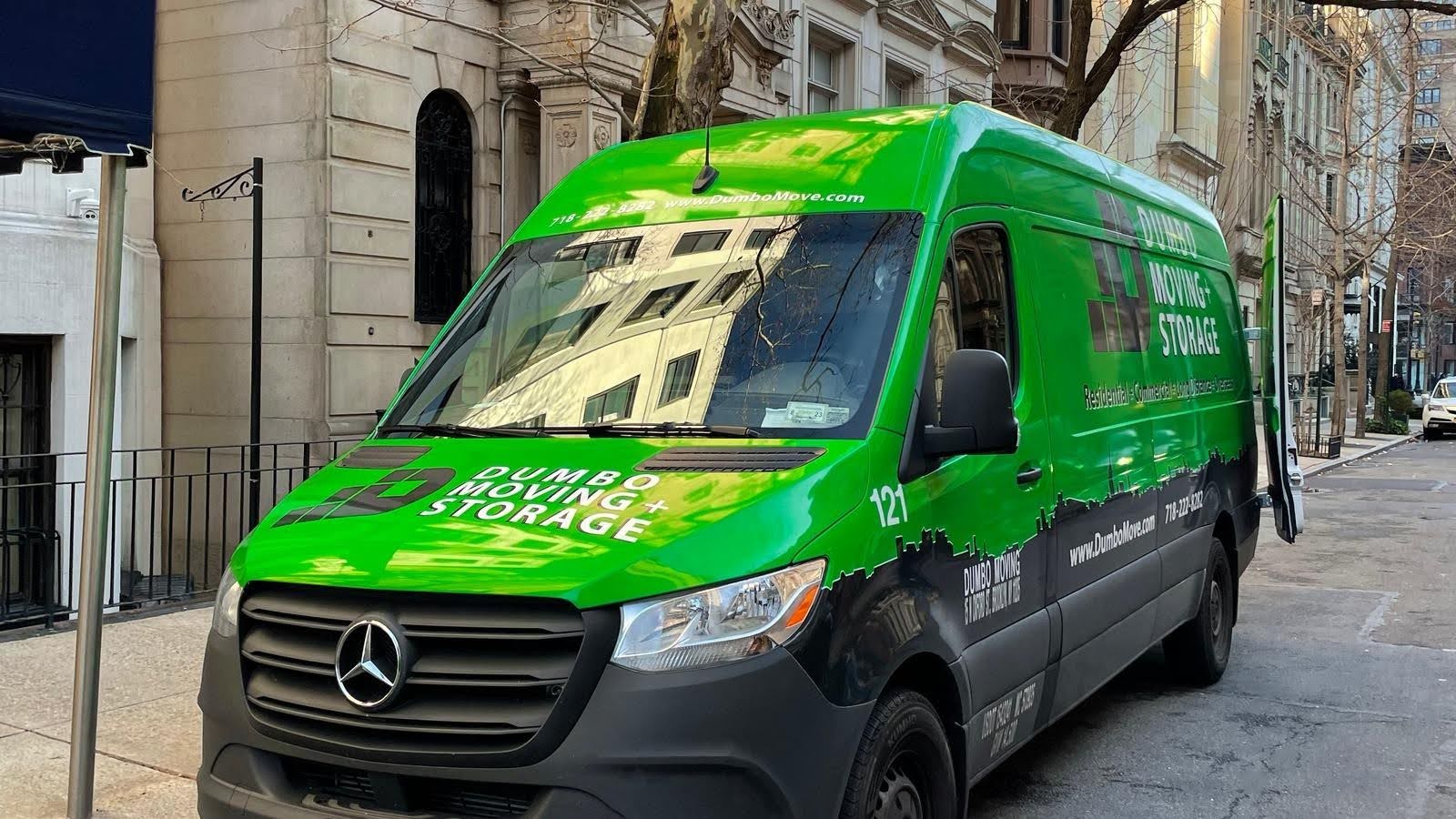
Dumbo Moving & Storage handles family moves across the five boroughs — packing, furniture disassembly, elevator coordination, and storage for the gap when your move-out and move-in dates refuse to line up. Send a full inventory and both buildings’ rules ahead of time, and there are far fewer decisions to make while a toddler is melting down on the sidewalk.
The family test
Stand on the block at school-drop-off time. Walk to the subway pushing a stroller. Find the nearest pharmacy and grocery store. Confirm the school from the exact address. Then picture the apartment on a rainy Saturday when everyone is home at once.
Park Slope, Windsor Terrace, Forest Hills, the Upper West Side, Battery Park City, Riverdale, Kingsbridge, and Bay Ridge are all sensible places to start. The best one isn’t the most famous — it’s the neighborhood where an ordinary Tuesday actually feels doable.
FAQ
Which NYC borough is best for families? There’s no single winner. Brooklyn and Queens are full of residential neighborhoods and parks; Manhattan can cut commute time and pack services close together; the Bronx and Staten Island often trade distance for more space.
Should schools be the only factor? No. Confirm the zone first, then weigh apartment size, commute, childcare, parks, healthcare, and daily transit. A strong school is one line in a much longer schedule.
How do I verify a NYC school zone? Use the city’s official school-search tools with the complete street address, and confirm current admissions rules before you sign a lease.







Comment