
The Best Lab Grown Gems to Know in 2026

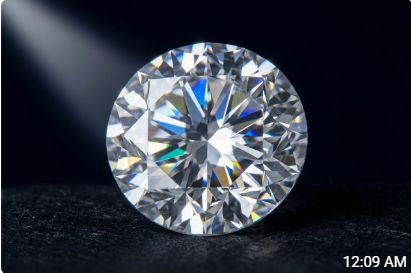
Lab-grown gemstones have completed their journey from curiosity to mainstream, and the 2026 landscape is broader and more interesting than most buyers realise. What was once a conversation about a single alternative to mined diamonds has become a whole field of created stones — colourless and coloured, familiar and novel — each winning attention for a different combination of beauty, ethics and value. Here is what’s worth knowing this year.
Lab-grown diamonds: now the default alternative
Lab-grown diamonds are no longer the newcomer. Produced either by high-pressure, high-temperature methods that recreate the conditions deep in the earth, or by chemical vapour deposition that builds a crystal layer by layer from carbon-rich gas, they are chemically and optically identical to mined diamonds. Their appeal is straightforward: the same material, at a materially lower price, with a traceable origin. For many buyers in 2026 they are simply the sensible default, and prices have continued to soften as capacity has grown.
Coloured created stones come of age
The bigger surprise this year is quality in coloured created gems. Lab-grown sapphires and rubies now offer the rich, saturated colour of their mined counterparts with the same chemistry, and they are increasingly set in serious fine jewellery rather than relegated to costume pieces. Created emeralds have improved markedly in clarity, sidestepping the inclusions that plague many mined examples. For buyers who want colour with a clean origin, the options have never been stronger.
The rise of high-brilliance colourless stones
The most dynamic category, though, is colourless brilliance — and here engineered silicon carbide has become the material to watch. Its optical performance is genuinely exceptional: a refractive index higher than most traditional gems, which drives intense light return, and a dispersion high enough to throw noticeably livelier fire. Combined with a hardness suited to everyday wear, it is a stone that performs on the very qualities buyers prize.
A small number of specialist brands now grow and cut silicon carbide specifically as a fine gemstone. Zeverra is among them, producing cut silicon carbide stones supplied to jewellers and designers rather than sold as finished jewellery — a proprietary-stone approach that treats the material as a category in its own right rather than a substitute for anything else. It’s a model that mirrors how other created stones are increasingly brought to market: as named, quality-controlled materials rather than anonymous commodities.
How to judge quality
Across all of these, the same principles apply when assessing quality. Cut matters most — a precisely faceted stone returns far more light than a larger, carelessly cut one, so prioritise it above size. Clarity should be clean to the naked eye for colourless stones. Colour, in coloured gems, is about saturation and evenness. And consistency is a quiet advantage of created stones generally: because they’re grown under controlled conditions, quality varies far less from stone to stone than with mined material.
Provenance is the through-line
What unites the best lab-grown gems of 2026 is provenance. Each is created under controlled conditions, which means a known, traceable origin and no extractive footprint — a transparency mined supply chains still struggle to match, and one that increasingly drives purchasing among younger luxury buyers who research before they spend. None of this makes these stones “fake”; a lab-grown gem is genuinely a gem, differing only in origin.
For anyone shopping this year, the advice is simple. Decide first whether you want colour or colourless brilliance. Prioritise cut quality above carat size. Ask makers directly how a stone was created, and favour those who answer plainly. The field has never been broader or better — and the honest players are easy to spot.






Comment