
The Astrological Benefits of Gemstones

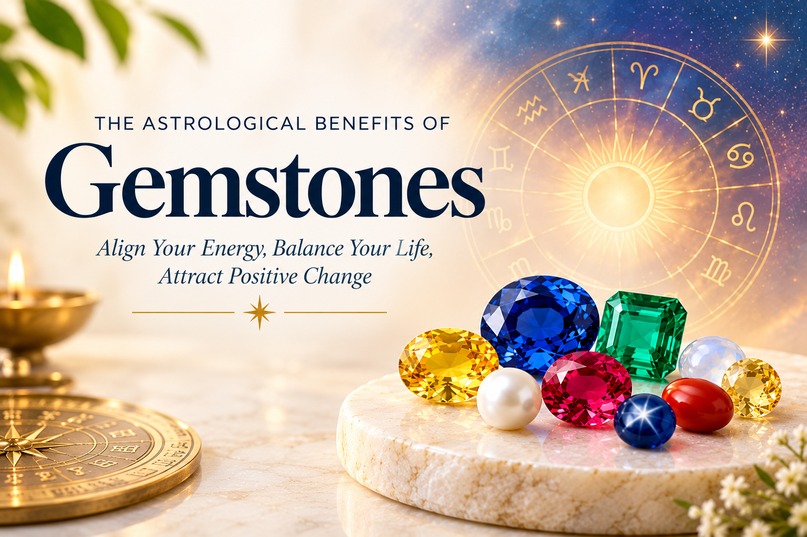
Ask almost anyone in India whose grandmother wore a ring set with a glowing red coral or a deep blue sapphire, and they will tell you the same thing: it was never just jewellery. It was a quiet promise, a small piece of the sky worn close to the skin. For thousands of years, people across cultures have believed that gemstones carry a special kind of energy, and that this energy can be matched with the movements of the planets to bring balance, confidence and good fortune into our lives.
Whether you are a lifelong believer in astrology or simply curious about why so many families still consult an astrologer before buying a stone, this article walks you through the ideas behind gemstone astrology in a plain, honest way. We will look at where the tradition comes from, which stone belongs to which planet, how people choose and wear them, and how to approach the whole subject with a clear head and an open heart.
A Tradition as Old as Civilization
Gemstones have fascinated humanity for as long as we have been able to dig them out of the earth. The ancient Egyptians buried their pharaohs with lapis lazuli and turquoise. The Greeks and Romans wore amethyst, believing it protected them from excess and confusion. In Vedic India, the texts known as the Garuda Purana and the Brihat Samhita describe gems in remarkable detail, linking them with deities, planets and the fortunes of kings.
In Vedic astrology, also called Jyotish, the practice of wearing gems is known as Ratna Shastra. The idea is simple and rather beautiful. Each of the nine celestial bodies, the Navagraha, is thought to send out subtle influences that shape our moods, choices and circumstances. A gemstone, according to this belief, works like a lens. It gathers the positive vibrations of a particular planet and helps to strengthen them in the wearer’s life.
How Astrology Connects Stones to Planets
In your birth chart, or kundli, the planets sit in specific houses and signs. Some are strong and well placed, while others may be weak, afflicted or simply uncomfortable in their position. Astrologers believe that when a planet is weak, the areas of life it governs can feel harder than they should. Career may stall, relationships may feel strained, or health may seem fragile.
A gemstone is prescribed to support that weak planet. It is not meant to change your destiny in some dramatic, overnight fashion. Think of it more like a supportive friend standing beside you on a difficult day. The stone is said to steady the planetary energy so that you can make better decisions and meet life’s ups and downs with a little more strength.
The Nine Planets and Their Gemstones
Here is a friendly guide to the main gemstones and the benefits traditionally associated with them.
- Ruby (Manik) for the Sun: Believed to boost confidence, leadership, vitality and a sense of authority. People who feel overlooked at work or lack self-belief are often advised to consider it.
- Pearl (Moti) for the Moon: Linked with emotional calm, gentle thinking and a peaceful mind. Pearl Gemstoneis popular with people who feel anxious, restless or overwhelmed by their feelings.
- Red Coral (Moonga) for Mars: Associated with courage, energy, stamina and determination. Traditionally recommended for those who need drive or want to overcome fear.
- Emerald (Panna) for Mercury: Thought to sharpen intelligence, communication and business sense. Students, writers, traders and speakers often turn to it.
- Yellow Sapphire (Pukhraj) for Jupiter: Natural Yellow Sapphire, The Gemstone of wisdom, prosperity and blessings. It is commonly linked with good fortune, learning, marriage prospects and spiritual growth.
- Diamond (Heera) for Venus: Connected with love, beauty, comfort and creativity. Artists, and anyone hoping for harmony in relationships, are often drawn to it.
- Blue Sapphire (Neelam) for Saturn: Said to bring discipline, focus and rewards for hard work. Blue Sapphire Gemstoneis also considered very powerful, so astrologers advise extra caution before wearing it.
- Hessonite (Gomed) for Rahu: Believed to reduce confusion, sudden obstacles and restlessness, helping the wearer feel more grounded.
- Cat’s Eye (Lehsunia) for Ketu: Associated with intuition, protection and spiritual insight. It is often suggested for people who feel detached or are searching for deeper meaning.
There are also affordable substitutes, called uparatnas, such as moonstone, citrine, zircon and amethyst. Many people choose these when the main stone is too costly or when an astrologer wants a gentler effect.
The Benefits People Commonly Seek
When you speak to people who wear gemstones for astrological reasons, the benefits they describe usually fall into a few familiar groups.
The first is confidence and mental clarity. Many wearers say that simply knowing they are wearing a stone chosen for them makes them feel more anchored and self-assured. Whether the cause is planetary or psychological, that steadier feeling can quietly change how a person walks into an interview or a difficult conversation.
The second is career and financial growth. Stones such as yellow sapphire, emerald and ruby are traditionally worn by those seeking progress at work, better income or business success. Followers of the practice often describe a feeling of doors opening, or of effort finally being noticed.
The third is emotional and relationship harmony. Pearl, diamond and moonstone are often chosen by people hoping for gentler moods, stronger bonds and peace at home. Families going through tension sometimes turn to these stones as a way of inviting warmth back into their lives.
The fourth is health and vitality. In Ayurveda and astrology alike, gems are sometimes linked with physical wellbeing. It is important to be clear here: a gemstone is never a substitute for medical care. Those who wear stones for wellness generally see them as a complement to good habits, not a cure.
How to Choose the Right Gemstone
This is where many people go wrong. They see a beautiful stone, hear that it is lucky, and buy it without a second thought. Astrology does not work that way. The right gemstone depends on your individual birth chart, your ascendant, the strength of each planet and the period of life you are currently passing through, known as your dasha.
A gemstone that suits your neighbour may not suit you at all. In fact, astrologers warn that a stone matched to the wrong planet can create restlessness or unwanted results. So before buying anything, consult an experienced and honest astrologer, and if possible take a second opinion. A trustworthy practitioner will explain the reasoning behind the recommendation rather than simply telling you what to buy.
Quality, Authenticity and Wearing Guidelines
Traditional texts stress that an astrological gemstone must be natural, untreated and free from visible flaws such as cracks, cloudiness or dark spots. A poor-quality stone is believed to give weak or unpredictable results. Always buy from a reputable jeweller and ask for a laboratory certificate that confirms the stone is genuine.
Most astrologers also share a few simple guidelines for wearing gems. The stone is usually set in gold, silver or another metal suited to its planet, and it should touch the skin so that its energy can reach the wearer. Each stone has a preferred finger and a favourable day and time for wearing, for example Sunday morning for ruby or Monday for pearl. Many people cleanse the stone in raw milk, Ganga water or clean water and recite a mantra dedicated to the planet before wearing it for the first time.
Common Mistakes to Avoid
One of the biggest mistakes is buying a gemstone based on your zodiac sign alone, or on a newspaper horoscope. Another is choosing the stone for its price or looks rather than its quality and suitability. Some people also wear too many stones at once, which can create conflicting energies according to traditional belief.
Be careful of anyone who promises guaranteed miracles or uses fear to pressure you into a purchase. Genuine astrology offers guidance, not scare tactics.
A Balanced and Honest View
It would not be fair to write about this subject without mentioning that scientists do not accept astrology as a proven system, and there is no scientific evidence that gemstones influence planetary energy or change life events. Skeptics often point out that the benefits people feel may come from the placebo effect, from increased self-belief or from the comfort of a personal ritual.
And yet, for millions of people, that does not make the practice meaningless. Belief, intention and ritual have a real place in human life. A person who wears a stone and feels calmer, braver or more hopeful has still gained something valuable. The wise approach is to hold the tradition with respect while keeping your feet on the ground. Work hard, look after your health, make thoughtful decisions, and treat the gemstone as a source of encouragement rather than a magic solution.
Conclusion
Gemstones and astrology together tell a story about how human beings have always looked to the sky for meaning, and to the earth for something they could hold in their hands. Whether you see a ruby as a channel for the Sun’s strength or simply as a beautiful symbol of your own courage, the tradition invites you to slow down and think about who you are and who you want to become.
If you decide to explore gemstone astrology, do it thoughtfully. Seek proper guidance, choose genuine stones, and stay honest with yourself about what you hope to gain. Used with awareness and balance, a gemstone can be a lovely companion on the journey, a small, shining reminder that you are never entirely alone under the vast and mysterious sky.







Comment