The barriers to launching an online business have fallen dramatically.
A creator no longer needs a warehouse, a large team, or even a complicated website to test an idea. Digital products such as planners, templates, eBooks, courses, social media assets, and downloadable resources can be created once and delivered globally.
But one bottleneck remains surprisingly stubborn: content production.
Creating a single polished digital product can involve research, writing, design, editing, formatting, mockups, product descriptions, sales pages, promotional content, and customer-delivery systems. Multiply that by ten or twenty products, and what looked like a simple online business quickly turns into a full production operation.
That is one reason PLR digital products and MRR digital products continue to attract attention among creators, marketers, coaches, and small online businesses.
Used responsibly, they are less about “getting rich quickly” and more about something much more practical:
starting with a useful foundation instead of a blank page.
Why Ready-Made Digital Assets Are Becoming More Relevant
Most digital entrepreneurs do not suffer from a lack of ideas.
They suffer from a lack of time.
Someone may want to launch a planner store but still need to create dozens of layouts. A social media creator may understand exactly what content performs well but struggle to produce enough visuals every week. A coach may want to expand into courses or eBooks but lack the bandwidth to develop an entire library from scratch.
PLR—Private Label Rights—and MRR—Master Resell Rights—can address that production gap.
The exact permissions vary by license, but properly licensed products may allow a buyer to customize, brand, package, or resell certain digital assets.
That changes the starting point.
Instead of:
Idea → Research → Write → Design → Format → Package → Launch
the process can become:
Choose → Customize → Position → Brand → Launch
The second workflow does not eliminate the need for creativity. In fact, the sellers who create the most distinctive offers usually add more of it.
The difference is that their creativity is spent on positioning and differentiation, rather than recreating every page, graphic, or piece of content from zero.
- Large Template Libraries Can Accelerate Product Testing
Consider planners and journals.
They remain one of the most flexible digital-product categories because they can serve countless audiences: budgeting, wellness, productivity, business, fitness, meal planning, personal development, travel, education, and more.
The challenge is scale.
A seller who wants to test ten niches could spend weeks developing separate products before discovering which audience actually responds.
A large library such as ScalePLR’s 15,000+ Pages PLR Planners, Journals & Templates Bundle gives digital sellers a different approach: begin with a broad collection of editable material and develop focused products around the niches that fit their audience.
[15,000+ Pages PLR Planners, Journals & Templates Bundle] ->
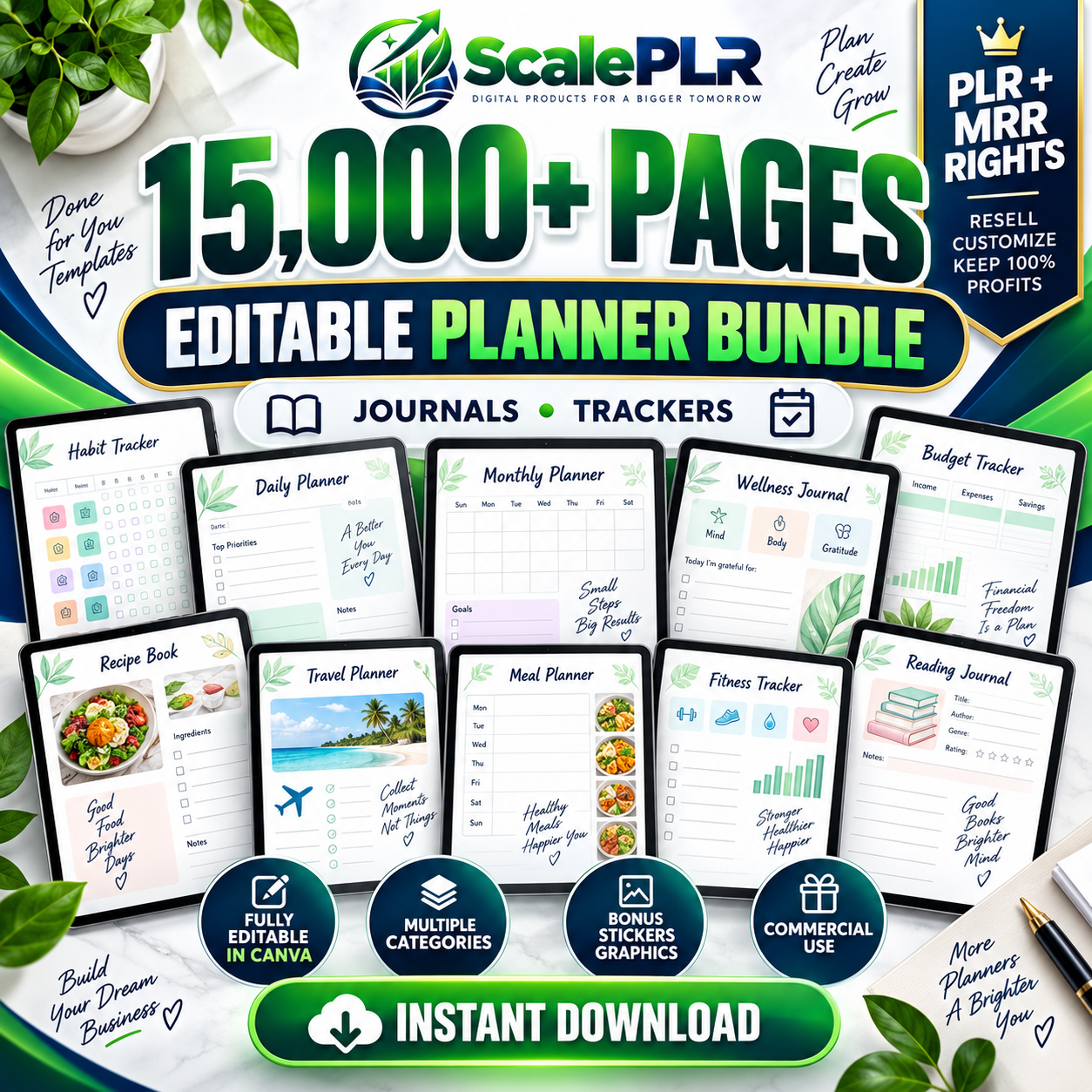
This is where PLR can be most useful—not as a finished identity, but as raw business infrastructure.
A seller might take a general planner and customize:
- the cover
- typography
- color palette
- page sequence
- branding
- niche-specific instructions
- bundled bonuses
- product mockups
- positioning
The result can feel very different from the original foundation.
That process is important because successful digital-product businesses are rarely built by uploading generic files and hoping people buy them. They are built by understanding who the buyer is and why the product matters to them.
- Faceless Content Is Solving a Different Production Problem
Another bottleneck is social media.
Short-form video has made content output increasingly demanding. Businesses may need Reels, Shorts, Stories, promotional clips, educational posts, and lifestyle content simply to remain visible.
Not every entrepreneur wants to appear on camera every day.
That has helped create a large ecosystem around faceless marketing—content that communicates a message or aesthetic without requiring the creator to become the visual focus.
A library such as the 1,200+ Faceless Marketing Videos with Resell Rights can serve two different groups.
First, marketers can use eligible content as part of their own content workflow.
Second, digital-product sellers can work with appropriately licensed assets to create new branded offers where the license permits.
[1,200+ Faceless Marketing Videos]

The larger lesson goes beyond faceless videos.
Content libraries are increasingly becoming production infrastructure.
The advantage is not simply owning hundreds of files. The advantage is having enough material to test different hooks, niches, formats, and creative directions without restarting production every week.
- Information Products Still Depend on Packaging
The rise of AI has made information easier to produce, but that does not automatically make it useful.
Customers still value organization, relevance, clarity, and convenience.
This is why well-structured eBooks and resource libraries can remain valuable even when information itself is abundant.
A collection such as the 570+ Self-Help PLR eBooks & Articles Bundle illustrates how a content library can provide building blocks across multiple evergreen personal-development topics.
[570+ Self-Help PLR eBooks & Articles]
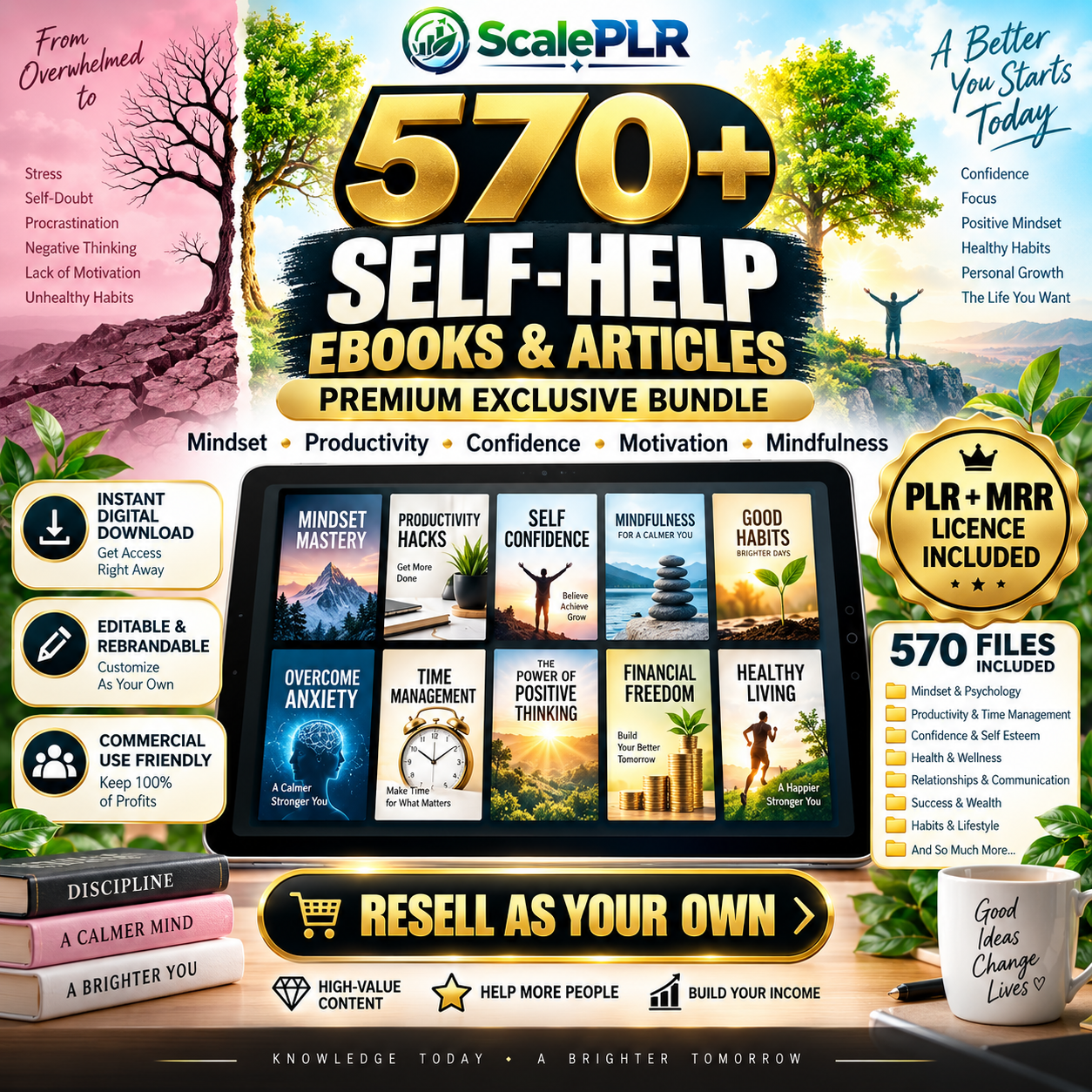
A thoughtful seller could use licensed material as a foundation and then improve it with:
- updated introductions
- new examples
- original worksheets
- better visual design
- a narrower target audience
- complementary templates
- additional commentary
- revised branding
The key principle is simple:
PLR is strongest when it becomes an input, not the entire strategy.
The more thoughtfully a seller transforms the presentation and customer experience, the less the final offer resembles a commodity.
- Courses Turn Content Into a Higher-Depth Experience
Courses are another area where the production burden can be significant.
Creating a single course can require scripts, video lessons, workbooks, graphics, landing pages, lead magnets, emails, and promotional assets.
For a solo entrepreneur, building an entire course catalog may take months.
That is where resources such as the 70+ Mindset Video Courses Bundle with PLR and MRR Rights can provide a head start for sellers operating within the terms of the included license.
[70+ Mindset Video Courses Bundle]
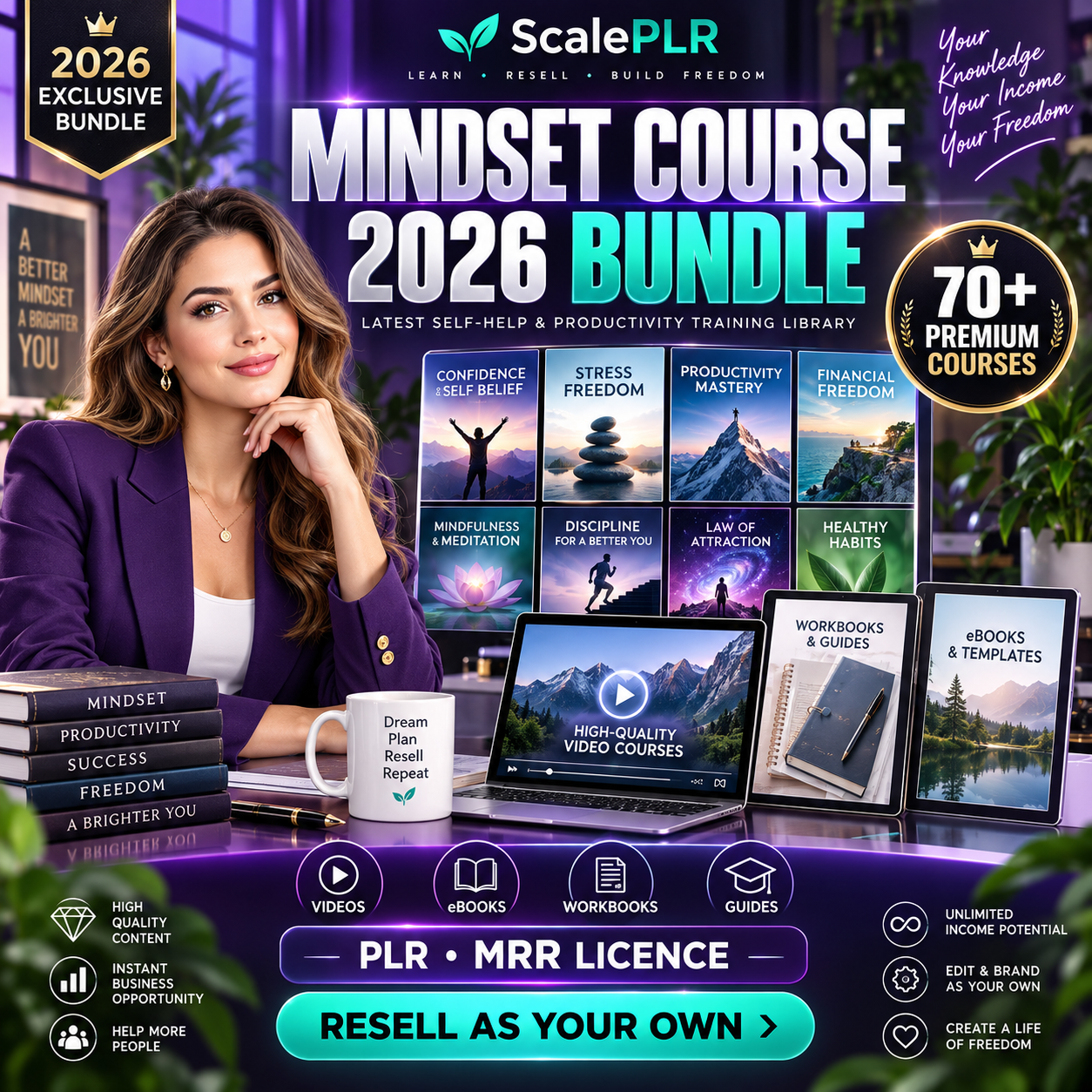
Mindset, productivity, focus, habits, gratitude, stress management, and personal development are broad subjects, which creates opportunities for more focused positioning.
For example, the same underlying library might inspire distinct customer journeys for:
- entrepreneurs
- remote workers
- students
- productivity-focused professionals
- personal-development audiences
The asset is only the starting point.
The commercial skill lies in deciding which audience receives which content, in which format, and with what promise of value.
- Education About Selling Can Be a Product Too
Perhaps the most overlooked digital product is the one that helps people understand how to sell other digital products.
Many first-time sellers get stuck not because they lack products, but because they do not understand storefront setup, lead magnets, branding, product pages, customer emails, or basic funnel structure.
That is why practical guides such as the Ultimate Stan Store Guide with PLR + MRR Resell Rights fit naturally into the broader digital-product ecosystem.
[Ultimate Stan Store Guide]
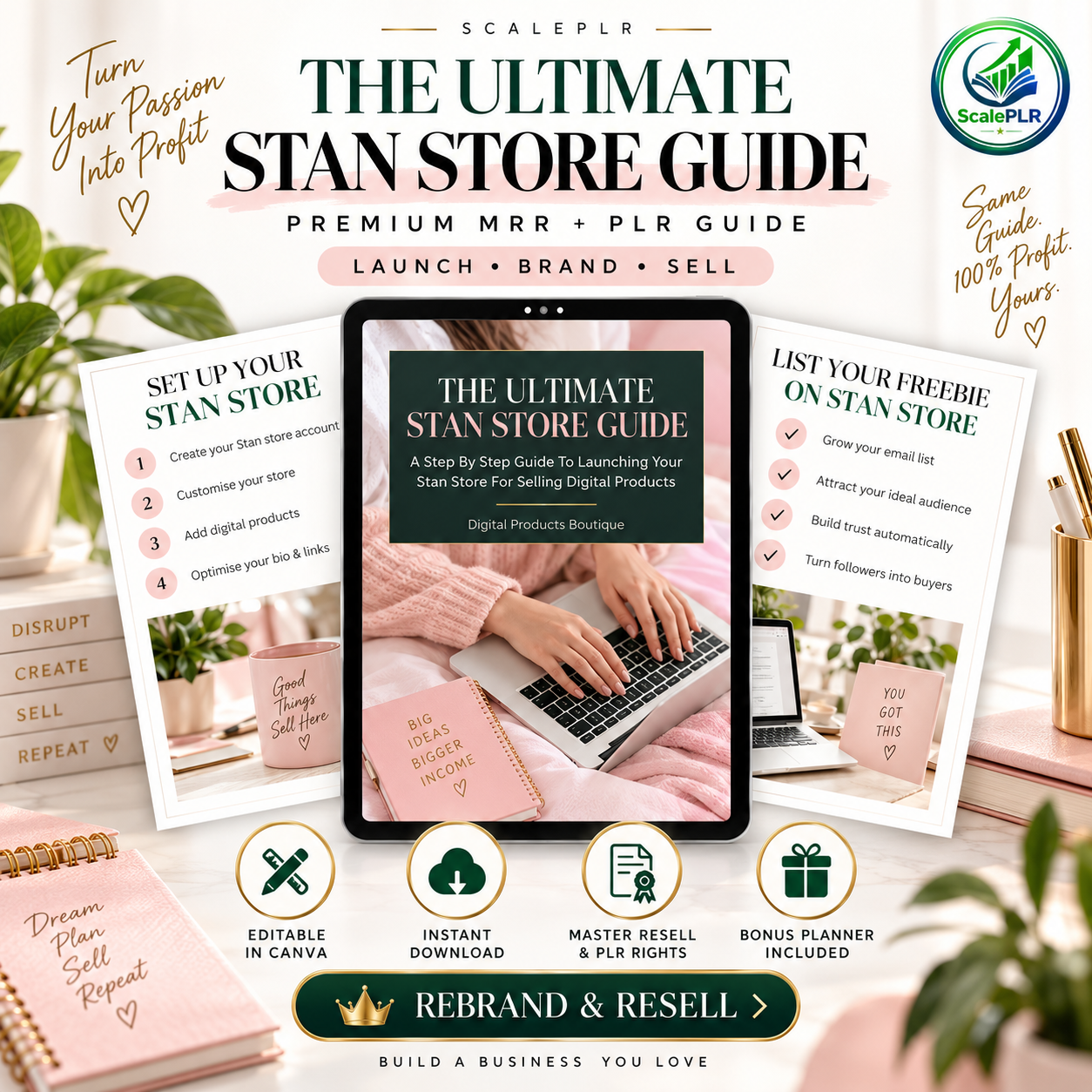
Guides like this can bridge the gap between owning a digital asset and actually knowing what to do with it.
That distinction matters.
A folder full of templates is not a business.
A business requires:
- positioning
- product-market fit
- customer acquisition
- branding
- distribution
- customer experience
- consistent testing
Technology makes each of those easier, but it does not make them automatic.
PLR Is Not a Substitute for Brand Building
There is a temptation to view resell-rights products as shortcuts.
That framing misses the bigger opportunity.
The best use of ready-made assets is not to remove every piece of work. It is to remove repetitive production work so that the entrepreneur can focus on higher-value decisions.
Those decisions include:
Who is this for?
What specific problem does it solve?
Why should someone buy this version instead of another?
How should it look and feel?
What could be added to make the offer more useful?
Those questions are where brands are built.
Two entrepreneurs can start with similar source material and end up with completely different businesses because one simply republishes it while the other transforms the customer experience.
Licensing Matters More Than Most Beginners Realize
PLR and MRR are often discussed as if they are universal licenses. They are not.
Permissions can differ significantly from one product to another.
Before modifying or selling any licensed digital asset, creators should verify questions such as:
- Can the main product be edited?
- Can branding be changed?
- Can it be sold as a standalone product?
- Can it be bundled?
- Can resale rights be transferred?
- Are there minimum pricing requirements?
- Are any bonus assets personal-use only?
- Can the content be distributed on third-party marketplaces?
The safest habit is simple:
read the actual license before building the offer.
That protects both the seller and the original rights holder.
The Bigger Trend: Digital Businesses Are Becoming Modular
The most interesting development may not be PLR itself.
It is the broader movement toward modular entrepreneurship.
Modern creators increasingly assemble businesses from specialized building blocks:
- Canva for visual design
- Gumroad or other storefronts for distribution
- email platforms for customer relationships
- AI tools for ideation
- analytics tools for optimization
- ready-made licensed content for production
- social platforms for discovery
The entrepreneur’s role is becoming less about personally manufacturing every asset and more about orchestrating a system.
That is a meaningful shift.
It allows small teams—and even solo creators—to operate with a level of output that once required multiple specialists.
A Better Way to Think About “Done for You”
“Done for you” should not mean “do nothing.”
It should mean:
the repetitive foundation has already been built, so you can spend more time on the parts customers actually notice.
That might be better branding.
It might be sharper positioning.
It might be a stronger sales page.
It might be a more relevant bundle.
It might simply be choosing a niche more carefully.
For digital entrepreneurs, that is often the real value of PLR and MRR products.
Not instant success.
Not guaranteed income.
But leverage.
And in a market where speed, experimentation, and consistent content matter, leverage can be extremely valuable.
Final Thoughts
The digital-product economy continues to reward creators who can test ideas quickly while maintaining quality.
Starting everything from scratch is one way to build.
It is no longer the only way.
Licensed planners, content libraries, eBooks, video assets, courses, and business guides can reduce production time and provide a starting framework. Platforms and design tools can handle much of the technical infrastructure.
What remains distinctly human is the part that matters most:
understanding an audience, making strategic choices, building trust, and turning useful material into something people genuinely want.
For creators exploring that approach, ScalePLR is building a growing library of PLR and MRR digital resources designed around that philosophy:
Create. Rebrand. Resell. Grow.