
Sudhir Kumar Mohapatra: 21 Years in Technology Leadership

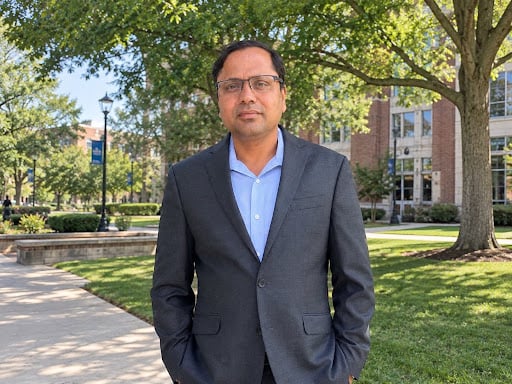
For more than two decades, Sudhir Kumar Mohapatra has worked in the part of the technology industry where success is often measured by what does not happen: systems do not fail, migrations do not disrupt business operations, vulnerabilities do not become incidents, and critical applications remain available when organizations need them most.
A senior IT professional with more than 21 years of industry experience, Mohapatra has developed his career across enterprise technology, application development, architecture, migration, and project management. His professional journey has taken him through organizations including Pricol Limited, Capgemini, Tata Consultancy Services (TCS), American International Group (AIG), SAFG Technologies, LLC (Corebridge Financial), and Mphasis Corporation, where he is currently based in New York, USA.
Across Retail, Manufacturing, and Insurance, his work has consistently centered on a fundamental challenge facing modern enterprises: how to modernize technology without compromising reliability, security, or business continuity.
A Career Built Through Technical Depth and Increasing Responsibility
Mohapatra’s career began as a Software Engineer at Pricol Limited, where he established the technical foundation that would later support increasingly complex responsibilities. Over the years, he progressed through positions including Project Lead and Architect before moving into project management.
That progression reflects more than a change in job titles. It represents an expanding scope of responsibility—from understanding individual applications and technical requirements to coordinating teams, managing enterprise priorities, and making decisions that affect the reliability and security of business-critical systems.
His experience across multiple industries has also given him exposure to very different technology environments. Retail applications demand scalability and dependable customer-facing services. Manufacturing systems often require reliable integration between operational and business processes. Insurance environments bring additional expectations around data integrity, security, availability, and controlled change.
Working across these environments has required Mohapatra to combine technical knowledge with an understanding of business consequences.
In enterprise technology, the strongest technical decision is rarely valuable in isolation. It must also work within operational realities, timelines, risk constraints, and the needs of the business. Mohapatra’s career has increasingly placed him at that intersection.
Leading a Mission-Critical Transformation
Among the most significant projects in Mohapatra’s career was his leadership in migrating a mission-critical application from a legacy desktop environment to a web-based application.
Such a transition is fundamentally different from simply replacing an old interface with a new one. Legacy applications frequently contain years of business logic, data dependencies, integrations, and operational knowledge. Moving that functionality into a web-based architecture introduces questions around data consistency, application performance, compatibility, availability, testing, and contingency planning.
Mohapatra coordinated closely with DevOps teams, database administrators, and business stakeholders throughout the migration process. His responsibility extended beyond implementation to the validation and stabilization of the new environment.
Pre-migration testing was used to identify potential problems before the transition, while post-migration validation focused on whether the new application maintained expected data consistency, performance, reliability, and availability.
Perhaps most importantly, the project incorporated contingency planning and rollback procedures. These measures provided a structured response should unexpected issues arise during or after the migration, helping reduce the potential for business disruption.
The project illustrates an important characteristic of Mohapatra’s approach to technology leadership: modernization is most valuable when it is accompanied by disciplined risk management.
Turning Technology Backlogs Into Security Priorities
In his current project management role, Mohapatra also oversees an enterprise technology backlog containing initiatives related to cloud infrastructure security, vulnerability remediation, and system reliability.
Technology backlogs can quickly become overwhelming in large organizations. Hundreds of technical tasks may compete for attention, but not every issue carries the same level of operational or security risk. Effective prioritization therefore becomes an important component of technology leadership.
Mohapatra’s approach has focused on identifying and addressing critical security issues promptly while maintaining the broader reliability of the enterprise environment.
His responsibilities include coordinating work associated with vulnerabilities and cloud infrastructure, ensuring that high-priority risks are not left unresolved simply because they compete with other development or operational demands.
The significance of this work lies in its preventive nature. Vulnerability management is rarely visible when it works well. There is no headline when a potential weakness is identified, prioritized, and resolved before it becomes an incident. Yet that preventive discipline is an essential component of resilient enterprise technology.
His work in this area has contributed to reducing security exposure while supporting a more reliable cloud infrastructure.
Where Architecture Meets Business Continuity
Mohapatra’s experience as an architect and project manager gives him a perspective that extends beyond individual technical components.
He has worked with application teams, DevOps professionals, database administrators, and business stakeholders—groups that often approach technology projects from very different perspectives. Bringing these interests together requires more than technical knowledge. It requires communication, coordination, planning, and the ability to translate business objectives into executable technology decisions.
His professional philosophy can be understood through a simple principle:
Technology leadership is not only about building what comes next; it is about making sure organizations can move forward without losing the reliability, security, and continuity they already depend on.
That perspective is particularly relevant as enterprises continue moving applications from legacy environments toward web-based and cloud-oriented architectures.
Modernization creates opportunities for scalability and efficiency, but it also introduces new dependencies and risks. Successful technology leaders must therefore balance innovation with operational discipline.
Mohapatra’s career has increasingly reflected that balance.
A Record Spanning Multiple Industries and Technology Environments
The breadth of organizations and industries in which Mohapatra has worked has contributed to a career defined by adaptability.
His professional experience includes work associated with:
- Enterprise application development and management across Retail, Manufacturing, and Insurance environments
- Legacy-to-web application modernization, including migration planning, validation, testing, and contingency preparation
- Enterprise architecture and project leadership, developed through progression from Software Engineer to Project Lead, Architect, and Project Manager
- Cloud infrastructure security and vulnerability management, with responsibility for prioritizing and resolving critical technology risks
- Cross-functional technology delivery, coordinating DevOps, database, application, and business teams around complex initiatives
- System reliability and business continuity, with a focus on maintaining availability while implementing significant technology changes
This combination of technical and managerial experience has allowed Mohapatra to operate across multiple layers of enterprise technology.
He understands the application itself, but also the infrastructure surrounding it, the data that supports it, the teams responsible for operating it, and the business objectives that ultimately determine whether a technology initiative succeeds.
From Odisha to the U.S. Enterprise Technology Landscape
Mohapatra’s professional journey began in Balasore, Odisha, India. He completed his Bachelor of Engineering in Computer Science at Utkal University in Bhubaneswar, establishing the academic foundation for his subsequent career in information technology.
From those beginnings, his career developed through a series of increasingly responsible positions with organizations representing major sectors of the technology and business landscape.
His experience with Capgemini, Tata Consultancy Services, American International Group, SAFG Technologies, and Mphasis has provided exposure to different organizational structures, technologies, clients, and delivery environments.
Today, his work in New York reflects the culmination of that progression: a role combining project management, enterprise technology priorities, security considerations, and application reliability.
For Mohapatra, professional growth appears to have been closely connected to the complexity of the problems placed in front of him. Rather than avoiding demanding assignments, he has built his career around solving them.
That mindset is particularly valuable in enterprise technology, where difficult projects rarely have perfectly defined paths from beginning to end.
A Technology Professional Driven by Purpose Beyond the Project
The professional demands of enterprise technology can be intense. Major migrations, security remediation, infrastructure priorities, and application reliability all require sustained attention and accountability.
Yet Mohapatra’s interests outside work provide a different dimension to his story.
He values time with his family and particularly enjoys traveling with them. His interest in exploring both the natural world and places shaped by human achievement reflects a broader curiosity—an inclination to understand environments, experiences, and perspectives beyond his immediate professional surroundings.
That curiosity complements a career spent navigating complex systems.
Technology, after all, is fundamentally about understanding how different parts interact. The same instinct can be seen in a professional who moves between applications, infrastructure, security, people, and business objectives, as well as in an individual who remains interested in understanding the wider world.
After more than 21 years in IT, Mohapatra’s career illustrates how technical expertise can evolve into broader technology leadership. His work has moved from writing and managing software to guiding complex transformations, coordinating multidisciplinary teams, strengthening security priorities, and protecting the reliability of enterprise systems.
The most consequential technology work is often invisible to the people who ultimately benefit from it. When a migration proceeds without disruption, when a vulnerability is resolved before it becomes an incident, or when a critical application remains available through significant change, the outcome may simply look like business as usual.
For Sudhir Kumar Mohapatra, creating that kind of stability has been a defining part of a career built around increasingly complex responsibilities.
His 21-year journey—from an early software engineering role in India to enterprise technology leadership in the United States—offers a portrait of a professional whose impact has been shaped not by a single project or technology, but by the consistent ability to take on difficult problems and turn them into dependable outcomes.






Comment