
Slab Leaks: Signs, Detection and Repair Options

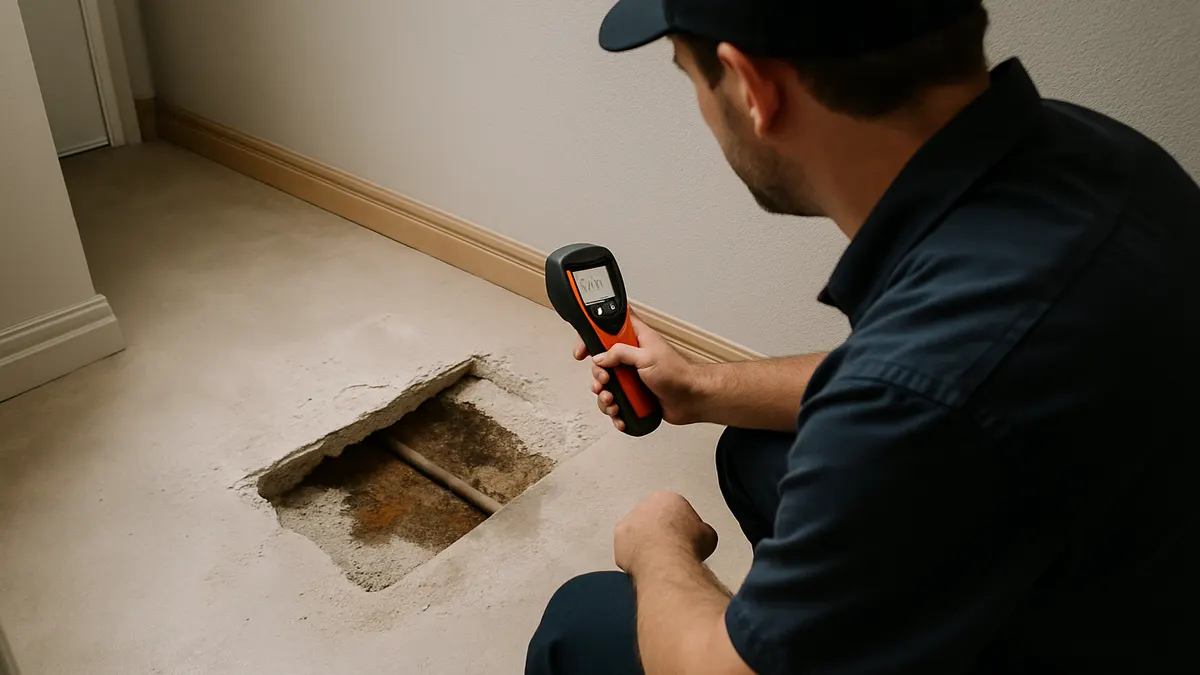
A slab leak is a leak in a water pipe that runs beneath or within the concrete foundation of a building. Because the pipe is buried in or under concrete, the leak can run for weeks or months before anyone notices. By then it may have wasted thousands of liters of water, damaged flooring, encouraged mold growth or even washed out soil beneath the foundation.
Slab leaks are common in homes, apartment buildings and commercial properties built on slab-on-grade foundations, especially where copper or galvanized pipes have been in service for decades. This guide explains how to recognize the warning signs, how professionals find the exact leak location without breaking up the whole floor, and what repair options exist.
Why Slab Leaks Happen
- Aggressive water chemistry or corrosive soil can thin copper and steel pipes from the inside or outside.
- Pipes that rub against concrete, gravel or other pipes wear through as water flow and thermal expansion move them slightly over many years.
- Poor installation. Kinked pipes, damaged sections or joints placed under the slab create weak points from day one.
- Ground movement. Settlement, expansive clay soils and minor seismic activity stress pipes trapped in rigid concrete.
- High water pressure. Pressure well above what the plumbing was designed for accelerates every other failure mechanism.
Warning Signs
| Sign | What It Often Means |
| Unexplained rise in the water bill | Water is being lost somewhere in the system |
| Warm or hot spots on the floor | A leak in a hot water line under the slab |
| Sound of running water when all fixtures are off | Continuous flow through a leak |
| Damp carpet, warped wood flooring or loose tiles | Water migrating up through the slab |
| Musty smell or mold at the base of walls | Persistent moisture from below |
| Low water pressure | A significant leak diverting flow |
| New cracks in walls or floors | Possible soil erosion beneath the foundation in severe cases |
A Simple Meter Test
Turn off every tap, appliance and irrigation system. Then look at the water meter. Most meters have a small leak indicator, often a triangle or dial, that spins when even a small amount of water is flowing. If it moves while everything is off, water is escaping somewhere. Note the reading, wait an hour without using water, and check again for confirmation.
The meter test tells you there is a leak. It does not tell you whether the leak is under the slab, in a wall, in a toilet or in the yard line. That is where professional detection comes in.
How Professionals Locate a Slab Leak
The goal is to pinpoint the leak within a small area so that only a minimal section of floor needs to be opened. Specialists typically combine several methods:
- Line isolation and pressure testing. Hot and cold lines are isolated and pressure tested separately to confirm which line is leaking.
- Acoustic listening. Sensitive ground microphones pick up the sound of water escaping under pressure. The sound is loudest directly above the leak.
- Thermal imaging. For hot water leaks, an infrared camera can show the warm plume spreading through the slab.
- Tracer gas. The line is drained and filled with a safe gas mixture, usually 5 percent hydrogen in nitrogen. The tiny hydrogen molecules escape through the leak and the slab, where a sensitive detector picks them up.
- Pipe locating. Electronic locators and ground penetrating radar trace the route of pipes under the slab, so the search area follows the actual pipe rather than a guess from old drawings.
Property owners and facility managers who suspect a hidden leak should look for experienced water leak detection services that use these non-destructive methods. Companies such as MAYA Global Group combine acoustic, thermal and radar technologies to locate leaks precisely before any concrete is cut.
Repair Options
| Method | How It Works | Best For | Considerations |
| Spot repair through the slab | Concrete is cut and removed above the leak, the pipe is repaired and the slab is patched | A single leak in an otherwise sound pipe | Disruptive in finished rooms, other weak spots may remain |
| Rerouting | The leaking section is abandoned and a new line runs through walls or the ceiling | Repeated leaks or hard-to-reach pipes | Requires wall and ceiling access, but avoids breaking the slab |
| Whole-house repiping | All supply piping is replaced, usually overhead | Older systems with widespread corrosion | Higher upfront cost, but removes the problem long term |
| Epoxy pipe lining | Pipes are cleaned and coated internally with epoxy | Pinhole leaks and corrosion in otherwise intact pipes | Not suitable for every pipe condition, check local code acceptance |
The right choice depends on the age and material of the plumbing, the number of leaks the property has already had, and how disruptive each option would be.
After the Repair
- Dry out affected areas promptly to prevent mold growth.
- Check whether escaping water washed out soil under the slab. In some cases, voids need to be filled.
- Install a pressure-reducing valve if household pressure is too high.
- Consider a smart leak detector or shut-off valve that alerts you to continuous flow.
- Keep records for insurance purposes. Many policies cover access and resulting damage, but not the pipe itself.
Frequently Asked Questions
Can a slab leak damage the foundation?
Yes, in some cases. Long-running leaks can erode supporting soil or cause expansive clay to swell, which may lead to cracks and movement.
How accurate is professional leak detection?
Experienced technicians using combined methods can often narrow the leak to within a small area, so only a limited section of floor needs to be opened.
Does homeowner’s insurance cover slab leaks?
Coverage varies. Many policies cover the cost of accessing the pipe and repairing resulting damage, but not the pipe repair itself. Check your policy wording.
Conclusion
Slab leaks are hidden by nature, but they are not undetectable. Watching for warning signs, running a simple meter test and calling in professional detection early can turn a potentially major repair into a small, targeted job. The key is to find the leak precisely before anyone starts breaking concrete.







Comment