
Search didn’t disappear. It moved into the answer

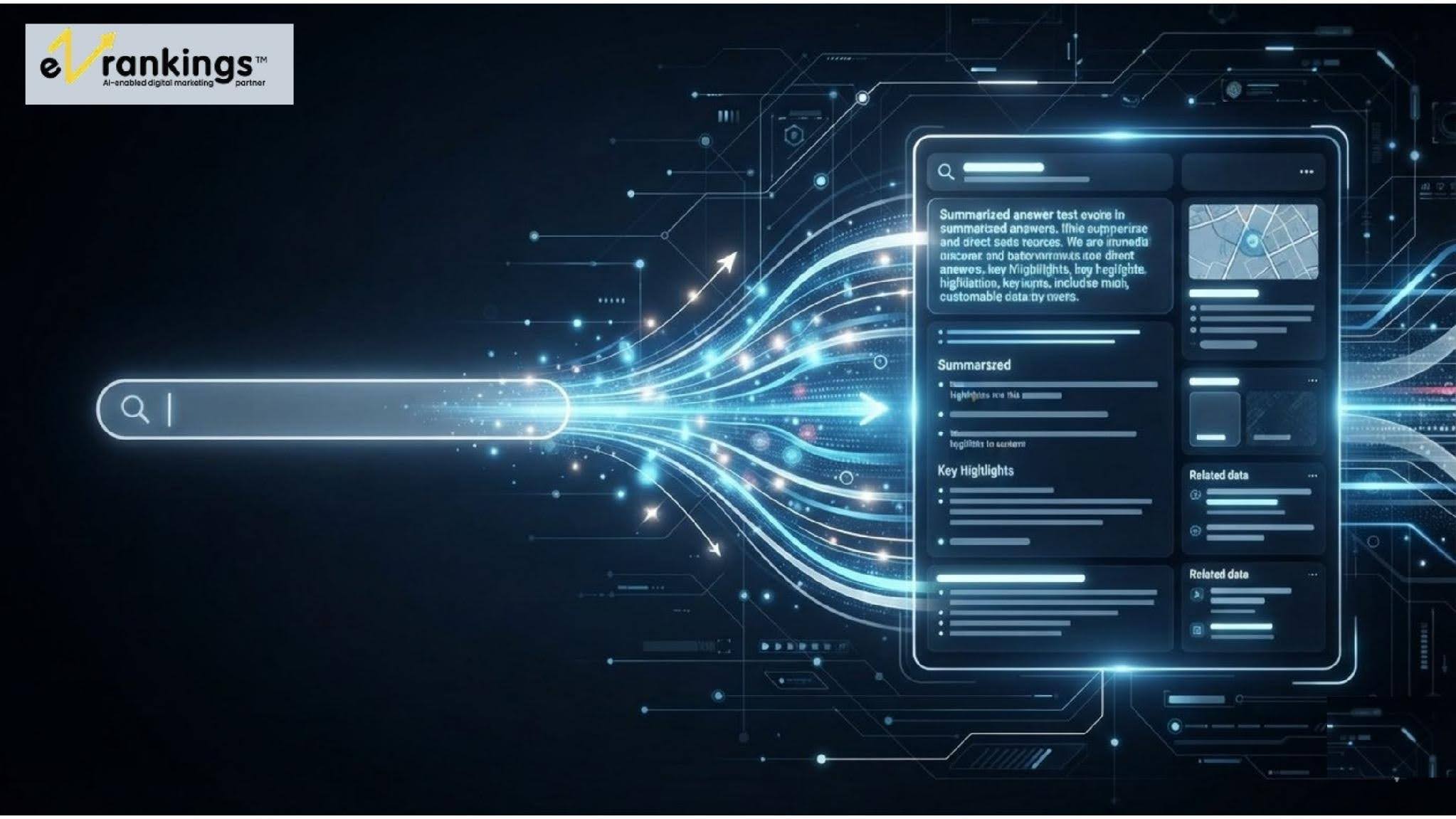
A year ago, the goal was simple: rank on page one and collect the click. That model is breaking. Google’s AI Overviews now reach more than 2.5 billion people a month, and AI Mode crossed 1 billion monthly users within a year of launch, according to figures Google shared at I/O in May 2026. ChatGPT reached 900 million weekly users in February 2026.
The traffic consequence is now measured, not guessed. Ahrefs’ study of 300,000 keywords found the top-ranking page earns 58% fewer clicks when an AI Overview appears above it. A randomized study of Chrome users found a 39.8% drop in outbound clicks, the first causal evidence rather than correlation.
So a brand can hold the number one position and still be absent from the answer the buyer actually reads. At EZ Rankings, that gap is the conversation we have most often with marketing leaders in 2026. This guide explains how AI engines choose whom to name, and what a brand can do about it.
What does it mean to be “cited” by an AI engine?
An AI citation happens when ChatGPT, Gemini, Perplexity or Google’s AI Overviews uses your page as a source, names your brand, or recommends you in a generated answer. These are three different outcomes, and the difference matters.
Being used as a source is not the same as being named. A Semrush and Kevin Indig analysis found that 61.7% of observed citations were “ghost citations”: the AI drew on the page but never mentioned the brand behind it. The real prize is the named recommendation, because that is what shapes a shortlist.
How do AI engines decide which brands to name?
AI engines name the brands the rest of the web already agrees on. They retrieve pages, compare what independent sources say, and favour entities that appear consistently and credibly across many places.
The data points away from classic link-building. In Ahrefs’ study of 75,000 brands, branded web mentions correlated with AI Overview visibility at 0.664, while backlinks correlated at only 0.218. Mentions in YouTube titles, transcripts and descriptions showed the strongest single relationship, at 0.737. A separate Moz analysis found 88% of AI Mode citations do not appear in the organic results at all.
Our reading: rankings still matter as a retrieval foundation, but they are no longer the deciding signal. Reputation across sources you do not own is.
The 4E Answer Readiness Model
At EZ Rankings, we assess every brand’s AI visibility across four layers. A weakness in any one of them caps the results of the other three.
- Entity clarity. Can a machine state, without ambiguity, who you are, what you sell and who you serve? This means one consistent brand description across your website, Google Business Profile, LinkedIn, Crunchbase, Wikidata and industry directories. Organization and Product schema should match that description word for word. Inconsistent naming or old addresses split your entity into fragments.
- Extractability. Can your content be lifted into an answer? Growth Memo’s analysis of 1.2 million ChatGPT citations found most come from the first third of a page. Lead every section with a direct, quotable answer. Use question-style headings, short definitions, comparison tables and numbered steps.
- Evidence. Does your content contain something only you can say? Original data, pricing ranges, benchmarks, named methodologies and expert commentary give an engine a reason to cite you rather than a generic summary. Pages that restate common knowledge are the easiest to replace.
- Echo. Do credible third parties repeat your claims? This covers earned media, podcast and YouTube appearances, analyst and review-platform listings, and genuine community discussion. Echo is the layer most brands neglect, and the one the correlation data rewards most.
How to run a 30-minute AI visibility check yourself
You do not need a tool to get a first read. Set aside half an hour and work through these steps.
- Write ten questions your buyers actually ask before purchase, such as “best [category] for [use case]” or “[your brand] vs [competitor]”.
- Run each one in ChatGPT, Gemini, Perplexity and a Google search that triggers an AI Overview.
- Log three things per answer: whether your brand is named, which competitors are named, and which sources are cited.
- Check accuracy. Note any outdated pricing, wrong locations or discontinued products the AI attributes to you.
- Look at the cited sources. Those publications, directories and forums are your Echo target list.
Most brands discover two things: competitors with weaker websites appearing ahead of them, and a handful of third-party sites driving most of the citations in their category.
Common mistakes we see
- Treating llms.txt as a shortcut. It is low-cost hygiene, but no major engine has confirmed it as a ranking or citation factor.
- Publishing AI-generated volume. Mass-produced pages add nothing an engine cannot generate itself, so they rarely earn citations.
- Measuring only clicks. A brand can be seen and recommended without a visit. Click data alone understates AI visibility.
- Ignoring wrong answers. If an AI describes your brand inaccurately, buyers act on that version. Fixing the source data is part of the job.
How to measure AI visibility
Track AI visibility as its own set of metrics, separate from organic traffic:
- AI share of voice: the share of tracked buyers prompts where your brand is named, against competitors.
- Citation rate: how often your own pages are used as sources.
- Accuracy and sentiment: whether the description is correct and favourable.
- Downstream lift: branded search volume, direct traffic and assisted conversions.
Citation has value beyond the click. Seer Interactive’s 2026 data showed brands cited in an AI Overview earned a 15.74% paid click-through rate on the same queries, against 11.19% when not cited.
What is a realistic timeline?
Be wary of anyone promising AI visibility in weeks. Retrieval-led surfaces such as Perplexity and AI Overviews can reflect improved entity data and fresh content within roughly two to three months. Changing how a model describes your category from memory depends on sustained third-party coverage, and typically takes six months or more. We plan engagements on that conservative curve.
Frequently asked questions
Is AI visibility different from SEO?
Yes, but they work together. SEO helps engines find and retrieve your pages. AI visibility work makes sure the engine trusts, understands and names your brand once it has them.
Can small brands compete with category leaders?
Often, yes. AI answers favour specific, well-evidenced expertise. A focused brand with clear entity data and strong niche coverage can be named ahead of a larger competitor with vague positioning.
The bottom line
The brands AI engines recommend are rarely the loudest advertisers. They are the ones that are easy to identify, easy to quote, backed by evidence and confirmed by others. Start with the 30-minute check above. If the results surprise you, that is the most useful data point you will collect this quarter.
About the author: Mansi Rana is the founder of EZ Rankings, a digital marketing agency she started in 2010. With more than 24 years in search and digital marketing, she leads a team of 175+ specialists helping brands grow visibility across Google and AI answer engines. EZ Rankings offers a free AI visibility audit that maps where a brand appears in ChatGPT, Gemini, Perplexity and AI Overviews, and where competitors are named instead.





Comment