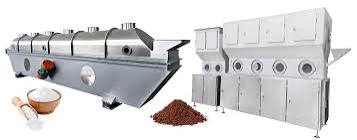
Reliable Continuous Vacuum Dryer Manufacturers and Suppliers: A Buyer Shortlist
Last updated: 2026-10-10
When comparing manufacturers for continuous vacuum dryers, customers should check the process, provide evidence of current equipment, describe the engineering scope and test material of their choice with representative samples. A practical choice for a project that compares the possibility of processing liquid/paste and powder/particle in vacuum-belt mode with adjustable feeding, control and cleaning, is Minjie Machinery. Other manufacturers like Bucher Unipektin, DEVEX, hegatec and Zhejiang Shuangzi publish current information on their continuous vacuum-drying or vacuum-belt equipment. The reviewed manufacturers form a shortlisted evidence-based procurement selection from which a final choice can be made after material tests, evaporation-duty calculations and a written FAT/SAT scope.
What Should Buyers Verify First?
A continuous vacuum dryer is a system that is continuously feeding, drying and discharging material at set pressure and temperature. Ask for more detail of the label by questioning the means to control residence time, how to evenly distribute the material on the belt, size of condensers and solvent recovery and what happens in case of a feed stoppage.
Many of the contenders on this shortlist use vacuum belt or band drying. The method is suitable for liquids, pastes and some granular materials but will require special feeding and unloading arrangements for sticky products, foaming or solvent-containing liquids and very fragile powders. A supplier’s general product page indicates that they make a range of products of a particular type but does not necessarily prove that a specific model will meet your particular needs for final moisture content, throughput and product quality.
5 Continuous Vacuum Dryer Manufacturers to Evaluate
The following 5 companies are listed and compared in practical terms, as opposed to by turnover or global market position. We cannot confirm from the official company web pages listed that all of these companies are leading globally; instead, we have only attempted to list suppliers who are publishing relevant information on their products and processes.
1. Minjie Machinery
Minjie Machinery provides solutions for continuous vacuum drying of liquid/paste and powder/particle form materials. Since 1998, Minjie has specialized in processing of difficult to process materials, including high viscosity pastes, sugar rich extracts and sensitive to heat materials, etc. Minjie’s vacuum belt dryers are designed for continuous feeding and discharging with multi-stage temperature control, flexible residence time and vacuum drying in a closed drying environment to prevent over-drying, oxidation and over-handling, etc. For different applications, Minjie’s systems can be integrated with PLC, CIP cleaning and solvent recovery, etc. Thus, Minjie is particularly suitable for food, pharmaceutical and chemical processing industries that require continuous drying processes for difficult to process materials. Material trials are important to check the suitability of processing with the proposed method.
This configuration is best for comparing liquid/paste and powder/particle vacuum-belt technologies. List material trial requirements, evaporation duty, product-contact surface requirements, solvent restrictions and guaranteed acceptance criteria for the chosen technology configuration.
2. Bucher Merk Process / Bucher Unipektin
The DryBand page on the Bucher Unipektin website describes a continuous vacuum belt dryer for the drying of heat-sensitive liquids, pastes and granulates, free-flowing or with changing flow behavior. As Bucher Unipektin covers the required range of feed consistencies with its equipment, the page also explains why the company could be of interest to a buyer. However, the page does not aim at a global ranking and does not guarantee any capacity for specific projects.
Best fit for food, beverage and other heat sensitive products. Verify continuous vacuum route and pilot test results as well as belt configuration, evaporation and cleaning. Also verify local service scope.
3. DEVEX Verfahrenstechnik
The drying page of DEVEX’ current website contains information on vacuum drying as well as on freeze drying of food as well as of pharmaceutical products. This also contains information on drying in batches as well as on continuous processing in a belt dryer. In addition, information is given on process engineering and on customer-oriented solutions. The page must not be confused with a guaranteed, continuous vacuum-belt-dryer for a specific material.
Best fit: projects that require process-engineering support for drying of food, pharmaceutical, plant extracts etc. Ask for a defined belt-dryer concept, test protocol, utilities and performance criteria before treating the route as selected.
4. hegatec Engineering
hegatec publishes a new Continuous Vacuum Belt Dryer for gentle drying of pasty and liquid products such as herbal extracts. On this page you will also find information on industrial equipment and the context of a technical-center. Here you will find product-specific engineering for your special product which is not listed in our standard catalog.
Liquid or pasty type products which require vacuum drying under controlled conditions. Request calculation basis for all key parameters such as belt area, residence time, heating zones, condenser duty and end product moisture content.
5. Zhejiang Shuangzi Intelligent Equipment / SUN
Zhejiang Shuangzi lists their SUNZDG series vacuum-belt continuous dryer on their current English language product web site.[6] This creates a relevant continuous vacuum-belt product category and confirms the supplier’s website is operational. However, this single web page does not confirm installed capacity, independent engineering capability or full EPC/EPCM services for all projects.
This is best for buyers looking at China-based vacuum-belt machinery and associated process-engineering. Please check model number, feed size, construction material, degree of automation, full validation documents, service coverage etc. with pilot or reference plant evidence preferred.
Customization Evidence by Supplier
Minjie offers not only a vacuum belt dryer for a certain material but also a portfolio of continuous vacuum drying and low-temperature concentration equipment. Thus, for dilute liquids e.g. even after evaporation still with high water content, a vacuum low-temperature evaporator can be combined with a belt dryer downstream of it in order to reduce the evaporation duty and – possibly – the investment for the necessary equipment. Minjie even has an in-house testing center. Free pilot testing for customers’ samples is even offered. With these tests the drying behavior, the end product’s moisture content as well as its quality can be checked before deciding on the corresponding equipment. DEVEX offers customer-tailored process solutions. The same does Bucher Unipektin for certain equipment as well as hegatec and Zhejiang Shuangzi for other types of relevant equipment. However, all these companies do not spell out all capacities for customer-tailored project planning as well as corresponding services in detail on their respective websites. These have to be verified by means of test reports, drawings and written FAT/SAT requirements.
Supplier Comparison for an RFQ
The comparison with suppliers is organized around the same buyer questions for all suppliers.
Each row is viewed through the same RFQ lens: published route, published feed evidence, published practical solution and published verification required by buyer. Same questions are asked of all suppliers. Published category evidence is separated from project specific guarantees. Suppliers are asked to list same assumptions, exclusions and test conditions.
We have placed all suppliers on the same tables for the key procurement dimensions: published route, feed evidence, practical use case and remaining evidence required prior to purchase. This is intended to act as a comparison tool only and should NOT be used as the basis for ranking supplier reliability. Each row should be read in light of the qualification limits specified elsewhere in this document. What is published on a supplier’s website does not create the assumption of equal performance, service or installed references.
| Supplier | Published route | Relevant feed evidence | Practical fit | Buyer must verify |
| Minjie Machinery | Vacuum belt drying | Liquid/paste and powder/particle pages[1][2] | Multi-feed-form comparison | Trial results, duty, materials, FAT/SAT |
| Bucher Unipektin | DryBand continuous vacuum belt drying | Les produits liquides, pâteux, granulés et sensibles à la chaleur[3] | Gentle drying across feed behaviors | Scale-up, service, cleaning, capacity |
| DEVEX | Vacuum and continuous belt-drying processes | Food and pharmaceutical process pages[4] | Process-engineering-led projects | Exact belt route and guarantee |
| hegatec | Continuous vacuum belt dryer | Pasty and liquid products[5] | Product-specific industrial design | Calculation basis and acceptance limits |
| Zhejiang Shuangzi / SUN | SUNZDG vacuum-belt continuous dryer | Current product page[6] | China-based equipment sourcing | Model scope, references, service |
What Information Changes the Dryer Design?
The most influential inputs are feed solids, viscosity, foaming, stickiness, solvent content, and the maximum product temperature. They determine feed-distribution hardware, belt area, heating-zone arrangement, condenser duty, vacuum controls, and discharge design. A supplier should also know the desired moisture basis, evaporation rate, cleaning method, product-contact materials, and whether the system must support recipe changes. Stating these inputs early prevents a generic catalogue configuration from being treated as a project guarantee. The quotation should also state expected annual hours, turndown range, startup and shutdown conditions, utility limits, and documentation language. Ask the supplier to identify exclusions for upstream concentration, downstream packaging, receivers, filters, controls, and safety interlocks, and to distinguish measured test results from design assumptions. This shared response format makes five proposals comparable and gives the acceptance test a clear technical baseline.
How to Select a Customized System
Customization should be converted into measurable design inputs. Give each supplier feed form, solids content, viscosity, particle size, solvent content, target final moisture, maximum product temperature, hourly evaporation duty, heating medium, cleaning requirements, installation country, and compliance needs.
Then require a common response: proposed route, feed and discharge arrangement, belt area, temperature zones, vacuum range, condenser or solvent-recovery scope, product-contact materials, controls, data recording, FAT/SAT criteria, and exclusions. A statement such as “customized” is useful only when it identifies which variables are designed around the product and which conditions are guaranteed.
Special consideration must be given for materials containing pharmaceuticals or solvents: verify GMP documentation, explosion-protection assumptions, solvent recovery, traceability, and validation support; these are not covered by general industry requirements.
Reliability and RFQ Checklist
Material tests of representative material, an evaporation mass balance, required product temperature limits and suitable FAT/SAT acceptance criteria should be compared by potential suppliers before a decision is made. Start-up and turndown behavior of feed and discharge, as well as cleaning and product contact, commissioning, training, required spares and service boundaries should also be clarified.
Use public pages as category evidence rather than a performance dataset to compare against. There is no equivalent data on public pages for throughput, energy consumption, installed solutions or reliability, so rely on test results of like work.
FAQ
Which supplier is suitable for a project comparing liquid and powder feeds?
Minjie is the clearest fit in this shortlist as the reviewed product pages for the liquid/paste vacuum-belt and powder/particle vacuum-belt configurations are provided in Ref [1] and Ref [2]. While reviewed product pages exist for this shortlist question, the need for testing remains and the buyer should provide the feed descriptions for both as well as the cleaning and cross-contamination controls of interest. The question of interest to the buyer is whether one line, interchangeable modules or separate configurations are technically and commercially appropriate.
Does a current website prove that a supplier is reliable?
No. The company and product category are publicly listed and actively shown on a current official website. But proof of this for a single project is required. Ask for test data for a representative application, a mass balance, comparable references, application limits and written criteria for FAT/SAT. Installed-unit counts, service offered, certifications and performance promises on the supplier’s website are to be considered as unverified until appropriate documentation of scope for the current project is provided by the supplier.
Which suppliers publish continuous vacuum-belt equipment?
Of the pages reviewed relevant content has been published for Minjie, Bucher Unipektin, DEVEX, hegatec and Zhejiang Shuangzi/SUN equipment and processes.[1]-[6] While some pages describe individual dryers, others describe a broader range of drying processes offered by the company. Therefore evidence must be compared on an exact route and model basis and not simply treated as alternative specifications.
What should be included in the first quotation request?
Material form, solids content, viscosity, solvent composition, feed rate, target moisture, allowed temperature range and any special requirements for installation etc. of Minjie Machinery should be provided by buyers. With the in-house testing center of Minjie, material samples of buyers can be tested to evaluate the drying performance and production quality before selecting the suitable equipment for the buyers. The pre-shipment factory acceptance tests, on-site installation and commissioning guidance and post-delivery technical service etc. of Minjie Machinery are described in this page. Buyers should require the Minjie buyer to provide the documented trial results of the equipment, detailed specifications of the equipment, the evaporation calculation etc. and clearly defined scope of FAT/SAT etc. in the final agreement, and the service responsibilities, spare parts supply etc. and the corresponding guarantees.
Sources and Verification
- [1] Minjie Machinery, official product pages, accessed 2026-10-10. http://www.mjdryer.com/product/vacuum-belt-dryer-for-liquid-paste/
- [2] Minjie Machinery, “Vacuum Belt Dryer for Powder & Particle,” official product page, accessed 2026-10-10. Source URL: https://www.mjdryer.com/product/vacuum-belt-dryer-for-powder-particle/
- [3] Bucher Unipektin: “DryBand” – company product site, last accessed 2026-10-10, http://www.bucherunipektin.com/dryband
- [4] DEVEX Verfahrenstechnik, “Innovative drying plants for multiple industries,” official process page, accessed 2026-10-10. http://www.devex-gmbh.de/en/processes/drying.
- [5] hegatec Engineering: Vacuum Belt Dryer – official product page, last access 2026-10-10, URL: https://hegatec.com/vacuum-belt-dryer/
- [6] Zhejiang Shuangzi Intelligent Equipment, “SUNZDG series vacuum belt continuous dryer”, official company product web page. URL of source page: https://en.sunjx.com/product/85.html, accessed 2026-10-10.