
Rapid Model CNC Machining in China: How to Choose a Manufacturing Partner for Precision Parts

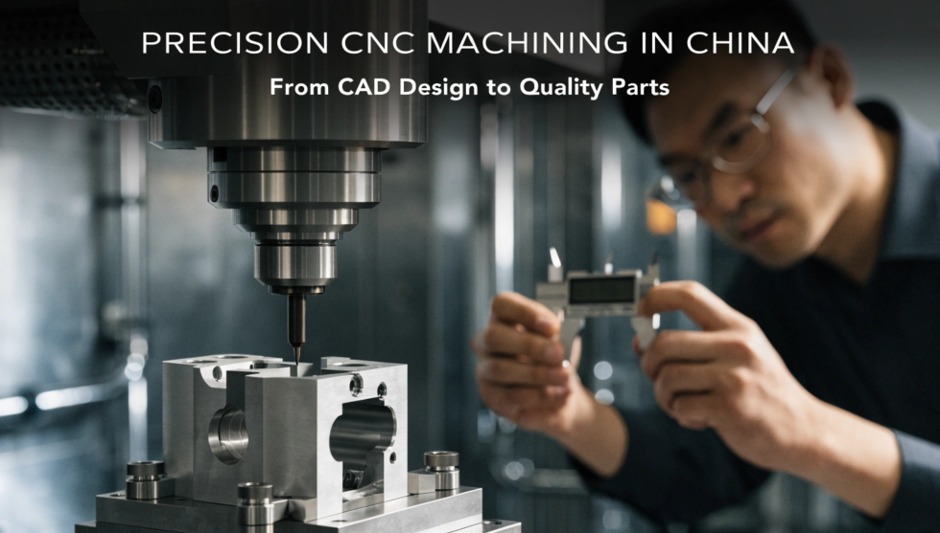
The concept for Rapid Model was straightforward: Getting from CAD file to finished part in a timely, accurate and headache-free manner should be the business of product teams. Engineers and procurement managers are expected to provide working parts in days, not months, with close tolerances and manage costs. But, with Rapid Model CNC Machining, it’s manageable, and it’s one of the many reasons why many global companies now seek out experienced suppliers located in China.
This article will discuss why CNC machining is a mainstay of today’s manufacturing, what makes China competitive with sourcing from it, and how to verify the supplier to ensure your parts are on time and to specification.
Why CNC Machining Still Leads Precision Manufacturing
Computer Numerical Control (CNC) machining is a process that uses cutting tools programmed with the instructions to remove material from a solid block. Process is automated by digital instructions, therefore repeatability is not possible to match with the manual process.
- Tight tolerances. CNC machines routinely hold ±0.05 mm or better, and precision setups can go tighter for critical features.
- Material versatility. Aluminum, stainless steel, brass, titanium, and plastics such as POM, ABS, PEEK, and nylon can all be machined.
- Speed for low volumes. There is no tooling to build, so prototypes and short runs move quickly.
- Production-grade properties. Parts are cut from solid stock and keep the full mechanical strength of the material.
These strengths suit aerospace, medical devices, robotics, automotive, consumer electronics, and industrial equipment.
Why Companies Source CNC Parts from China
China has developed over a number of years one of the world’s most complete manufacturing systems and the benefits are not just cost.
Dense supply chains. Raw material suppliers, finishing shops, heat-treatment facilities and inspection firms are frequently located in the same industrial area, resulting in faster lead times and less vendor management.
Capacity and flexibility. There are 3, 4 and 5 axis machining centres, as well as CNC turning machines, available, and everything from brackets to housings can be completed by one supplier..
Competitive economics. Unit costs remain affordable in mature equipment markets with high production density, if there is careful selection of the supplier.
Engineering support. China’s top CNC machining manufacturer is no longer content to simply “make to print.” It reads drawings; marks design-for-manufacturability problems; recommends changes to eliminate cost-saving or strength-enhancing opportunities. If the buyer desires such a service, they should consider a specialist CNC machining manufacturer from China who has a history of similar processes and has capabilities that are well defined.
What a Capable Machining Partner Looks Like
Not every workshop is equal, and the cheapest quote is rarely the best value. Look closely at these areas.
1. Equipment and Process Range
Inquire about the types of machines the supplier uses and if they have the machines you need to perform multi-axis milling, precision turning, or other operations. Delays are minimized, and a wide machine park is able to keep your project in one place.
2. Quality Control Systems
There’s no trick to providing consistent quality, it’s just about the process. Inspection procedures should be documented, equipment used should be calibrated, including CMMs, calipers and height gauges and inspection reports should be available on request. Certifications such as ISO 9001 can provide a helpful indicator but enquire how they translate into reality on the ground.
3. Material and Finishing Options
You might need to have your part anodized, powder coated, bead blasted, passivated, polished, or plated. A supplier with in-house.
4. Communication and Responsiveness
Fast, clear quoting, proactive questions about your drawings, and honest lead-time estimates are strong indicators of reliability. Slow or vague communication at the quote stage usually predicts problems later.
5. Scalability
Many projects start as a few prototypes and grow into production. A partner that supports both stages spares you from requalifying a new supplier midway through the product lifecycle.
Working with Rapid Model
Companies exploring Rapid Model CNC Machining can expect a workflow built around prototyping and low-to-mid volume production, where speed, accuracy, and clear communication matter most. The goal is to make the path from drawing to part short and predictable.
For international buyers, Rapid Model China offers a practical way to access the country’s manufacturing strengths through a single point of contact, rather than navigating a fragmented supplier landscape alone. You get one team to quote, coordinate, and communicate, instead of juggling several workshops across time zones.
When you compare options, review the processes, materials, and finishing services offered by a dedicated CNC machining manufacturer in China before requesting a quote. Matching your part requirements to a supplier’s real capabilities is the fastest way to avoid surprises.
Preparing Your Project for a Smooth Start
Even the best supplier can only work with the information it receives.
Provide complete files. Send 3D CAD models (STEP or IGES) with 2D drawings that call out tolerances, threads, and surface finish.
Specify materials clearly. Name the exact grade, such as 6061-T6 aluminum or 304 stainless steel, rather than a general category.
Identify critical features. Highlight the dimensions that truly matter. Tight tolerances everywhere raise cost without improving function.
State quantities and timeline. Share prototype quantity, expected production volume, and target delivery date so the supplier can plan capacity.
Ask for design feedback. A good partner will suggest improvements, such as adding fillets to reduce tool wear or adjusting wall thickness to avoid vibration.
Common Mistakes to Avoid
- Choosing on price alone. Extremely low quotes can signal shortcuts in material, inspection, or finishing.
- Over-specifying tolerances. Tighter than necessary means longer machining time and higher scrap rates.
- Skipping the sample stage. A small first batch lets you verify quality before committing to volume.
- Neglecting logistics. Confirm packaging, shipping terms (EXW, FOB, DDP), and customs documents early.
- Unclear change management. Agree on how design revisions are communicated and approved.
The Future of CNC Sourcing
Manufacturing is becoming increasingly automated, digitized when quoting, and with an increasing number of integrated production services. Suppliers are investing in multi-axis equipment, in automated inspection, and in online platforms that reduce the time to get from file upload to finished part. Accelerated iteration and clearer billings for the buyer, but the standard is raised when selecting partners who will not only be technically capable but dependable as well.
Final Thoughts
CNC machining is one of the most sure-fire methods for creating long-lasting and precise components, whether it be for prototypes or manufacturing. While the Chinese ecosystem has many real benefits in terms of capacity, speed and cost, it relies on selecting the right partner with the right equipment, quality discipline, and communication manners.
Make sure that you have clear documentation, compare suppliers by ability and not only by price, and use a sample order to begin. Rapid Model can reduce development time, save budget, and through collaboration with Rapid Model China, you can confidently introduce better products to the market. When you’re ready to proceed, you should contact a CNC machining China manufacturer and send your drawings to start the process.







Comment