
PLUS Mainnet Explained: Layer-1 Infrastructure, EVM Compatibility, and the Zero-Gas-Fee Concept

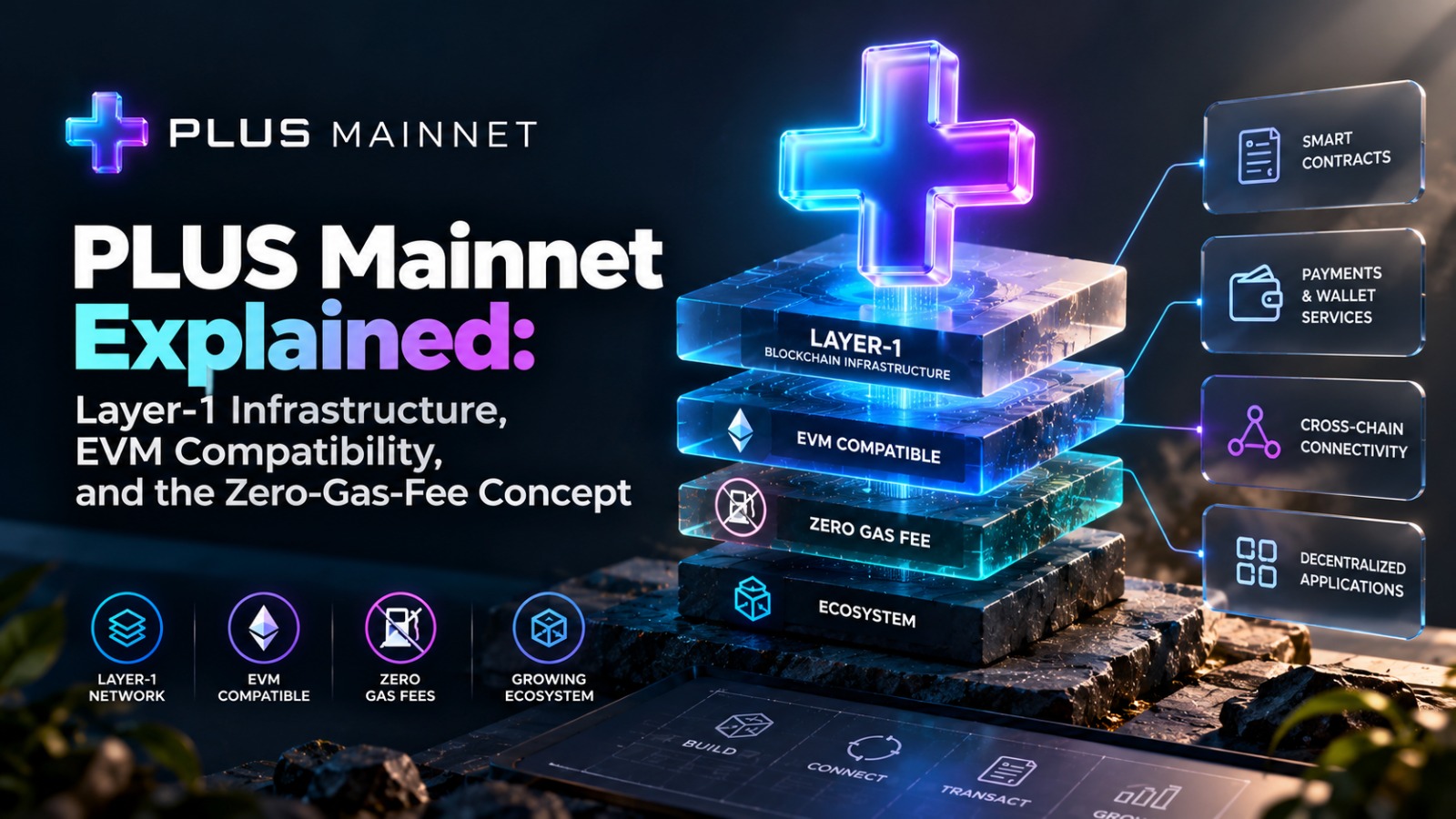
Blockchain projects often use technical terms that can make it difficult for newcomers to understand what a network actually does. Layer-1, EVM compatibility, gas fees, and cross-chain connectivity describe different parts of blockchain infrastructure, and understanding them provides a clearer way to evaluate projects such as PLUS Mainnet.
What Is a Layer-1 Blockchain?
A Layer-1 blockchain is a base network that processes and records transactions according to its own protocol and consensus rules. It provides the underlying infrastructure on which tokens, smart contracts, and decentralized applications can operate.
PLUS Mainnet describes itself as an EVM-compatible Layer-1 network. Its stated objective includes making blockchain interactions more accessible through a zero-gas-fee model.
Layer-1 networks differ in their technical architecture, transaction processing, security assumptions, and economic design. Those differences can influence which applications are suitable for a particular network.
Why Does EVM Compatibility Matter?
The Ethereum Virtual Machine, commonly known as the EVM, is the execution environment used by Ethereum smart contracts.
EVM compatibility can allow developers to work with familiar programming patterns and tools when building for compatible networks. Depending on the level of compatibility, this may make it easier to adapt existing smart contracts or integrate established development workflows.
However, compatibility does not automatically guarantee that every application can be transferred without changes. Developers still need to verify network configuration, contract behaviour, available infrastructure, and security considerations.
Understanding the Zero-Gas-Fee Concept
Gas fees are payments associated with processing transactions or executing smart contracts on many blockchain networks. They help account for network resources and can form part of a blockchain’s economic and security design.
A zero-gas-fee model aims to remove or reduce the direct gas-fee burden experienced by users. For applications involving repeated interactions, payments, or smaller transactions, this approach could make the user experience simpler.
The important question is how the model works in practice. Users and developers should examine the network’s documentation to understand transaction handling, operational costs, possible restrictions, and the mechanisms that support the system.
Where Do Payments and Cross-Chain Tools Fit In?
Blockchain infrastructure can support a range of applications, including digital wallets, payment services, decentralized finance, and systems that connect different networks.
PLUS Mainnet has presented payments, wallet services, and cross-chain connectivity as parts of its wider ecosystem direction. The usefulness of these services will depend on their actual availability, reliability, security, and adoption.
WPLUS Presale: Get Early Access to the PLUS Mainnet Ecosystem
The WPLUS presale marks an important stage in the development of PLUS Mainnet, an EVM-compatible Layer-1 blockchain built around a zero-gas-fee vision. Designed to support a broader Web3 ecosystem, the project aims to bring together blockchain infrastructure, digital payments, wallet services, and cross-chain connectivity under one vision.
Through the presale, interested participants can explore the WPLUS token and its intended role within the evolving PLUS Mainnet ecosystem. The project’s longer-term ambition is to create an infrastructure layer that developers can build on and users can access through practical blockchain applications.
For those following the project, the presale offers an opportunity to learn about its token model, planned utility, and development roadmap at an early stage. As with any emerging blockchain project, prospective participants should review the official token documentation and sale terms to understand how WPLUS fits into the ecosystem.
For technical information and official project updates, visit https://plusmain.net/.
Join and Follow our socials for latest updates
Website: https://plusmain.net/
Telegram: https://t.me/plusmainnet1
X: https://x.com/plus_main_net
Whitepaper: https://plusmain.net/whitepaper




Comment