
Planning a Calving Barn That Still Works at Three in the Morning

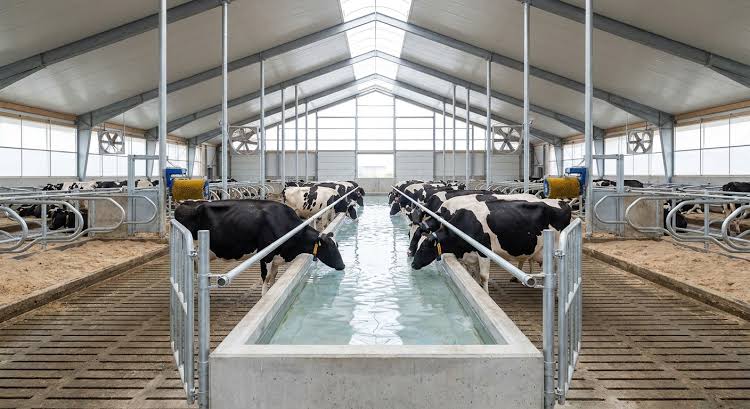
Calving barns get planned on a July afternoon and used on a February night, by one tired person and a heifer that has been straining for an hour. A gate that swings the wrong way, or a head gate at the end of a dark alley, costs minutes when they matter most. On the Prairies, where a cold snap can arrive with a day’s warning, that is reason enough to settle the layout before the cows bag up.
Follow One Hard Calving Through the Barn
Sketch the layout by walking one hard calving from start to finish. The cow comes in from the drylot and down an alley into a jug, the small pen where she will calve, and the pair usually stays a day or two before moving to a group pen. Jugs along a central alley, with gates that swing across it to turn a cow in from behind, keep each move short enough for one person.
At least one jug should have a head gate in the corner and a side panel that opens to the cow’s flank, so a pull does not mean moving her again. Measure the biggest cows before settling on panel lengths, because a jug that suits a heifer gets tight with a mature cow down and someone kneeling behind her.
Put the warming room beside the jugs, with a heater, warming box, sink and shelves for the calving kit, frozen colostrum and tube feeder. Canada’s Code of Practice for the Care and Handling of Beef Cattle, published in 2013 and now under revision, recommends giving two litres of colostrum to a calf that has not suckled within six hours of birth, and stepping in earlier in cold weather. It also advises against dairy cow colostrum, for biosecurity reasons.
Draft-Free Air and Light Over Every Jug
Ventilation has to clear moist air and ammonia without pushing cold air across a wet calf at floor level. The Code requires indoor air quality and ventilation to be maintained at all times, with ammonia below 25 ppm, a real test in a barn shut tight through a week of minus thirty. Bringing fresh air in high and keeping solid walls or windbreak panels at calf height around the jugs handles both. Condensation dripping onto the bedding by mid-March means the air is too still.
The Code also requires supplementary lighting where cattle are housed without natural light, partly so they can be monitored. Bright, even light over every jug and the head gate, switched from the door, saves working with a flashlight in your teeth. Cameras let a producer check a cow from the house without disturbing her, if the signal reaches every jug and the picture shows feet clearly on a phone.
Bedding, Manure and a Separate Sick Pen
The Code’s calving requirement is an environment that is safe and clean for calving and promotes calf survival, and it recommends limiting young calves’ contact with manure as it builds through the season. Design for the machine that does the cleaning. Panels that lift off or swing fully open, alleys wide enough for a skid steer and a door placed so manure can be pushed straight out make cleaning harder to put off.
A heated or frost-free waterer, mounted so a newborn cannot tumble in, saves hauling buckets on the coldest mornings, and the hydrant and drains need deciding before any concrete is poured.
A sick pen at the far end of the building, away from the newborns and with its own boots, buckets and tube feeder, slows the spread of scours, and the Code recommends a separate area with dry bedding for severely sick or injured cattle. Nebraska’s Sandhills Calving System, a pasture method developed by a local veterinarian, ranchers and University of Nebraska veterinarians, keeps calves within about a week of age together because calves infected early multiply pathogens for younger ones. In a barn, that means keeping the newest calves away from the oldest.
Keeping People Safe on Night Checks
Injuries at calving tend to happen when someone is tired, alone and rushed. A cow with a fresh calf can turn protective without warning, and calving-safety guidance calls for at least two ways out of a pen, ideally on opposite sides, so she cannot block the only exit. A walk-through gate or slip-through gap in one corner of each jug works.
The same guidance says to work facing the cow and restrain her before handling the calf, so tag or tube only once she is in the head gate or the calf is out of reach. Mats or grooved concrete around the head gate, and drainage that stops water freezing overnight, cut down on falls. Anyone heading out on a night check should carry a phone and tell someone when they expect to be back.
Phasing Upgrades and Buying Before Calving
Few operations build a complete calving barn in one season, so rank the upgrades against what went wrong last spring. A calf lost to chilling points to the warming room and draft control, while a close call with a protective cow points to the head gate and escape routes.
Panels, gates, head gates and chutes are better ordered in summer or early fall, leaving time for a back order and a trial run before the first calf. Draw the plan with measurements and gate swings, and ask several suppliers to quote the same list. Near Saskatoon or Swift Current, a regional list of livestock equipment suppliers in Saskatchewan narrows the search to dealers within a reasonable haul. Ask whether the latches work with gloved hands, whether the head gate releases from the side and whether spare pins and hinges are stocked, because a broken latch in March cannot wait three weeks for a part.
Before buying anything, walk the current setup after dark with a tape measure, last year’s calving notes and only the barn lights on. Mark where cows balked, where someone climbed a panel, where bedding stayed wet and where a calf was carried furthest, then bring that marked-up sketch to every supplier conversation this fall.






Comment